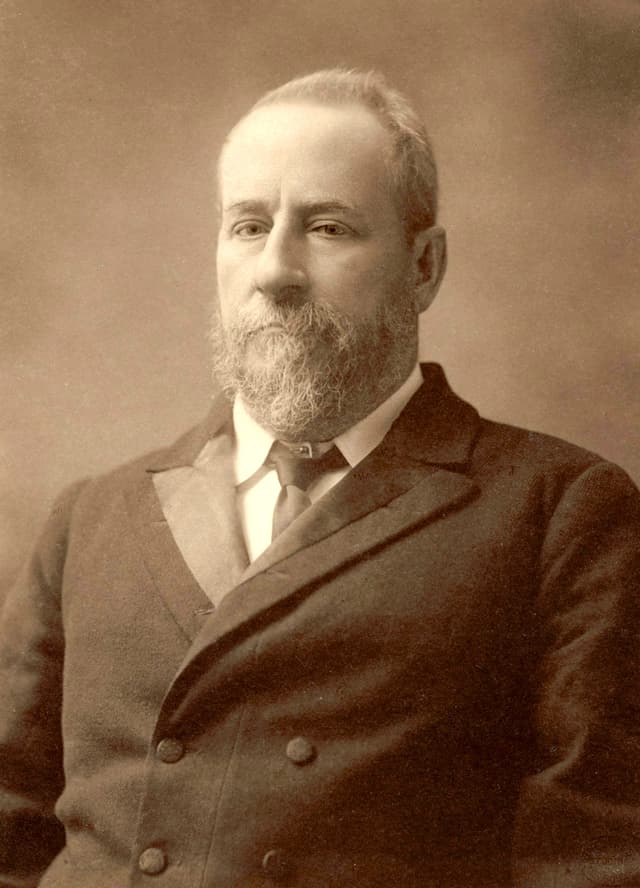
Charles Kingston
Charles Kingston was a prominent Australian politician and a radical liberal who served as the Premier of South Australia from 1893 to 1899. During his tenure, he championed significant electoral reforms, notably introducing the first law in Australia granting women the right to vote, making it the second such law in the world after New Zealand. Kingston's administration was marked by progressive legislation, including the establishment of a state bank, the first conciliation and arbitration act in Australia, and comprehensive reforms in taxation and workers' compensation. His commitment to social justice and economic reform positioned him as a leading figure in the push for federation, contributing substantially to the unification of the Australian colonies into a single nation. After his time as Premier, Kingston continued to influence Australian politics as a member of the House of Representatives, where he was elected with the highest votes in the Division of South Australia during the inaugural national election in 1901. He aligned himself with the Protectionist Party and represented the Division of Adelaide in subsequent elections. Kingston's legacy is characterized by his advocacy for progressive policies and his role in shaping the political landscape of early 20th-century Australia, leaving an enduring impact on the nation's governance and social reforms.
Famous Quotes
View all 1 quotes“The weak can often become strong in the hands of the unscrupulous.”
Books from the author




Link to this page
Add a free, dofollow link to Lex on your blog, forum, syllabus, or reading list.

<a href="https://lex-books.com/author/charles-kingston"><img src="https://lex-books.com/badges/read-on-lex.svg" alt="Charles Kingston on Lex" width="160" height="40"></a>[](https://lex-books.com/author/charles-kingston)[url=https://lex-books.com/author/charles-kingston][img]https://lex-books.com/badges/read-on-lex.svg[/img][/url]Charles Kingston on Lex: https://lex-books.com/author/charles-kingston