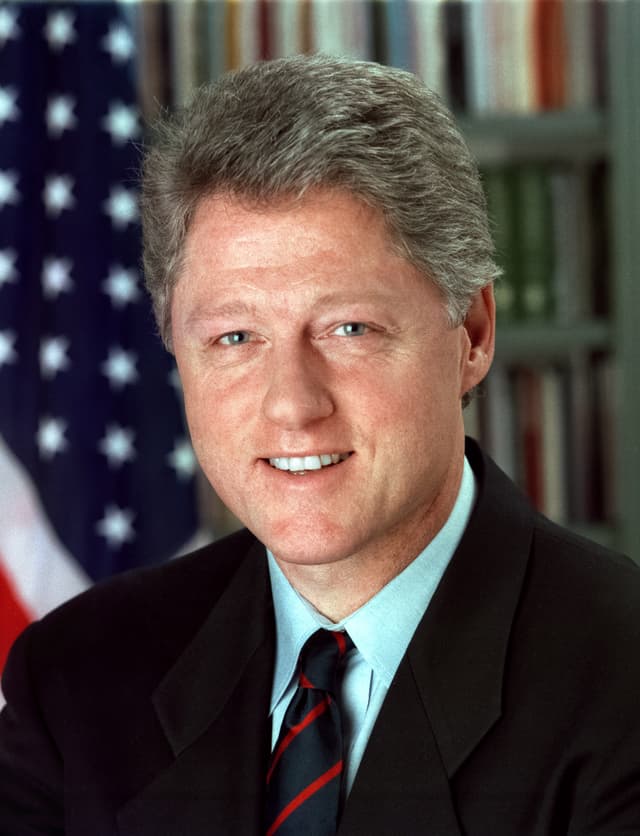
Bill Clinton
William Jefferson Clinton, known as Bill Clinton, was an influential American politician and lawyer who served as the 42nd president of the United States from 1993 to 2001. Born in Arkansas, he graduated from Georgetown University and later earned his law degree from Yale, where he met his future wife, Hillary Rodham. Clinton's political career began as the attorney general of Arkansas, followed by two terms as governor, during which he implemented significant reforms in the state's education system. His centrist political philosophy, often referred to as 'Clintonism,' shaped his presidency and had a lasting impact on the Democratic Party's direction in the years that followed. Clinton's presidency was marked by notable achievements, including the longest peacetime economic expansion in American history and the signing of key legislation such as the North American Free Trade Agreement and the Violent Crime Control and Law Enforcement Act. His administration also saw significant ideological shifts, as he moved toward more conservative domestic policies, exemplified by the Personal Responsibility and Work Opportunity Act. On the international stage, Clinton's foreign policy initiatives included military interventions in the Balkans, the expansion of NATO, and efforts to broker peace in the Middle East, notably through the Oslo Accords and the Camp David Summit. Despite facing controversies, including impeachment, Clinton's legacy remains one of complexity, reflecting both his achievements and the challenges of his presidency.
Famous Quotes
View all 3 quotes“We all do better when we work together. Our differences do matter, but our common humanity matters more.”
“from Bill Clinton speech- People are more impressed by the power of our example rather than the example of our power...”
“There is nothing wrong with America that cannot be cured by what is right with America.”
Books from the author



Link to this page
Add a free, dofollow link to Lex on your blog, forum, syllabus, or reading list.

<a href="https://lex-books.com/author/bill-clinton"><img src="https://lex-books.com/badges/read-on-lex.svg" alt="Bill Clinton on Lex" width="160" height="40"></a>[](https://lex-books.com/author/bill-clinton)[url=https://lex-books.com/author/bill-clinton][img]https://lex-books.com/badges/read-on-lex.svg[/img][/url]Bill Clinton on Lex: https://lex-books.com/author/bill-clinton