Allan Menzies
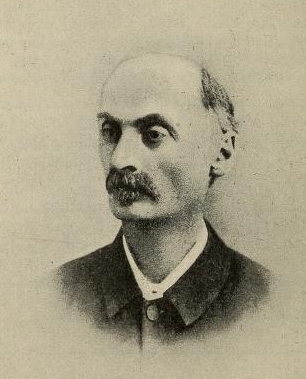
Allan Menzies was a Scottish minister renowned for his contributions to religious literature and translation. Fluent in both English and German, he dedicated much of his life to exploring and articulating theological concepts through his writings. Menzies is particularly noted for his translations of significant religious texts, which made complex theological ideas more accessible to a broader audience. His works often reflected a deep commitment to his faith and an earnest desire to communicate spiritual truths effectively. Among his notable works, Menzies authored several books that delved into the intersection of faith and reason, as well as the nuances of Christian doctrine. His writings not only served as a resource for the faithful but also engaged with contemporary theological debates of his time. Menzies's legacy lies in his ability to bridge linguistic and cultural divides, fostering a greater understanding of religious thought through his translations and original works. His impact on religious literature continues to be acknowledged by scholars and readers alike, marking him as a significant figure in the landscape of 19th-century Scottish theology.
Famous Quotes
View all 1 quotes“much depended; and so was the great lake or the ocean. This is what M. Réville calls the great Nature-worship, in comparison with the minor Nature-worship to be noticed presently. We do not now enter on the subject of mythology; that is to say, of the names men very early began to give to the great natural objects of worship, the characters they ascribed to them, the stories they told about them. That process of myth-making began very early, and is to be found at work in every part of the world. But at first it was simply the natural being itself, conceived as living, that was worshipped, not a spirit or a person thought to dwell in it. Of this, abundant evidence has survived in the great religions. Jupiter is just the sky, the Greek god Helios is just the sun, and the goddess Selene the moon. In China heaven itself is worshipped to this day. The Babylonians worshipped the stars. The Vedic gods are primarily the elements. From savage life examples of this earliest state of matters can also be quoted, though mythology has nearly everywhere greatly confused it. The Mincopies adore the sun as a beneficent deity, the moon as an inferior god. To the Natchez the sun is the supreme god; with some tribes of North America the chief god is heaven blowing, the sky with a wind in it, what Longfellow calls the "Great Spirit" or blowing. The Incas invoked together the Creator and the Sun and Thunder. Thunder was one of the great”
Books from the author




Link to this page
Add a free, dofollow link to Lex on your blog, forum, syllabus, or reading list.

<a href="https://lex-books.com/author/allan-menzies"><img src="https://lex-books.com/badges/read-on-lex.svg" alt="Allan Menzies on Lex" width="160" height="40"></a>[](https://lex-books.com/author/allan-menzies)[url=https://lex-books.com/author/allan-menzies][img]https://lex-books.com/badges/read-on-lex.svg[/img][/url]Allan Menzies on Lex: https://lex-books.com/author/allan-menzies