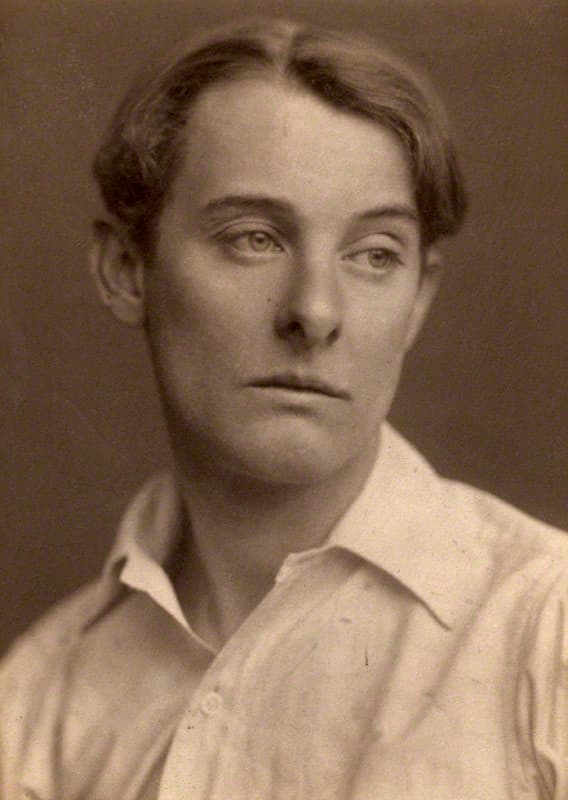
Alfred Bruce Douglas
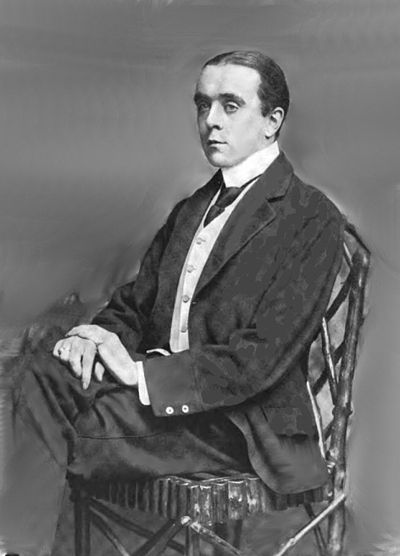
Lord Alfred Bruce Douglas, known affectionately as Bosie, was an English poet and journalist, whose life was intricately linked to that of the renowned playwright Oscar Wilde. Born into an aristocratic family, Douglas attended the University of Oxford, where he edited the undergraduate journal The Spirit Lamp, which featured homoerotic themes. His passionate yet tumultuous relationship with Wilde became a focal point of his life, particularly when his father, John Douglas, 9th Marquess of Queensberry, publicly accused Wilde of homosexuality, leading to Wilde's infamous trial and imprisonment. After Wilde's release, Douglas briefly lived with him in Naples, but their relationship had deteriorated by the time of Wilde's death in 1900. Douglas's literary contributions include several volumes of poetry, notably in the Uranian genre, which explored themes of homoerotic love. His poem 'Two Loves' is particularly famous for coining the phrase 'the love that dare not speak its name,' often misattributed to Wilde. Despite his earlier life, Douglas underwent a significant transformation after converting to Catholicism in 1911, during which he renounced his homosexuality and expressed controversial views, including antisemitism, in the Catholic magazine Plain English. His later years were marked by legal troubles, including a conviction for libelling Winston Churchill. Douglas's legacy remains complex, as he navigated the intersections of love, literature, and societal norms in a time of great change.
Famous Quotes
View all 3 quotes“I am the Love that Dare not Speak its Name”
“I dreamed I stood upon a little hill, And at my feet there lay a ground, that seemed Like a waste garden, flowering at its will With buds and blossoms. There were pools that dreamed Black and unruffled; there were white lilies A few, and crocuses, and violets Purple or pale, snake-like fritillaries Scarce seen for the rank grass, and through green nets Blue eyes of shy peryenche winked in the sun. And there were curious flowers, before unknown, Flowers that were stained with moonlight, or with shades Of Nature's willful moods; and here a one That had drunk in the transitory tone Of one brief moment in a sunset; blades Of grass that in an hundred springs had been Slowly but exquisitely nurtured by the stars, And watered with the scented dew long cupped In lilies, that for rays of sun had seen Only God's glory, for never a sunrise mars The luminous air of Heaven. Beyond, abrupt, A grey stone wall. o'ergrown with velvet moss Uprose; and gazing I stood long, all mazed To see a place so strange, so sweet, so fair. And as I stood and marvelled, lo! across The garden came a youth; one hand he raised To shield him from the sun, his wind-tossed hair Was twined with flowers, and in his hand he bore A purple bunch of bursting grapes, his eyes Were clear as crystal, naked all was he, White as the snow on pathless mountains frore, Red were his lips as red wine-spilith that dyes A marble floor, his brow chalcedony. And he came near me, with his lips uncurled And kind, and caught my hand and kissed my mouth, And gave me grapes to eat, and said, 'Sweet friend, Come I will show thee shadows of the world And images of life. See from the South Comes the pale pageant that hath never an end.' And lo! within the garden of my dream I saw two walking on a shining plain Of golden light. The one did joyous seem And fair and blooming, and a sweet refrain Came from his lips; he sang of pretty maids And joyous love of comely girl and boy, His eyes were bright, and 'mid the dancing blades Of golden grass his feet did trip for joy; And in his hand he held an ivory lute With strings of gold that were as maidens' hair, And sang with voice as tuneful as a flute, And round his neck three chains of roses were. But he that was his comrade walked aside; He was full sad and sweet, and his large eyes Were strange with wondrous brightness, staring wide With gazing; and he sighed with many sighs That moved me, and his cheeks were wan and white Like pallid lilies, and his lips were red Like poppies, and his hands he clenched tight, And yet again unclenched, and his head Was wreathed with moon-flowers pale as lips of death. A purple robe he wore, o'erwrought in gold With the device of a great snake, whose breath Was fiery flame: which when I did behold I fell a-weeping, and I cried, 'Sweet youth, Tell me why, sad and sighing, thou dost rove These pleasent realms? I pray thee speak me sooth What is thy name?' He said, 'My name is Love.' Then straight the first did turn himself to me And cried, 'He lieth, for his name is Shame, But I am Love, and I was wont to be Alone in this fair garden, till he came Unasked by night; I am true Love, I fill The hearts of boy and girl with mutual flame.' Then sighing, said the other, 'Have thy will, I am the love that dare not speak its name.”
“Then sighing, said the other, 'Have thy will, I am the love that dare not speak its name.”
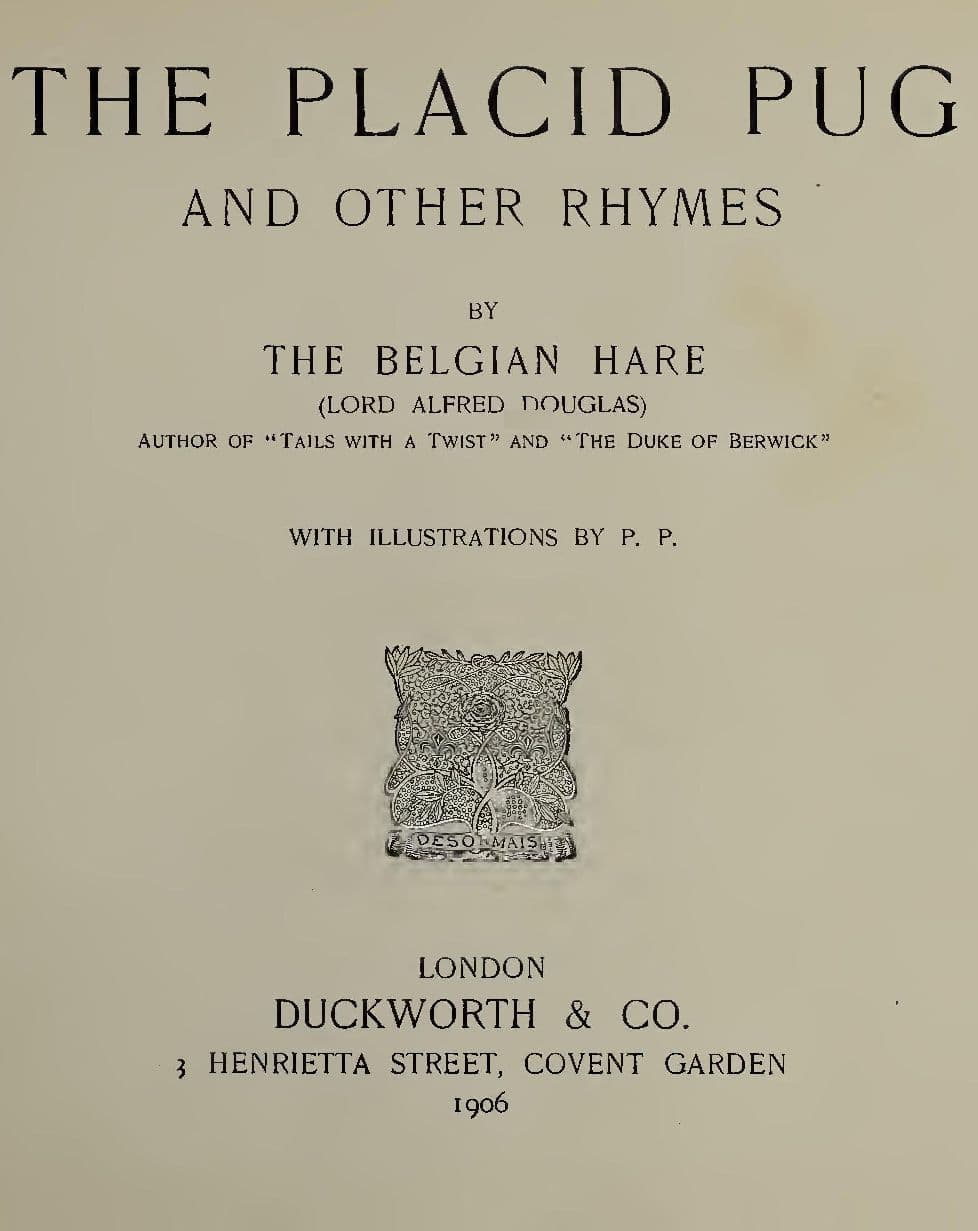
Books from the author


Link to this page
Add a free, dofollow link to Lex on your blog, forum, syllabus, or reading list.

<a href="https://lex-books.com/author/alfred-bruce-douglas"><img src="https://lex-books.com/badges/read-on-lex.svg" alt="Alfred Bruce Douglas on Lex" width="160" height="40"></a>[](https://lex-books.com/author/alfred-bruce-douglas)[url=https://lex-books.com/author/alfred-bruce-douglas][img]https://lex-books.com/badges/read-on-lex.svg[/img][/url]Alfred Bruce Douglas on Lex: https://lex-books.com/author/alfred-bruce-douglas