Yksinkertainen Sydän
1877
A novel written in the mid-19th century. The story revolves around Félicité, a devoted servant to the ungrateful Madame Aubain, highlighting themes of love, service, and tragedy through her life experiences and relationships. The narrative primarily focuses on Félicité's perspective, her unwavering loyalty, and the simple yet poignant moments of her life that reflect deeper emotional truths. At the start of the novel, we are introduced to the character of Félicité, who for over fifty years has served Madame Aubain in Pont-l'Évêque. The opening chapters depict Félicité's diligent work and her life full of hardship and servitude. We see her dedication as she manages the household chores, raises Madame Aubain's children, and deals with her own heartbreak from a past romance that ended in abandonment. The narrative paints a vivid picture of Félicité's modest existence, presenting both the details of her daily routines and her profound sense of belonging within the household, even as she remains an outsider in many respects. This establishes a foundation for themes of loyalty and loss that will resonate throughout the novel.
Editions
X-Ray
“Human speech is like a cracked kettle on which we tap crude rhythms for bears to dance to, while we long to make music that will melt the stars.””
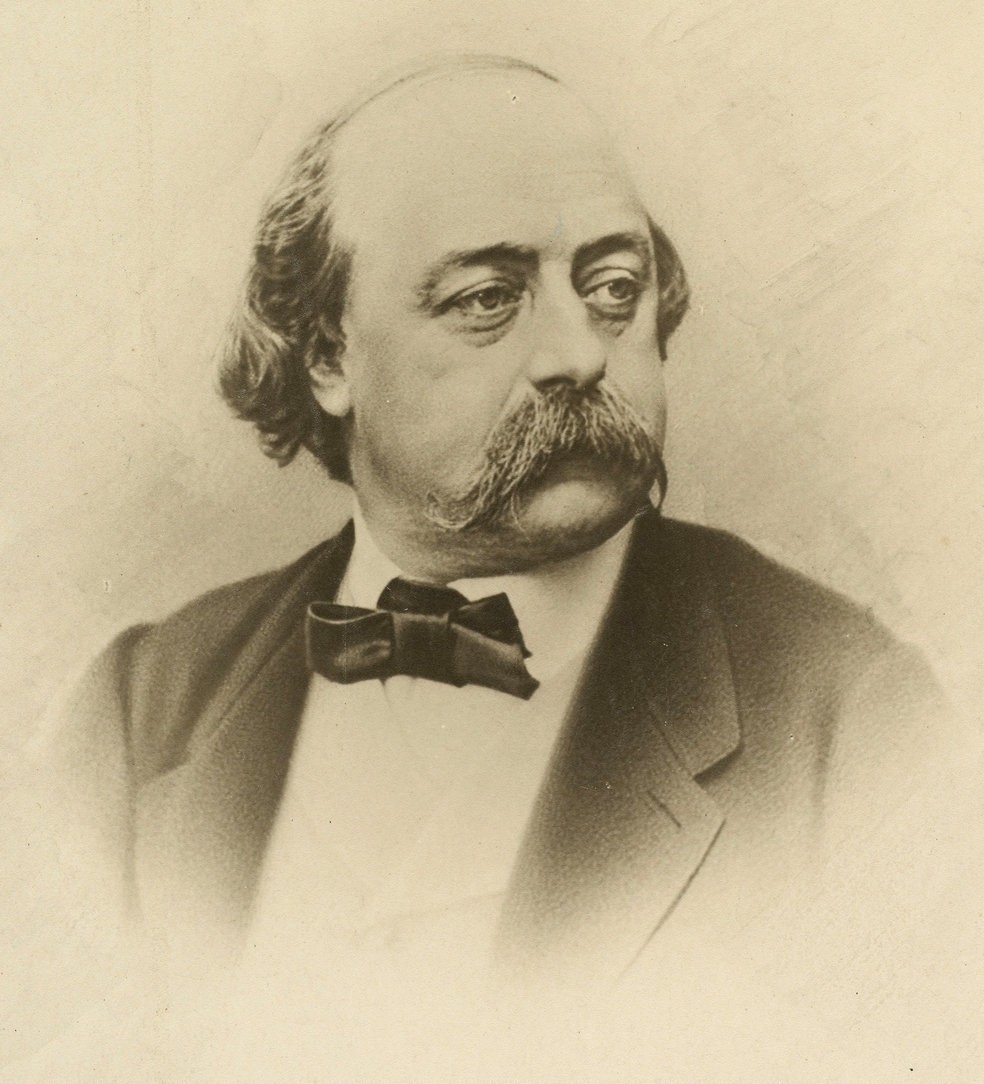
— Gustave Flaubert
“At the bottom of her heart, however, she was waiting for something to happen. Like shipwrecked sailors, she turned despairing eyes upon the solitude of her life, seeking afar off some white sail in the mists of the horizon. She did not know what this chance would be, what wind would bring it her, towards what shore it would drive her, if it would be a shallop or a three-decker, laden with anguish or full of bliss to the portholes. But each morning, as she awoke, she hoped it would come that day; she listened to every sound, sprang up with a start, wondered that it did not come; then at sunset, always more saddened, she longed for the morrow.””
— Gustave Flaubert
“She wanted to die, but she also wanted to live in Paris.””
— Gustave Flaubert
“Never touch your idols: the gilding will stick to your fingers."””
— Gustave Flaubert
“What better occupation, really, than to spend the evening at the fireside with a book, with the wind beating on the windows and the lamp burning bright...Haven't you ever happened to come across in a book some vague notion that you've had, some obscure idea that returns from afar and that seems to express completely your most subtle feelings?””
— Gustave Flaubert
“Love, she thought, must come suddenly, with great outbursts and lightnings,--a hurricane of the skies, which falls upon life, revolutionises it, roots up the will like a leaf, and sweeps the whole heart into the abyss.””
— Gustave Flaubert
“An infinity of passion can be contained in one minute, like a crowd in a small space.””
— Gustave Flaubert
“You forget everything. The hours slip by. You travel in your chair through centuries you seem to see before you, your thoughts are caught up in the story, dallying with the details or following the course of the plot, you enter into characters, so that it seems as if it were your own heart beating beneath their costumes.””
— Gustave Flaubert
“One's duty is to feel what is great, cherish the beautiful, and to not accept the conventions of society with the ignominy that it imposes upon us.””
— Gustave Flaubert
Link to this book
Add a free, dofollow link to Lex on your blog, forum, syllabus, or reading list.

<a href="https://lex-books.com/book/yksinkertainen-syd-n-734d3e37-a6ff-4951-a91e-0a190bfd772c"><img src="https://lex-books.com/badges/read-on-lex.svg" alt="Read Yksinkertainen Sydän by Gustave Flaubert free on Lex" width="160" height="40"></a>[](https://lex-books.com/book/yksinkertainen-syd-n-734d3e37-a6ff-4951-a91e-0a190bfd772c)[url=https://lex-books.com/book/yksinkertainen-syd-n-734d3e37-a6ff-4951-a91e-0a190bfd772c][img]https://lex-books.com/badges/read-on-lex.svg[/img][/url]Read Yksinkertainen Sydän by Gustave Flaubert free on Lex: https://lex-books.com/book/yksinkertainen-syd-n-734d3e37-a6ff-4951-a91e-0a190bfd772cCite this book
Reading this edition for a paper or guide? Copy a citation.
Flaubert, Gustave. Yksinkertainen Sydän. Lex, lex-books.com/book/yksinkertainen-syd-n-734d3e37-a6ff-4951-a91e-0a190bfd772c.Flaubert, G. (1877). Yksinkertainen Sydän. Lex. https://lex-books.com/book/yksinkertainen-syd-n-734d3e37-a6ff-4951-a91e-0a190bfd772cFlaubert, Gustave. Yksinkertainen Sydän. Lex. https://lex-books.com/book/yksinkertainen-syd-n-734d3e37-a6ff-4951-a91e-0a190bfd772c.