White Moll
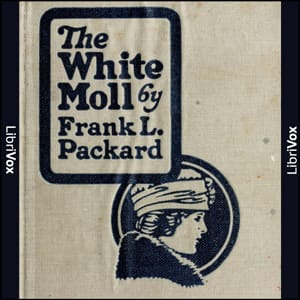
Rhoda Gray moves through the gaslit slums of New York like a ghost in white, a wealthy woman who abandoned privilege to become the Angel of Mercy known as the White Moll, tending to the forgotten and the desperate. But when she extends her help to Gypsy Nan, a woman whose mysterious ways conceal dangerous secrets, Rhoda finds herself accused of murder and fleeing through the same dark alleys she once walked as a healer. Now hunted by both police and the most ruthless gang in the New York underworld, she must infiltrate the criminal empire that destroyed her, using her enemies' own weapons against them. The city that offered her compassion becomes her cage, and every shadow hides a blade waiting to strike. Published in 1920, White Moll arrives at the precise moment mystery fiction begins its transformation from parlor puzzles to hard-boiled street warfare. Frank L. Packard, who would later create the iconic Gray Seal, demonstrates here his gift for visceral atmosphere and taut, visceral action. This is a tale of moral inversion: a woman of genuine goodness must become cunning, calculating, and ultimately dangerous to survive in a world designed to consume her. The female protagonist predates similar characters by decades, making this a surprising progenitor of the modern crime thriller.
Editions

Link to this book
Add a free, dofollow link to Lex on your blog, forum, syllabus, or reading list.

<a href="https://lex-books.com/book/white-moll-622d38f7-2fd4-4b99-8d64-e5937de117f5"><img src="https://lex-books.com/badges/read-on-lex.svg" alt="Read White Moll by Frank L. Packard free on Lex" width="160" height="40"></a>[](https://lex-books.com/book/white-moll-622d38f7-2fd4-4b99-8d64-e5937de117f5)[url=https://lex-books.com/book/white-moll-622d38f7-2fd4-4b99-8d64-e5937de117f5][img]https://lex-books.com/badges/read-on-lex.svg[/img][/url]Read White Moll by Frank L. Packard free on Lex: https://lex-books.com/book/white-moll-622d38f7-2fd4-4b99-8d64-e5937de117f5Cite this book
Reading this edition for a paper or guide? Copy a citation.
Packard, Frank L.. White Moll. Lex, lex-books.com/book/white-moll-622d38f7-2fd4-4b99-8d64-e5937de117f5.Packard, F. L. (n.d.). White Moll. Lex. https://lex-books.com/book/white-moll-622d38f7-2fd4-4b99-8d64-e5937de117f5Packard, Frank L.. White Moll. Lex. https://lex-books.com/book/white-moll-622d38f7-2fd4-4b99-8d64-e5937de117f5.