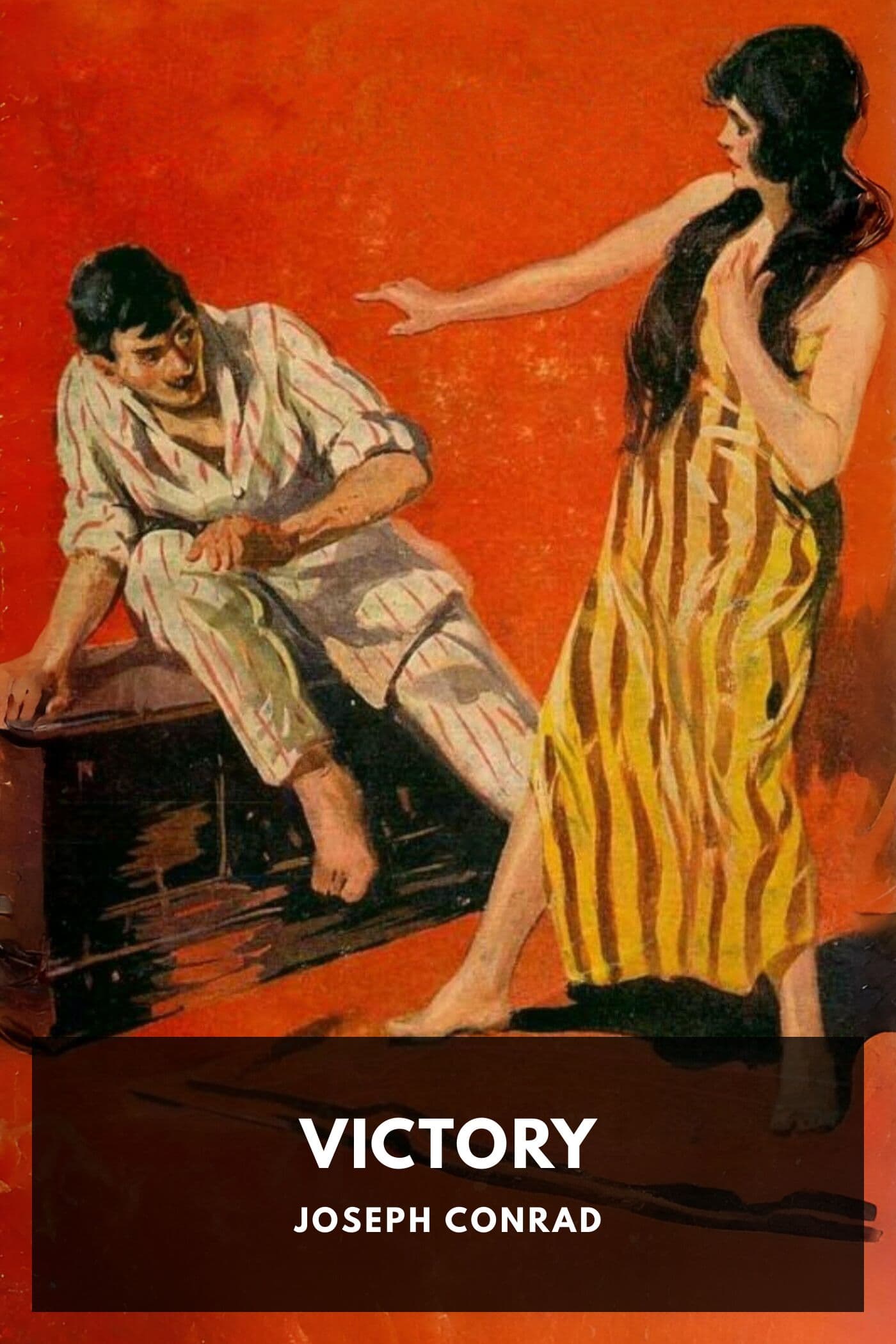
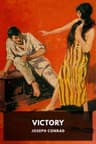
Victory: An Island Tale
Axel Heyst has perfected the art of withdrawal. A man who severed ties with humanity after a childhood of loss, he retreats to a remote island in the Malay Archipelago, managing a failing coal company with the same detached indifference he applies to all human connection. When circumstances compel him to rescue Lena, a young Englishwoman trapped in a traveling orchestra and at the mercy of predatory men, Heyst brings her to his island sanctuary believing he offers only safety. What unfolds is a psychological reckoning disguised as a tropical romance. Lena's unwavering devotion gradually penetrates Heyst's carefully constructed isolation, but Conrad refuses sentimentality. This is a novel about the impossibility of true escape, the violence inherent in self-erasure, and the way love can shatter as easily as it illuminates. The island becomes a crucible where two damaged people confront what it means to reach for another soul. Dark, haunting, and philosophically unsettling, Victory asks whether connection is worth its inevitable costs.
Editions
X-Ray
“Woe to the man whose heart has not learned while young to hope, to love - and to put it's trust in life!””
— Joseph Conrad
“The use of reason is to justify the obscure desires that move our conduct, impulses, passions, prejudices and follies, and also our fears.””
— Joseph Conrad
“The Zangiacomo band was not making music; it was simply murdering silence with a vulgar, ferocious energy.””
— Joseph Conrad
“She was engaged in the task of defending her position in life," said Heyst. "It's a very respectable task.””
— Joseph Conrad
“dreams are madness, my dear. It's things that happen in the waking world, while one is asleep, that one would be glad to know the meaning of.””
— Joseph Conrad
“The world of finance is a mysterious world in which, incredible as the fact may appear, evaporation precedes liquidation. First the capital evaporates, and then the company goes into liquidation. These are very unnatural physics ...””
— Joseph Conrad
“It was the very essence of his life to be a solitary achievement, accomplished not by hermit-like withdrawal with it's silence and immobility but by a system of restless wandering, by the detachment of an impermanent dweller amongst changing scenes. In this scheme he had perceived the means of passing through life without suffering and almost without a single care in the world- invulnerable because elusive.””
— Joseph Conrad
“I believe in children praying--well, women, too, but I rather think God expects men to be more self-reliant. I don't hold with a man everlastingly bothering the Almighty with his silly troubles.””
— Joseph Conrad
“A diplomatic statement ... is a statement of which everything is true but the sentiment which seems to prompt it.””
— Joseph Conrad
Link to this book
Add a free, dofollow link to Lex on your blog, forum, syllabus, or reading list.

<a href="https://lex-books.com/book/victory-an-island-tale-86fa7b05-80da-43fe-8aef-a56c5934ca30"><img src="https://lex-books.com/badges/read-on-lex.svg" alt="Read Victory: An Island Tale by Joseph Conrad free on Lex" width="160" height="40"></a>[](https://lex-books.com/book/victory-an-island-tale-86fa7b05-80da-43fe-8aef-a56c5934ca30)[url=https://lex-books.com/book/victory-an-island-tale-86fa7b05-80da-43fe-8aef-a56c5934ca30][img]https://lex-books.com/badges/read-on-lex.svg[/img][/url]Read Victory: An Island Tale by Joseph Conrad free on Lex: https://lex-books.com/book/victory-an-island-tale-86fa7b05-80da-43fe-8aef-a56c5934ca30Cite this book
Reading this edition for a paper or guide? Copy a citation.
Conrad, Joseph. Victory: An Island Tale. Lex, lex-books.com/book/victory-an-island-tale-86fa7b05-80da-43fe-8aef-a56c5934ca30.Conrad, J. (n.d.). Victory: An Island Tale. Lex. https://lex-books.com/book/victory-an-island-tale-86fa7b05-80da-43fe-8aef-a56c5934ca30Conrad, Joseph. Victory: An Island Tale. Lex. https://lex-books.com/book/victory-an-island-tale-86fa7b05-80da-43fe-8aef-a56c5934ca30.