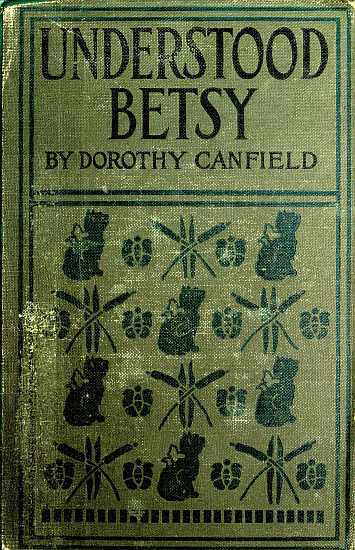
Understood Betsy
1916
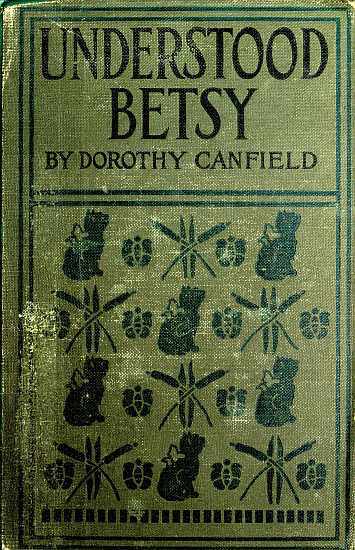
Understood Betsy
1916
For nine years, Elizabeth Ann has lived in a glass jar. Her well-meaning aunts have wrapped her in cotton wool, terrified she'll break. Then circumstances shift, and she's bundled off to Vermont to live with cousins she's been taught to fear, the rough, farm-dwelling Putneys. The child expects disaster. What she finds is something altogether more dangerous: freedom. On the Putney farm, children do real work. They get dirty. They solve their own problems. There's no one to shield her from life, and at first this feels like abandonment. But slowly, impossibly, Elizabeth Ann begins to unfurl. She learns she can chop wood, care for animals, make decisions. She gains a nickname (Betsy), a community, and something she's never had before, a version of herself worth being. By the time her aunt returns to claim her, the girl who left is gone. In her place stands someone healthier, prouder, braver. This is the rare children's book that understands: sometimes the greatest act of love is letting a child discover what they're capable of.
Editions

X-Ray
“What's the matter?" asked the teacher, seeing her bewildered face."Why”
— Dorothy Canfield Fisher
“Not a thing had happened the way she had planned, no, not a single thing! But it seemed to her she had never been so happy in her life.””
— Dorothy Canfield Fisher
“I never did,' said the little girl, but in a less doubtful tone than she had ever used with that phrase so familiar to her. A dim notion was growing in her mind that the fact that she had never done a thing was no proof that she couldn't.””
— Dorothy Canfield Fisher
“I declare! Sometimes it seems to me that every time a new piece of machinery comes into the door some of our wits fly out the window!””
— Dorothy Canfield Fisher
“It is possible that what stirred inside her head at that moment was her brain, waking up. She was nine years old, and she was in the third-A grade at school, but that was the first time she had ever had a whole thought of her very own. At home, Aunt Frances had always known exactly what she was doing, and had helped her over the hard places before she even knew they were there; and at school her teachers had been carefully trained to think faster than the scholars. Somebody had always been explaining things to Elizabeth Ann so carefully that she had never found out a single thing for herself before. This was a very small discovery, but it was her own.””
— Dorothy Canfield Fisher
“A dim notion was growing up in her mind that the fact that she had never done a thing was no proof that she couldn't.””
— Dorothy Canfield Fisher
“The matter was that never before had she known what she was doing in school. She had always thought she was there to pass from one grade to another, and she was ever so startled to get a glimpse of the fact that she was there to learn how to read and write and cipher and generally use her mind, so she could take care of herself when she came to be grown up.””
— Dorothy Canfield Fisher
“(P)ersonality...is perhaps the very most important thing in the world. Yet we know only one or two things about it. We know that anybody's personality is made up of the sum total of all the actions and thoughts and desires of his life. And we know that though there aren't any words or any figures in any languages to set down that sum total accurately, still it is one of the first things that everybody knows about anybody else. And that really is all we know!””
— Dorothy Canfield Fisher
“Why, what’s the matter?” asked the teacher again. This time Elizabeth Ann didn’t answer, because she herself didn’t know what the matter was. But I do, and I’ll tell you. The matter was that never before had she known what she was doing in school. She had always thought she was there to pass from one grade to another, and she was ever so startled to get a little glimpse of the fact that she was there to learn how to read and write and cipher and generally use her mind, so she could take care of herself when she came to be grown up.””
— Dorothy Canfield Fisher
Link to this book
Add a free, dofollow link to Lex on your blog, forum, syllabus, or reading list.

<a href="https://lex-books.com/book/understood-betsy-e628132a-359e-4c01-bccd-1b25d53494c7"><img src="https://lex-books.com/badges/read-on-lex.svg" alt="Read Understood Betsy by Dorothy Canfield Fisher free on Lex" width="160" height="40"></a>[](https://lex-books.com/book/understood-betsy-e628132a-359e-4c01-bccd-1b25d53494c7)[url=https://lex-books.com/book/understood-betsy-e628132a-359e-4c01-bccd-1b25d53494c7][img]https://lex-books.com/badges/read-on-lex.svg[/img][/url]Read Understood Betsy by Dorothy Canfield Fisher free on Lex: https://lex-books.com/book/understood-betsy-e628132a-359e-4c01-bccd-1b25d53494c7Cite this book
Reading this edition for a paper or guide? Copy a citation.
Fisher, Dorothy Canfield. Understood Betsy. Lex, lex-books.com/book/understood-betsy-e628132a-359e-4c01-bccd-1b25d53494c7.Fisher, D. C. (1916). Understood Betsy. Lex. https://lex-books.com/book/understood-betsy-e628132a-359e-4c01-bccd-1b25d53494c7Fisher, Dorothy Canfield. Understood Betsy. Lex. https://lex-books.com/book/understood-betsy-e628132a-359e-4c01-bccd-1b25d53494c7.