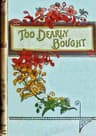
Too Dearly Bought: Or, The Town Strike

The novel opens on a town bracing itself for upheaval. A procession approaches, led by Peter Pope, the eloquent delegate whose words could bend men to his cause. Through him, Giberne captures the desperate hope of workers who have decided that starvation is worth the risk if dignity might follow. But this is no simple tale of heroes and villains. Giberne complicates the picture with characters like John Holdfast, who understands the moral weight of resistance but also sees its terrible cost, and Martha Stevens, whose fear for her children's survival makes her the voice of those who suffer most when strikes fail. The real power lies in what Giberne never oversimplifies: the choice between individual survival and collective action, the way factory owners and workers alike are trapped by systems larger than themselves. This is a novel about the moment when ordinary people decide their lives cannot continue as they are, and what happens when that courage meets the grinding machinery of industrial capitalism.
Editions
Link to this book
Add a free, dofollow link to Lex on your blog, forum, syllabus, or reading list.

<a href="https://lex-books.com/book/too-dearly-bought-or-the-town-strike-55eda724-8dc3-4bb5-a97c-51b0626c8c37"><img src="https://lex-books.com/badges/read-on-lex.svg" alt="Read Too Dearly Bought: Or, The Town Strike by Agnes Giberne free on Lex" width="160" height="40"></a>[](https://lex-books.com/book/too-dearly-bought-or-the-town-strike-55eda724-8dc3-4bb5-a97c-51b0626c8c37)[url=https://lex-books.com/book/too-dearly-bought-or-the-town-strike-55eda724-8dc3-4bb5-a97c-51b0626c8c37][img]https://lex-books.com/badges/read-on-lex.svg[/img][/url]Read Too Dearly Bought: Or, The Town Strike by Agnes Giberne free on Lex: https://lex-books.com/book/too-dearly-bought-or-the-town-strike-55eda724-8dc3-4bb5-a97c-51b0626c8c37Cite this book
Reading this edition for a paper or guide? Copy a citation.
Giberne, Agnes. Too Dearly Bought: Or, The Town Strike. Lex, lex-books.com/book/too-dearly-bought-or-the-town-strike-55eda724-8dc3-4bb5-a97c-51b0626c8c37.Giberne, A. (n.d.). Too Dearly Bought: Or, The Town Strike. Lex. https://lex-books.com/book/too-dearly-bought-or-the-town-strike-55eda724-8dc3-4bb5-a97c-51b0626c8c37Giberne, Agnes. Too Dearly Bought: Or, The Town Strike. Lex. https://lex-books.com/book/too-dearly-bought-or-the-town-strike-55eda724-8dc3-4bb5-a97c-51b0626c8c37.