The Mighty Deep: And What We Know of It
1902
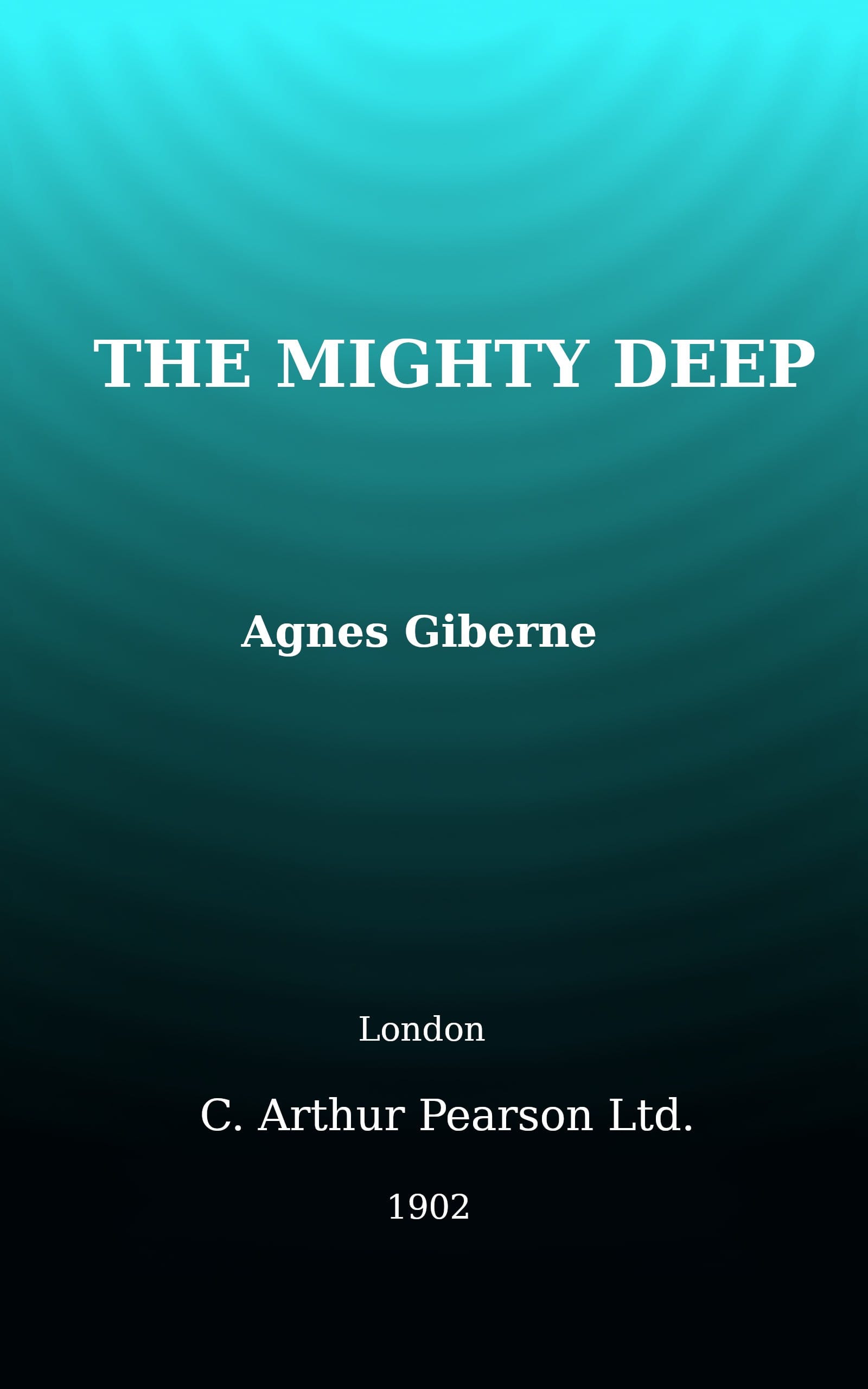
The Mighty Deep: And What We Know of It
1902
At the turn of the twentieth century, the ocean still held secrets that haunted the scientific imagination. Agnes Giberne, writing in 1902, invites readers into a world where the deep remains largely unmapped, where strange creatures rise from abyssal darkness in the accounts of awestruck naturalists, and where the very laws governing tides, currents, and pressure stretch human comprehension. This is oceanography before sonar, before deep-sea submersibles, when knowing the ocean meant拼接ing together observations from sailors, scientists, and explorers into a grand synthesis of wonder and empirical inquiry. The book moves through the ocean's physical properties, the crushing pressure of depths, the slow creep of currents, the rhythm of tides that have governed human settlement for millennia. Giberne weaves history with science, tracing the Phoenicians' daring passages and the English centuries-long intimacy with salt water. She catalogues marine life with the enthusiasm of a Victorian naturalist discovering new species, rendering jellyfish as ethereal bells of living light and whales as giants whose songs traverse leagues of black water. The writing carries a particular period charm: confident, didactic, and suffused with the belief that science reveals God's glory in creation. What makes this book endure is not its scientific currency, much has been revised, but its sensibility. Here is an ocean still mysterious, still capable of inspiring religious awe. For readers who love vintage nature writing, Victorian science, or the romance of how humanity slowly learned to read the sea.
Editions
Link to this book
Add a free, dofollow link to Lex on your blog, forum, syllabus, or reading list.

<a href="https://lex-books.com/book/the-mighty-deep-and-what-we-know-of-it-5d43f32e-a962-49b1-affe-57f86937138d"><img src="https://lex-books.com/badges/read-on-lex.svg" alt="Read The Mighty Deep: And What We Know of It by Agnes Giberne free on Lex" width="160" height="40"></a>[](https://lex-books.com/book/the-mighty-deep-and-what-we-know-of-it-5d43f32e-a962-49b1-affe-57f86937138d)[url=https://lex-books.com/book/the-mighty-deep-and-what-we-know-of-it-5d43f32e-a962-49b1-affe-57f86937138d][img]https://lex-books.com/badges/read-on-lex.svg[/img][/url]Read The Mighty Deep: And What We Know of It by Agnes Giberne free on Lex: https://lex-books.com/book/the-mighty-deep-and-what-we-know-of-it-5d43f32e-a962-49b1-affe-57f86937138dCite this book
Reading this edition for a paper or guide? Copy a citation.
Giberne, Agnes. The Mighty Deep: And What We Know of It. Lex, lex-books.com/book/the-mighty-deep-and-what-we-know-of-it-5d43f32e-a962-49b1-affe-57f86937138d.Giberne, A. (1902). The Mighty Deep: And What We Know of It. Lex. https://lex-books.com/book/the-mighty-deep-and-what-we-know-of-it-5d43f32e-a962-49b1-affe-57f86937138dGiberne, Agnes. The Mighty Deep: And What We Know of It. Lex. https://lex-books.com/book/the-mighty-deep-and-what-we-know-of-it-5d43f32e-a962-49b1-affe-57f86937138d.