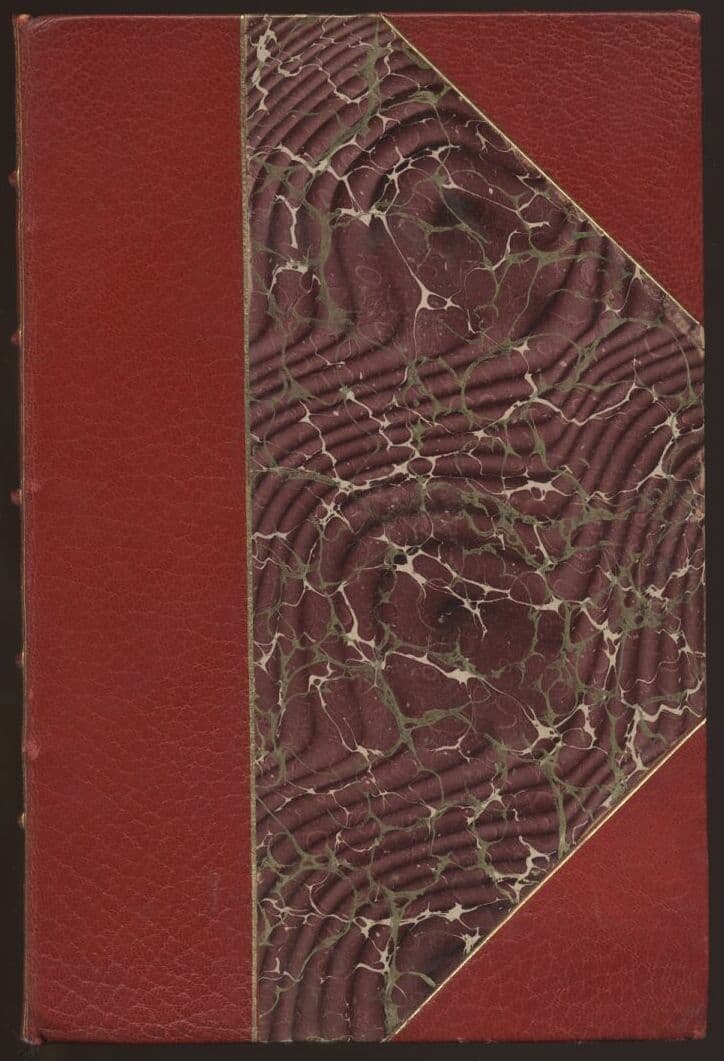
Told by an Idiot
1923

Told by an Idiot, published in 1923 by Rose Macaulay, is a domestic fiction novel set in Victorian England. It follows the Garden family, particularly Mr. Aubrey Garden, an Anglican clergyman grappling with crises of faith, and his six children, each representing diverse perspectives on belief, politics, and societal change. The narrative delves into the family's struggles with evolving belief systems and the implications of their father's wavering convictions, offering a rich commentary on faith, identity, and familial dynamics during a transformative era in British history.
Editions
X-Ray
“Really, there's hardly anything to say about anything. I mean, you could say it all, all that mattered, in a few sentences.””
— Rose Macaulay
“Once more the legend flourished that the number of years lived constitutes some kind of temperamental bond, so that people of the same age are many minds with but a single thought, bearing one to another a close resemblance. The young were commented on as if they were some new and just discovered species of animal life, with special qualities and habits which repaid investigation.””
— Rose Macaulay
“Life was well enough, she thought; well enough, and a gay enough business for those who had the means to make it so, and the temperament to find it so. Life was no great matter, and nor, certainly, was death; but it was well enough. We come and we go; we are born, we live, and we die; this poor ball, thought Rome, serves us for all that; and on the whole, we make too much complaint of it, expect, one way and another, too much of it. It is, after all, but a turning ball, which has burst, for some reason unknown to science, into a curious, interesting and rather unwholesome form of animal and vegetable life. (…) Funny, hustling, strutting, vain, eager little creatures that we are, so clever and so excited about the business of living, so absorbed and intent about it all, so proud of our achievements, so tragically deploring our disasters, so prone to talk about the wreckage of civilization, as if it mattered much, as if civilizations had not been wrecked and wrecked all down human history, and it all came to the same thing in the end. Nevertheless, thought Rome, we are really rather wonderful little spurts of life. The brief pageant, the tiny, squalid story of human life upon this earth, has been lit, among the squalor and the greed, by amazing flashes of intelligence, of valor, of beauty, of sacrifice, of love.””
— Rose Macaulay
“You may, for instance, inquire of a popular preacher, or any one else, who denounces his countrymen as "pagan" (as speakers, and even Bishops, at religious gatherings have been known to do) what, exactly, he means by this word, and you will find that he means irreligious, and is apparently oblivious of the fact that pagans were and are, in their village simplicity, the most religious persons who have ever flourished, having more gods to the square mile then the Christian or any other Church has ever possessed or desired, and paying these gods more devout and more earnest devotion than you will meet even among Anglo-Catholics in congress. To be pagan may not be very intelligent; it is rustic and superstitious, but it is at least religious. Yet you will hear the word "pagan" flung loosely about for "irreligious", or sometimes as meaning joyous, material and comfort-loving, whereas the simple pagans walked the earth full of what is called holy awe and that mystic faith in unseen powers which is the antithesis of materialism, and gloomy with apprehension of the visitations of their horrid and vindictive gods; and, though no doubt, like all men, they loved comfort, they only obtained, just as we do, as much of that as they could afford.””
— Rose Macaulay
“She was alone with beauty. She was passionately realizing the moment, its fleeting exquisiteness, its still, fragile beauty. So exquisite it was, so frail and so transitory, that she could have wept, even as she clasped it close. To savor the loveliness of moments, to bathe in them as in a wine-gold, sun-warmed sea, and then to pass on to the next - that was life.””
— Rose Macaulay
“She was a selfish girl, a shallow girl, a shoddy girl, enmeshed in egotism, happy in her own circus, caring little whether or no others had bread. Happy in her circus, and yet often wretched too, for life is like that”
— Rose Macaulay
“And had the young, both men and women, always believed that they alone could save the world, that the last generation, the elderly people, were no good, were, in fact, responsible for the unfortunate state in which the world had always up to now been, and that it was for the young to usher in the New Day? Well, no doubt they were right. The only hitch seemed to be that the young people always seemed to get elderly before they had had time to bring in the New Day, and then they were no good any more, and the next generation had to take on the job, and still the New Day coyly refused to be ushered in. Except that, of course, in a sense, each day was a new one. But not, alas, much of an improvement on the day before.””
— Rose Macaulay
“To be cool, skeptical and passionate at one and the same time - it has been done, but it remains difficult. To love ardently such absurdities as infants, and yet to retain unmarred the sense of the absurdity of all life - this, too, has been done, but the best parents do not do it. Something has to go, as a sacrifice to the juggernaut Life, which rebels against being regarded as merely absurd (and rightly, for in truth, it is not merely absurd, and this is one of the things which should always be remembered about it).””
— Rose Macaulay
Link to this book
Add a free, dofollow link to Lex on your blog, forum, syllabus, or reading list.

<a href="https://lex-books.com/book/told-by-an-idiot-b9c1decb-c41f-4182-9407-6565c985cdb1"><img src="https://lex-books.com/badges/read-on-lex.svg" alt="Read Told by an Idiot by Rose Macaulay free on Lex" width="160" height="40"></a>[](https://lex-books.com/book/told-by-an-idiot-b9c1decb-c41f-4182-9407-6565c985cdb1)[url=https://lex-books.com/book/told-by-an-idiot-b9c1decb-c41f-4182-9407-6565c985cdb1][img]https://lex-books.com/badges/read-on-lex.svg[/img][/url]Read Told by an Idiot by Rose Macaulay free on Lex: https://lex-books.com/book/told-by-an-idiot-b9c1decb-c41f-4182-9407-6565c985cdb1Cite this book
Reading this edition for a paper or guide? Copy a citation.
Macaulay, Rose. Told by an Idiot. Lex, lex-books.com/book/told-by-an-idiot-b9c1decb-c41f-4182-9407-6565c985cdb1.Macaulay, R. (1923). Told by an Idiot. Lex. https://lex-books.com/book/told-by-an-idiot-b9c1decb-c41f-4182-9407-6565c985cdb1Macaulay, Rose. Told by an Idiot. Lex. https://lex-books.com/book/told-by-an-idiot-b9c1decb-c41f-4182-9407-6565c985cdb1.