The Spanish Tragedy
1592
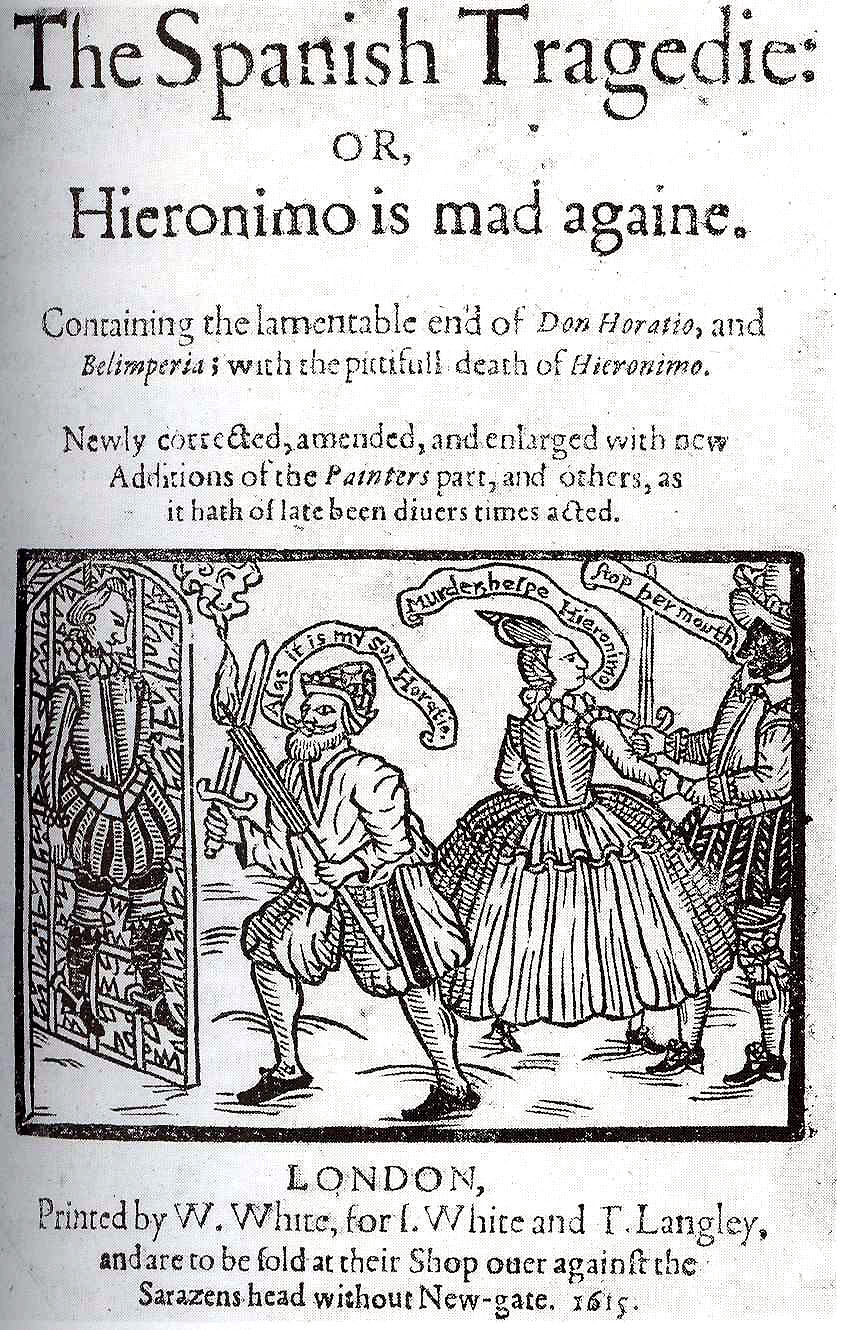
Few plays have left a deeper mark on English theatre than The Spanish Tragedy, the work that essentially invented the revenge play and gave Shakespeare his blueprint for Hamlet. Thomas Kyd's 1592 masterpiece opens with the Ghost of Don Andrea, slain in battle against the Portuguese prince Balthazar, returning to demand justice from the underworld. His lover Bel-imperia and his friend Hieronimo, the knight-marshall of Spain, must navigate a treacherous court where murder goes unpunished and political ambition trumps honor. When Hieronimo's own son Horatio becomes entangled in the scheme, the play spirals into a blood-soaked climax of orchestrated destruction that remains electrifying over four centuries later. What elevates Kyd's tragedy beyond mere melodrama is its unflinching examination of how vengeance corrupts, how grief drives men to madness, and how the demand for justice can become indistinguishable from the crime itself. The play's notorious play-within-a-play device, used to trap a murderer, directly influenced the construction of Hamlet, and the personification of Revenge as a stage character was radical for its time. This is a dark, violent, ultimately devastating work that proved revenge tragedy could be art.
Editions
X-Ray
“The less I speak, the more I meditate.””
— Thomas Kyd
“Let dangers go; thy war shall be with me,But such a war, as breaks no bonds of peace.Speak thou fair words, I'll cross them with fair words;Send thou sweet looks, I'll meet them with sweet looks;Write loving lines, I'll answer loving lines;Give me a kiss, I'll countercheck thy kiss.Be this our warring peace, or peaceful war.””
— Thomas Kyd
“My soule, poore soule thou talkes of things/ Thou knowest not what, my soule hath sliver wings,/ That mounts me up unto the highest heavens.””
— Thomas Kyd
“HIERONIMO. O eyes! no eyes, but fountains fraught with tears; O life! no life, but lively form of death O world! no world, but mass of public wrongs, Confus'd and fill'd with murder and misdeeds! O sacred heav'ns! if this unhallowed deed, If this inhuman and barbarous attempt, If this incomparable murder thus Of mine, but now no more my son, Shall unreveal'd and unreveng'd pass, How should we term your dealings to be just, If you unjustly deal with those that in your justice trust?””
— Thomas Kyd
“I'll trust myself, myself shall be my friend.””
— Thomas Kyd
“My grief no heart, my thoughts no tongue can tell.””
— Thomas Kyd
“Fear shall force what friendship cannot win.””
— Thomas Kyd
“That that is good for the body is likewise good for the soul.””
— Thomas Kyd
“Qui jacet in terra non habet unde cadat. In me consumpsit vires fortuna nocendo, Nil superest ut iam possit obesse magis." (loosely translated: "He who lies on the ground can fall no farther. In me, Fortune has exhausted her power of hurting; nothing remains that can harm me anymore.")””
— Thomas Kyd
Link to this book
Add a free, dofollow link to Lex on your blog, forum, syllabus, or reading list.

<a href="https://lex-books.com/book/the-spanish-tragedy-29ff21ae-8ab5-40a3-a9e4-a1f360520119"><img src="https://lex-books.com/badges/read-on-lex.svg" alt="Read The Spanish Tragedy by Thomas Kyd free on Lex" width="160" height="40"></a>[](https://lex-books.com/book/the-spanish-tragedy-29ff21ae-8ab5-40a3-a9e4-a1f360520119)[url=https://lex-books.com/book/the-spanish-tragedy-29ff21ae-8ab5-40a3-a9e4-a1f360520119][img]https://lex-books.com/badges/read-on-lex.svg[/img][/url]Read The Spanish Tragedy by Thomas Kyd free on Lex: https://lex-books.com/book/the-spanish-tragedy-29ff21ae-8ab5-40a3-a9e4-a1f360520119Cite this book
Reading this edition for a paper or guide? Copy a citation.
Kyd, Thomas. The Spanish Tragedy. Lex, lex-books.com/book/the-spanish-tragedy-29ff21ae-8ab5-40a3-a9e4-a1f360520119.Kyd, T. (1592). The Spanish Tragedy. Lex. https://lex-books.com/book/the-spanish-tragedy-29ff21ae-8ab5-40a3-a9e4-a1f360520119Kyd, Thomas. The Spanish Tragedy. Lex. https://lex-books.com/book/the-spanish-tragedy-29ff21ae-8ab5-40a3-a9e4-a1f360520119.