The Rime of the Ancient Mariner
1798
The Rime of the Ancient Mariner
1798
One of the most haunting poems in the English language opens with a stranger gripping a wedding guest's arm, insisting he hear a tale. The ancient mariner recounts a voyage that began in joy and descended into an nightmare when he killed an albatross, a bird of good omen. The crew perishes in a dead calm, the sky burns, and he is left alone with the bodies of his mates, the corpse of his captain lashed to the mast. This is not merely a ghost story but a profound meditation on guilt, nature, and the long road to grace. Coleridge's hypnotic repetition, his personification of wind and water, and his shift between serene beauty and grotesque horror create a poem that feels like a fever dream you cannot wake from. The mariner's redemption comes through loving all creatures great and small, a lesson that breaks around him like dawn after an endless night. Yet the price of his wisdom is permanent: he must wander, telling his story, for as long as there are ears to hear it. This is the poem that launched British Romanticism, and it remains unsettling, beautiful, and strange.
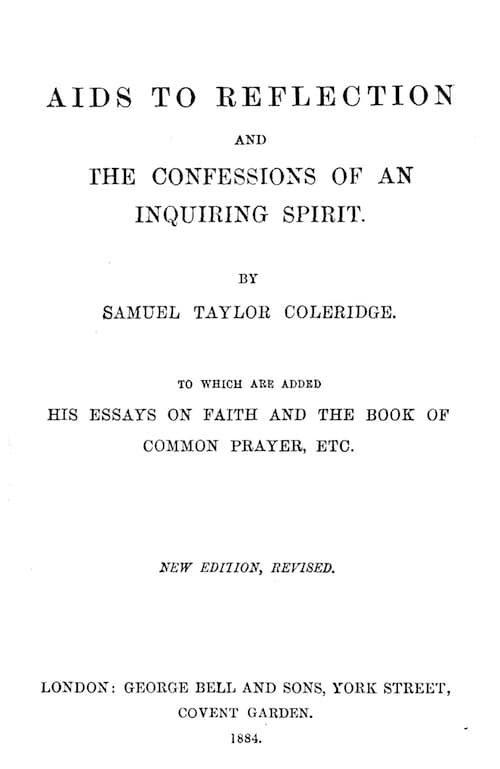
Editions

X-Ray
“Water, water, everywhere,And all the boards did shrink;Water, water, everywhere,Nor any drop to drink.””
— Samuel Taylor Coleridge
“Day after day, day after day,We stuck, nor breath nor motion;As idle as a painted shipUpon a painted ocean.””
— Samuel Taylor Coleridge
“Alone, alone, all, all alone, Alone on a wide wide sea! And never a saint took pity on My soul in agony.””
— Samuel Taylor Coleridge
“He prayeth best, who loveth bestAll things both great and small;For the dear God who loveth us,He made and loveth all.””
— Samuel Taylor Coleridge
“Like one, that on a lonesome roadDoth walk in fear and dread,And having once turned round walks on,And turns no more his head;Because he knows, a frightful fiendDoth close behind him tread.””
— Samuel Taylor Coleridge
“Her lips were red, her looks were free, Her locks were yellow as gold:Her skin was white as leprosy,The Nightmare Life-in-Death was she, Who thicks man's blood with cold.””
— Samuel Taylor Coleridge
“Since then, at an uncertain hour, That agony returns: And till my ghastly tale is told, This heart within me burns.””
— Samuel Taylor Coleridge
“The many men, so beautiful!And they all dead did lie:And a thousand thousand slimy thingsLived on; and so did I.””
— Samuel Taylor Coleridge
“The fair breeze blew,The white foam flew,And the forrow followed free.We were the first to ever burst into the silent sea.””
— Samuel Taylor Coleridge
Link to this book
Add a free, dofollow link to Lex on your blog, forum, syllabus, or reading list.

<a href="https://lex-books.com/book/the-rime-of-the-ancient-mariner-6009fee4-8122-46a7-bad3-ba8f79a9cd3b"><img src="https://lex-books.com/badges/read-on-lex.svg" alt="Read The Rime of the Ancient Mariner by Samuel Taylor Coleridge free on Lex" width="160" height="40"></a>[](https://lex-books.com/book/the-rime-of-the-ancient-mariner-6009fee4-8122-46a7-bad3-ba8f79a9cd3b)[url=https://lex-books.com/book/the-rime-of-the-ancient-mariner-6009fee4-8122-46a7-bad3-ba8f79a9cd3b][img]https://lex-books.com/badges/read-on-lex.svg[/img][/url]Read The Rime of the Ancient Mariner by Samuel Taylor Coleridge free on Lex: https://lex-books.com/book/the-rime-of-the-ancient-mariner-6009fee4-8122-46a7-bad3-ba8f79a9cd3bCite this book
Reading this edition for a paper or guide? Copy a citation.
Coleridge, Samuel Taylor. The Rime of the Ancient Mariner. Lex, lex-books.com/book/the-rime-of-the-ancient-mariner-6009fee4-8122-46a7-bad3-ba8f79a9cd3b.Coleridge, S. T. (1798). The Rime of the Ancient Mariner. Lex. https://lex-books.com/book/the-rime-of-the-ancient-mariner-6009fee4-8122-46a7-bad3-ba8f79a9cd3bColeridge, Samuel Taylor. The Rime of the Ancient Mariner. Lex. https://lex-books.com/book/the-rime-of-the-ancient-mariner-6009fee4-8122-46a7-bad3-ba8f79a9cd3b.