The Red Thumb Mark
1907
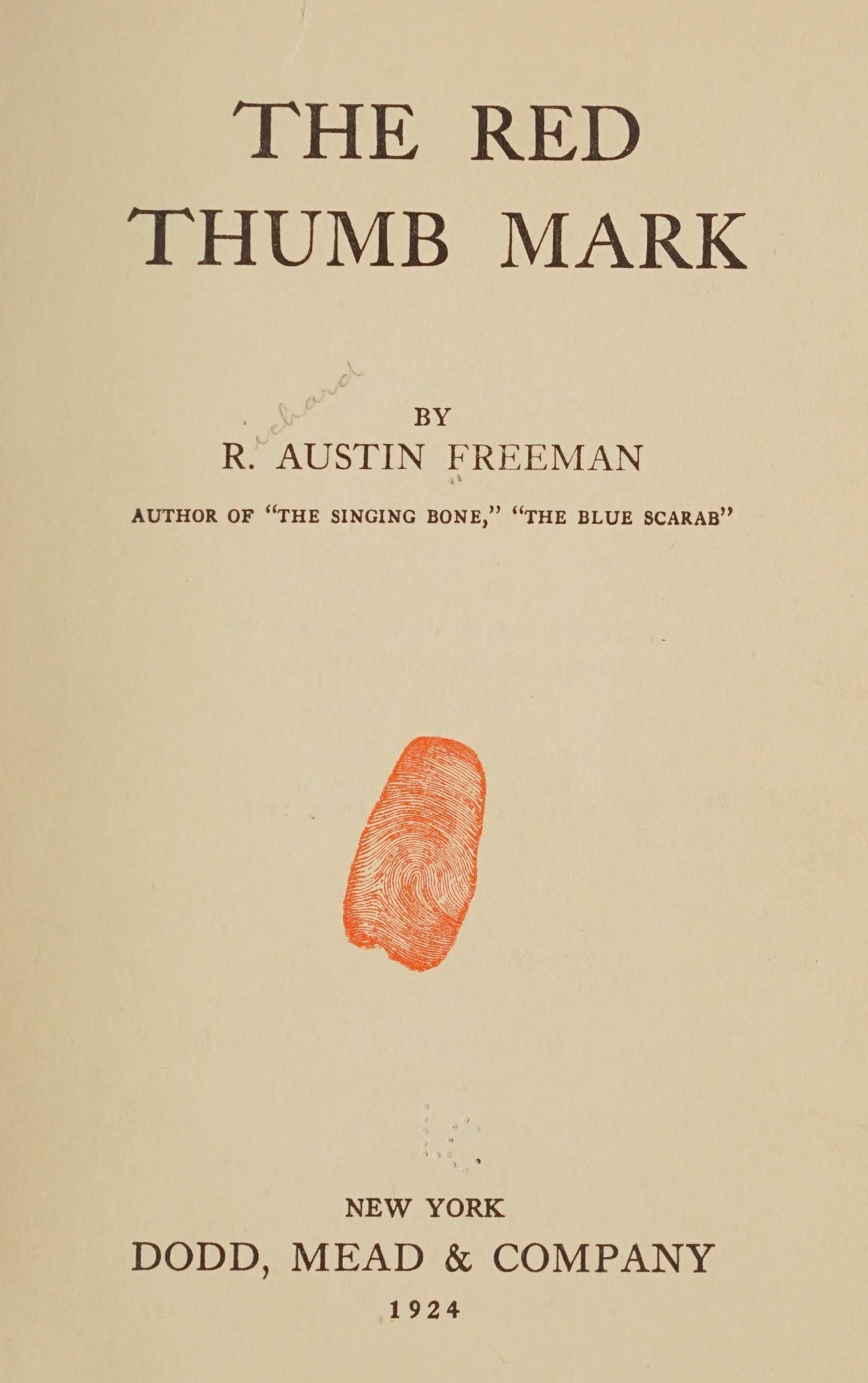
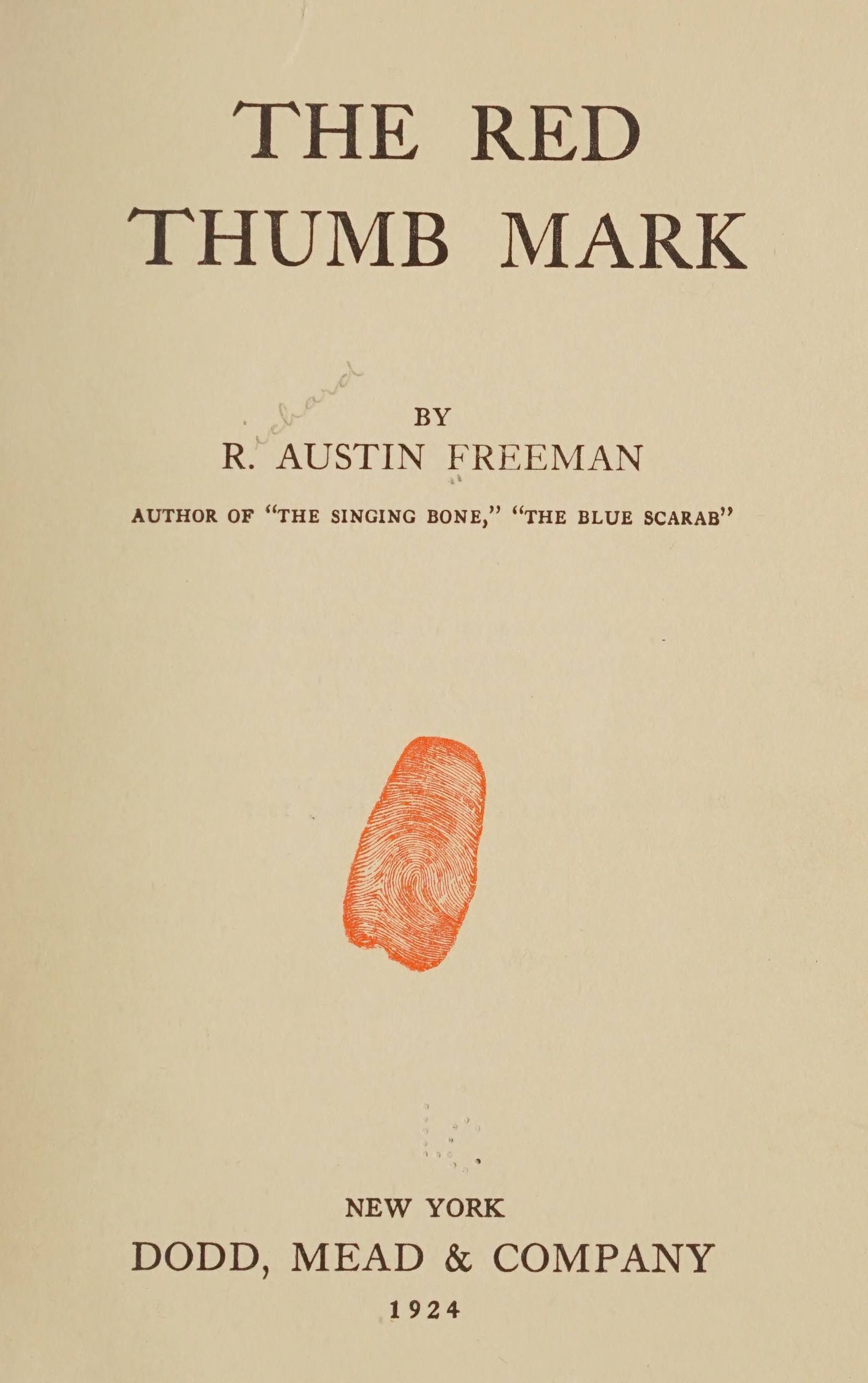
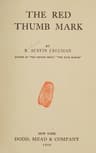
The Red Thumb Mark opens a window into a world where science was just beginning to reshape justice. In 1907, fingerprint evidence was still startling in courtrooms, and R. Austin Freeman built his debut Thorndyke novel around this technological leap. Dr. John Thorndyke, a physician turned legal investigator, enters not through a crime scene but through a civil case: his client, Reuben Hornby, stands accused of stealing a parcel of diamonds, and the only evidence is a bloody thumbprint found at the scene. What follows is forensic reasoning as drama, as Thorndyke dissects the evidence with the precision of a scientist and the patience of a barrister. The novel also introduced Freeman's radical structural innovation, the inverted detective story, where the crime is revealed first and the puzzle becomes how proof can be constructed. A mysterious young woman, Miss Juliet Gibson, adds human stakes to the legal chess game, believing in Hornby's innocence when no one else will. This is detective fiction as intellectual puzzle, rooted in the genuine arcana of early forensic science, from fingerprint classification to document analysis. It endures because it captures a moment when science promised to unmask the truth with certainty, and because Thorndyke remains one of the genre's most uncompromisingly cerebral detectives.
Editions
Link to this book
Add a free, dofollow link to Lex on your blog, forum, syllabus, or reading list.

<a href="https://lex-books.com/book/the-red-thumb-mark-46c0161b-df20-48f2-b9ed-3facf350974e"><img src="https://lex-books.com/badges/read-on-lex.svg" alt="Read The Red Thumb Mark by R. Austin Freeman free on Lex" width="160" height="40"></a>[](https://lex-books.com/book/the-red-thumb-mark-46c0161b-df20-48f2-b9ed-3facf350974e)[url=https://lex-books.com/book/the-red-thumb-mark-46c0161b-df20-48f2-b9ed-3facf350974e][img]https://lex-books.com/badges/read-on-lex.svg[/img][/url]Read The Red Thumb Mark by R. Austin Freeman free on Lex: https://lex-books.com/book/the-red-thumb-mark-46c0161b-df20-48f2-b9ed-3facf350974eCite this book
Reading this edition for a paper or guide? Copy a citation.
Freeman, R. Austin. The Red Thumb Mark. Lex, lex-books.com/book/the-red-thumb-mark-46c0161b-df20-48f2-b9ed-3facf350974e.Freeman, R. A. (1907). The Red Thumb Mark. Lex. https://lex-books.com/book/the-red-thumb-mark-46c0161b-df20-48f2-b9ed-3facf350974eFreeman, R. Austin. The Red Thumb Mark. Lex. https://lex-books.com/book/the-red-thumb-mark-46c0161b-df20-48f2-b9ed-3facf350974e.