The Octopus: A Story of California
1901
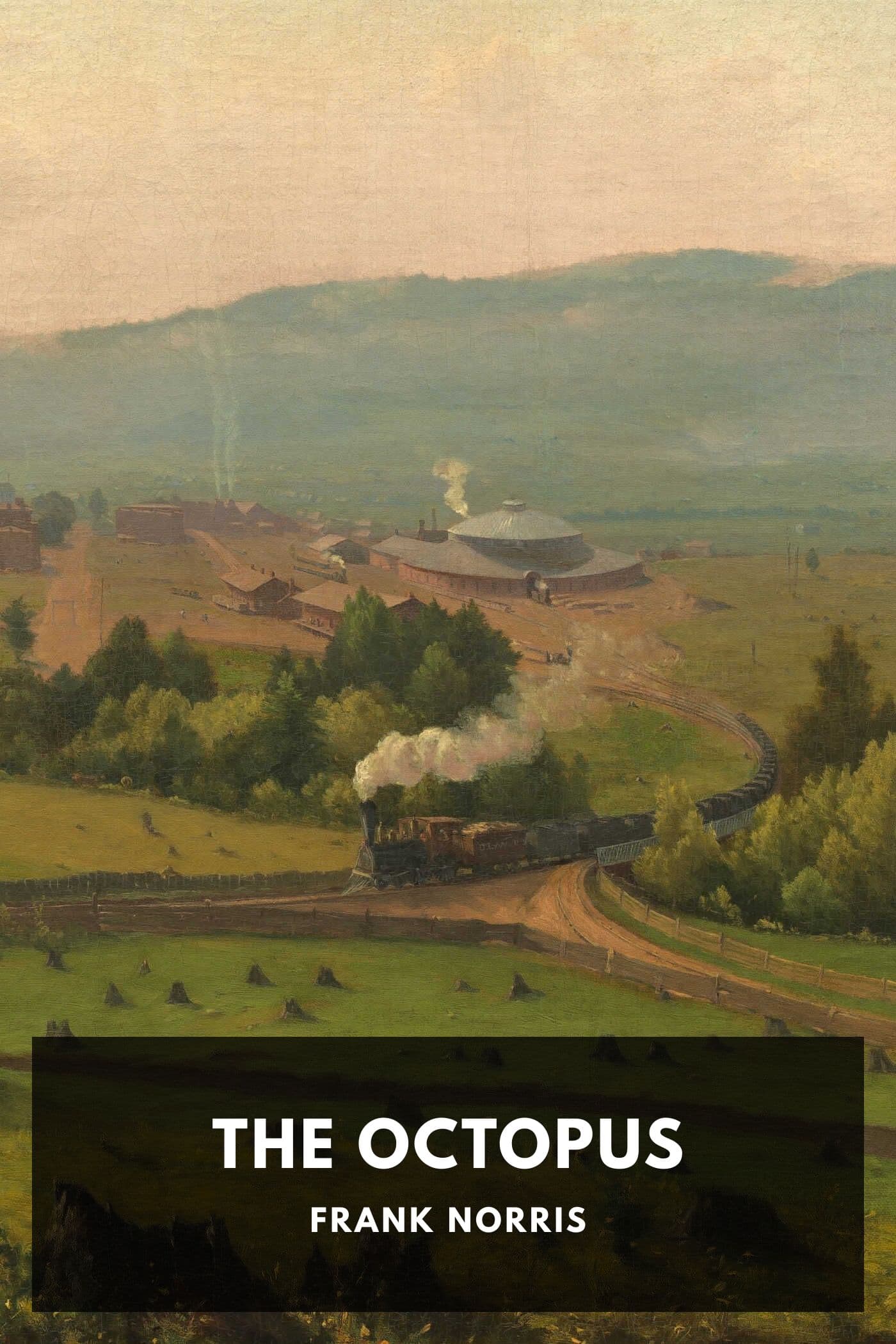
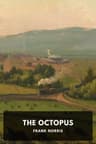
Frank Norris channeled a bloody real-life conflict into this thunderous American epic. The Octopus dramatizes the 1880 Mussel Slough confrontation between California wheat farmers and the Southern Pacific Railroad, transforming a regional dispute into a sweeping meditation on power, survival, and the cost of progress. The railroad isn't merely a corporation in Norris's hands, it becomes a living metaphor, its steel tentacles reaching across the San Joaquin Valley to grasp everything in its path: land, lives, dreams. Norris follows poet Presley as he abandons his romantic cycling tour of the West to bear witness to the farmers' desperate stand against monopolistic forces. The prose is muscular and naturalistic, rich with the dust and grit of the wheat fields, the psychological weight of drought and debt. What elevates The Octopus beyond mere protest novel is Norris's clear-eyed refusal to idealize anyone, the farmers exploit the land with the same ruthless efficiency they accuse the railroad of using against them. This is American naturalism at its most ambitious: a vision of individuals crushed beneath the weight of forces larger than themselves, and a foundational work that would influence everything from muckraking journalism to Steinbeck's California novels.
Editions
X-Ray
“Always blame conditions, not men””
— Frank Norris
“If I were to name the one crying evil of American life, Mr. Derrick, it would be the indifference of the better people to public affairs. It is so in all our great centres. There are other great trusts, God knows, in the United States besides our own dear P. and S.W. Railroad. Every state has its own grievance. If it is not a railroad trust, it is a sugar trust, or an oil trust, or an industrial trust, that exploits the People, because the people allow it. The indifference of the People is the opportunity of the despot. It is as true as that the whole is greater than the part, and the maxim is so old that it is trite - it is laughable. It is neglected and disused for the sake of some new ingenious and complicated theory, some wonderful scheme of reorganization, the fact remains, nevertheless, simple, fundamental, everlasting. The People have but to say 'No' and not the strongest tyranny, political, religious, or financial, that was ever organized, could survive one week.””
— Frank Norris
“Believe this, young man," exclaimed Shelgrim, layinga thick powerful forefinger on the table to emphasize his words, "try to believe this - to begin with - . Where there is a demand sooner or later there will be a supply. Mr. Derrick, does he grow his wheat? The Wheat grows itself. What does he count for? Does he supply the force? What do I count for? Do I build the Railroad? You are dealing with forces, young man, when you speak of Wheat and the Railroads, not with men. There is the Wheat, the supply. It must be carried to feed the People. There is the demand. The Wheat is one force, the Railroad, another, and there is the law that governs them - supply and demand. Men have only little to do in the whole business. Complications may arise, conditions that bear hard on the individual - crush him maybe - as inevitably as it will grow. If you want to fasten the blame of the affair at Los Muertos on any one person, you will make a mistake. Blame conditions, not men.””
— Frank Norris
“Wait till you see-at the same time that your family is dying for lack of bread-a hundred thousand acres of wheat-millions of bushels of food-grabbed and gobbled by the Railroad Trust, and then talk of moderation. That talk is just what the Trust wants to hear. It ain't frightened of that. There's one thing only it does listen to, one things it is frightened of-the people with dynamite in their hands,-six inches of plugged gaspipe. That talks.””
— Frank Norris
“He strove for the diapason, the great song that should embrace in itself a whole epoch, a complete era, the voice of an entire people, wherein all people should be included”
— Frank Norris
“It could be foreseen that morally he was of that sort who avoid evil through good taste, lack of decision, and want of opportunity.””
— Frank Norris
“Work, food, and sleep, all life reduced to its bare essentials, uncomplex, honest, healthy””
— Frank Norris
Link to this book
Add a free, dofollow link to Lex on your blog, forum, syllabus, or reading list.

<a href="https://lex-books.com/book/the-octopus-a-story-of-california-e9fd399a-58c1-4aa7-ac54-f886c7b39769"><img src="https://lex-books.com/badges/read-on-lex.svg" alt="Read The Octopus: A Story of California by Frank Norris free on Lex" width="160" height="40"></a>[](https://lex-books.com/book/the-octopus-a-story-of-california-e9fd399a-58c1-4aa7-ac54-f886c7b39769)[url=https://lex-books.com/book/the-octopus-a-story-of-california-e9fd399a-58c1-4aa7-ac54-f886c7b39769][img]https://lex-books.com/badges/read-on-lex.svg[/img][/url]Read The Octopus: A Story of California by Frank Norris free on Lex: https://lex-books.com/book/the-octopus-a-story-of-california-e9fd399a-58c1-4aa7-ac54-f886c7b39769Cite this book
Reading this edition for a paper or guide? Copy a citation.
Norris, Frank. The Octopus: A Story of California. Lex, lex-books.com/book/the-octopus-a-story-of-california-e9fd399a-58c1-4aa7-ac54-f886c7b39769.Norris, F. (1901). The Octopus: A Story of California. Lex. https://lex-books.com/book/the-octopus-a-story-of-california-e9fd399a-58c1-4aa7-ac54-f886c7b39769Norris, Frank. The Octopus: A Story of California. Lex. https://lex-books.com/book/the-octopus-a-story-of-california-e9fd399a-58c1-4aa7-ac54-f886c7b39769.