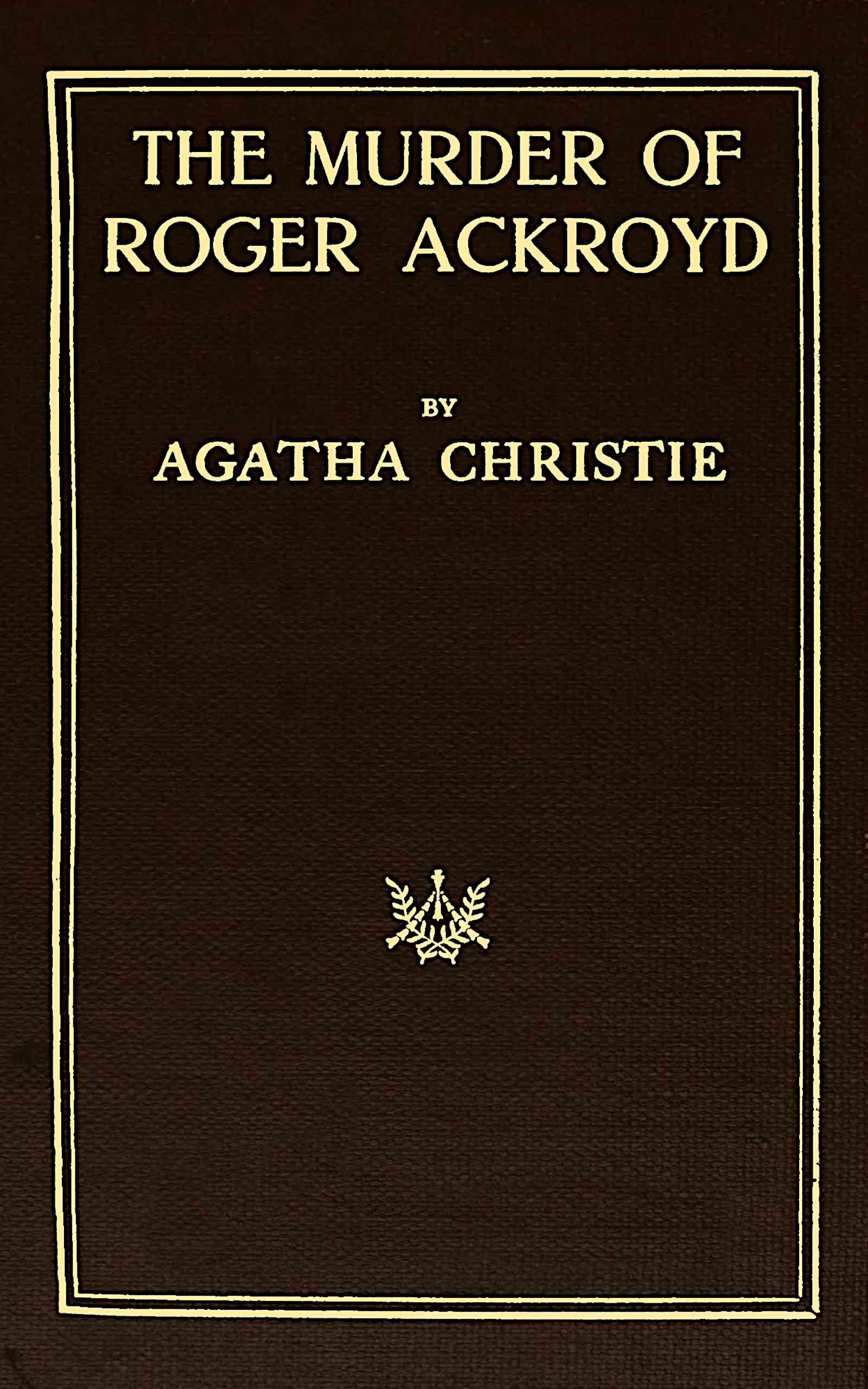
The Murder of Roger Ackroyd
1926
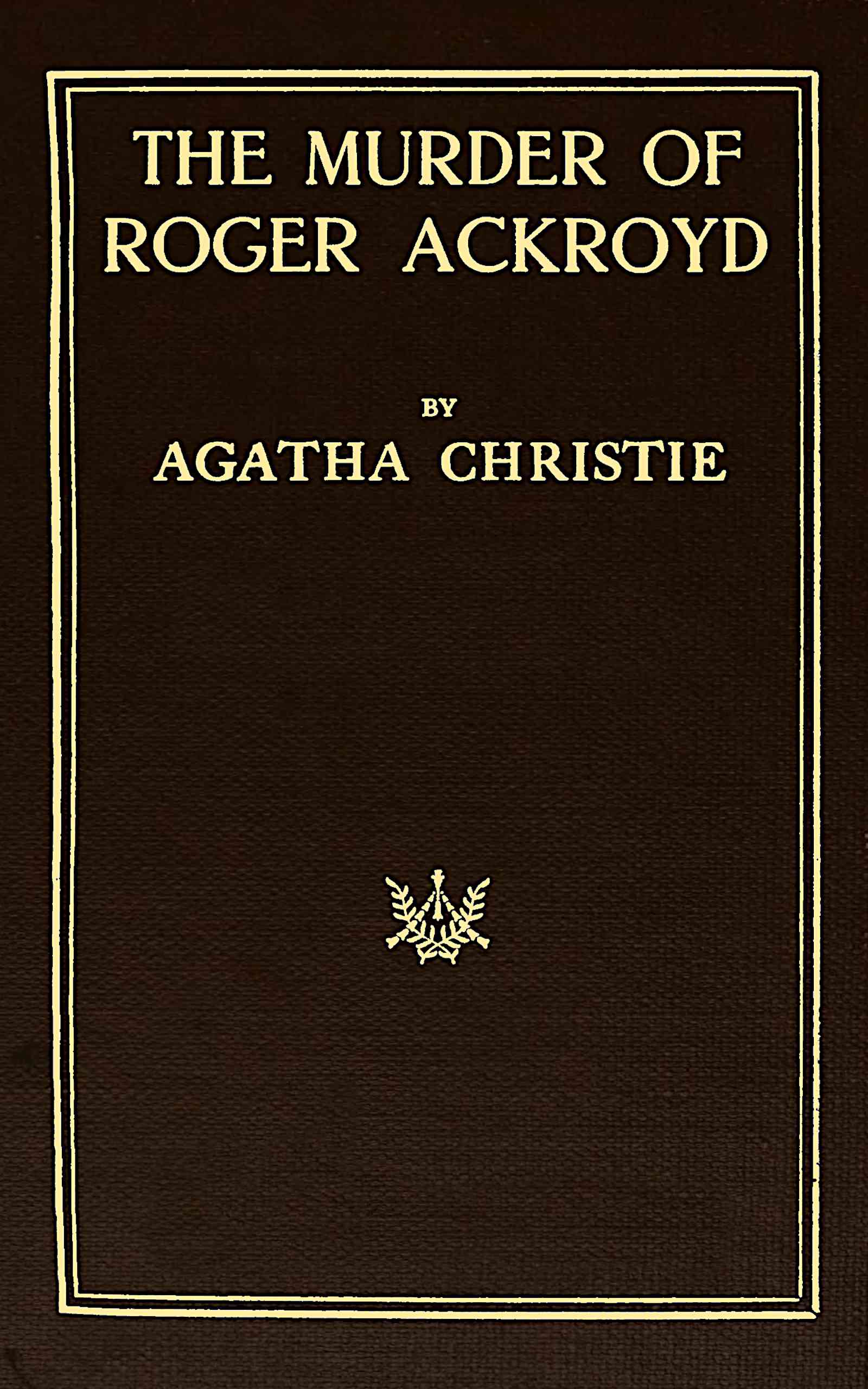
This is the one that broke the rules. When Agatha Christie published The Murder of Roger Ackroyd in 1926, she did something no mystery writer had dared: she broke an unspoken pact with the reader. The result sparked outrage, then admiration, then decades of imitation. The village of King's Abbot reels from two deaths in two days. First Mrs. Ferrars succumbs to Veronal, and whispers spread about her secret past with the wealthy Roger Ackroyd. Then Ackroyd himself is found murdered in his study, a dagger in his back. When the great Hercule Poirot arrives to investigate, he faces a puzzle wrapped in lies: a confession letter that arrives too late, a household full of suspects with secrets, and a narrator who may not be telling the entire truth. The twist that follows shattered detective fiction conventions and has kept readers arguing for nearly a century. It is, simply, the most notorious solution in mystery fiction. And yet the real achievement lies in what comes before: a perfectly constructed puzzle box of alibis, motives, and red herrings, written with the cool precision of a surgeon. This is the novel against which all others are measured.
Editions

X-Ray
“The truth, however ugly in itself, is always curious and beautiful to seekers after it.””
— Agatha Christie
“It is completely unimportant. That is why it is so interesting.””
— Agatha Christie
“You should employ your little grey cells””
— Agatha Christie
“It is odd how, when you have a secret belief of your own which you do not wish to acknowledge, the voicing of it by someone else will rouse you to a fury of denial.””
— Agatha Christie
“Women observe subconsciously a thousand little details, without knowing that they are doing so. Their subconscious mind adds these little things together”
— Agatha Christie
“I have no pity for myself either. So let it be Veronal. But I wish Hercule Poirot had never retired from work and come here to grow vegetable marrows.””
— Agatha Christie
“Oh! money! All the troubles in the world can be put down to money”
— Agatha Christie
“Fortunately words, ingeniously used, will serve to mask the ugliness of naked facts.””
— Agatha Christie
“The things young women read nowadays and profess to enjoy positively frighten me.””
— Agatha Christie
Link to this book
Add a free, dofollow link to Lex on your blog, forum, syllabus, or reading list.

<a href="https://lex-books.com/book/the-murder-of-roger-ackroyd-81b58bbe-5f1b-48fa-a772-a9fd10133faf"><img src="https://lex-books.com/badges/read-on-lex.svg" alt="Read The Murder of Roger Ackroyd by Agatha Christie free on Lex" width="160" height="40"></a>[](https://lex-books.com/book/the-murder-of-roger-ackroyd-81b58bbe-5f1b-48fa-a772-a9fd10133faf)[url=https://lex-books.com/book/the-murder-of-roger-ackroyd-81b58bbe-5f1b-48fa-a772-a9fd10133faf][img]https://lex-books.com/badges/read-on-lex.svg[/img][/url]Read The Murder of Roger Ackroyd by Agatha Christie free on Lex: https://lex-books.com/book/the-murder-of-roger-ackroyd-81b58bbe-5f1b-48fa-a772-a9fd10133fafCite this book
Reading this edition for a paper or guide? Copy a citation.
Christie, Agatha. The Murder of Roger Ackroyd. Lex, lex-books.com/book/the-murder-of-roger-ackroyd-81b58bbe-5f1b-48fa-a772-a9fd10133faf.Christie, A. (1926). The Murder of Roger Ackroyd. Lex. https://lex-books.com/book/the-murder-of-roger-ackroyd-81b58bbe-5f1b-48fa-a772-a9fd10133fafChristie, Agatha. The Murder of Roger Ackroyd. Lex. https://lex-books.com/book/the-murder-of-roger-ackroyd-81b58bbe-5f1b-48fa-a772-a9fd10133faf.