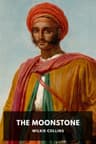
The Moonstone
1868
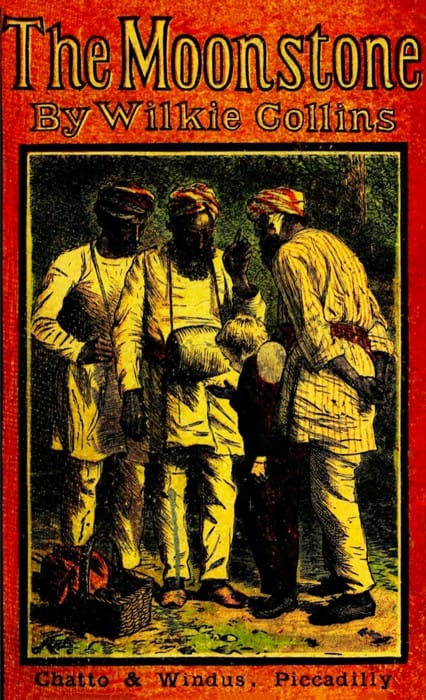
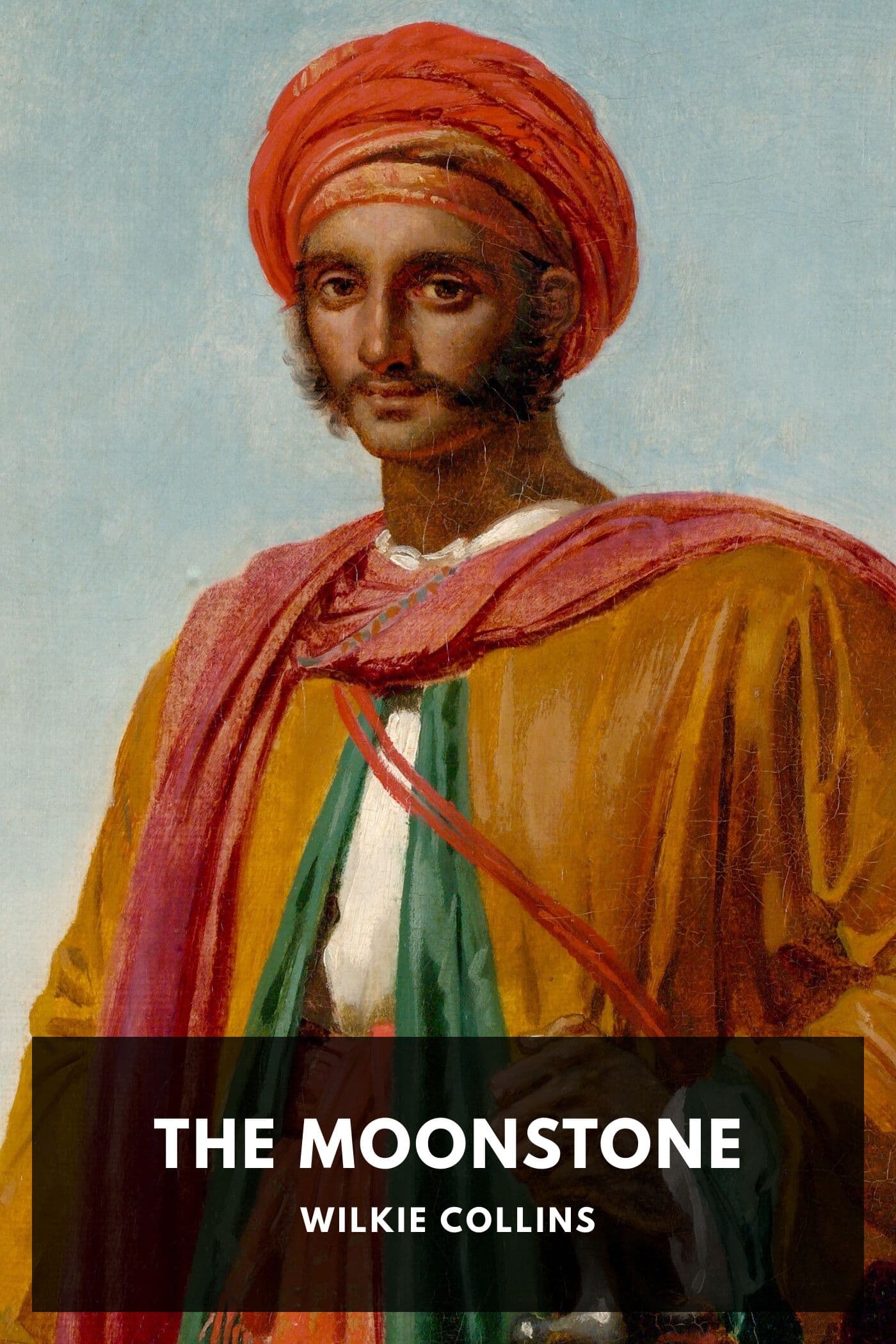
A priceless Indian diamond disappears from a young woman's bedroom on her birthday, and the theft sets off a mystery that would invent an entire genre. The Moonstone, stolen from a temple of Vishnu and smuggled to England by a disgraced colonel, carries an ancient curse with it and the relentless印度 jugglers who have followed it across the world. What follows is a puzzle presented in fragments, narrated by a rotating cast of suspects, witnesses, and one hilariously unreliable steward named Gabriel Betteredge who consults a self-help book on housekeeping for guidance in all life decisions. Detective fiction begins here, in the person of Sergeant Cuff, a orchid-obsessed investigator whose methods feel startlingly modern. But this is no mere puzzle box. The novel vibrates with the guilt of empire, the supernatural unease of stolen sacred things, and the social fractures beneath Victorian propriety. Collins gives us no easy answers about guilt or innocence, only the pleasure of watching a mystery unfold through contradictory testimonies. It is funny, eerie, and devastatingly clever.
Editions
X-Ray
“Your tears come easy, when you're young, and beginning the world. Your tears come easy, when you're old, and leaving it. I burst out crying.””
— Wilkie Collins
“We had our breakfasts--whatever happens in a house, robbery or murder, it doesn't matter, you must have your breakfast.””
— Wilkie Collins
“You are not to take it, if you please, as the saying of an ignorant man, when I express my opinion that such a book as ROBINSON CRUSOE never was written, and never will be written again. I have tried that book for years”
— Wilkie Collins
“She was unlike most girls of her age, in this--that she had ideas of her own.””
— Wilkie Collins
“Every human institution (Justice included) will stretch a little, if only you pull it in the right way.””
— Wilkie Collins
“I haven't much time to be fond of anything ... but when I a moment's fondness to bestow, most times ... the roses get it. I began my life among them in my father's nursery garden, and I shall end my life among them, if I can. Yes. One of these days (please God) I shall retire from catching thieves, and try my hand at growing roses.””
— Wilkie Collins
“At the age when we are all of us most apt to take our colouring, in the form of a reflection from the colouring of other people, he had been sent abroad, and had been passed on from one nation to another, before there was time for any one colouring more than another to settle itself on him firmly. As a consequence of this, he had come back with so many different sides to his character, all more or less jarring with each other, that he seemed to pass his life in a state of perpetual contradiction with himself. He could be a busy man, and a lazy man; cloudy in the head, and clear in the head; a model of determination, and a spectacle of helplessness, all together. He had his French side, and his German side, and his Italian side--the original English foundation showing through, every now and then, as much as to say, "Here I am, sorely transmogrified, as you see, but there's something of me left at the bottom of him still.””
— Wilkie Collins
“I am (thank God!) constitutionally superior to reason.””
— Wilkie Collins
“And earth was heaven a little the worse for wear. And heaven was earth, done up again to look like new. ””
— Wilkie Collins
Link to this book
Add a free, dofollow link to Lex on your blog, forum, syllabus, or reading list.

<a href="https://lex-books.com/book/the-moonstone-c75c5e01-e594-4b03-af3f-d853b9077e42"><img src="https://lex-books.com/badges/read-on-lex.svg" alt="Read The Moonstone by Wilkie Collins free on Lex" width="160" height="40"></a>[](https://lex-books.com/book/the-moonstone-c75c5e01-e594-4b03-af3f-d853b9077e42)[url=https://lex-books.com/book/the-moonstone-c75c5e01-e594-4b03-af3f-d853b9077e42][img]https://lex-books.com/badges/read-on-lex.svg[/img][/url]Read The Moonstone by Wilkie Collins free on Lex: https://lex-books.com/book/the-moonstone-c75c5e01-e594-4b03-af3f-d853b9077e42Cite this book
Reading this edition for a paper or guide? Copy a citation.
Collins, Wilkie. The Moonstone. Lex, lex-books.com/book/the-moonstone-c75c5e01-e594-4b03-af3f-d853b9077e42.Collins, W. (1868). The Moonstone. Lex. https://lex-books.com/book/the-moonstone-c75c5e01-e594-4b03-af3f-d853b9077e42Collins, Wilkie. The Moonstone. Lex. https://lex-books.com/book/the-moonstone-c75c5e01-e594-4b03-af3f-d853b9077e42.