The Invasion
1906
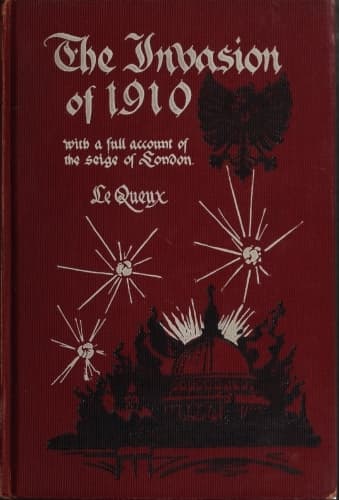
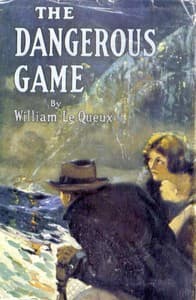
In 1906, William Le Queux wrote a nightmare that haunted the British imagination. Serialized in the Daily Mail to enormous public appetite, The Invasion imagines German forces landing on English shores while the nation sleeps, communications collapse, and London descends into chaos. The novel pulses with Edwardian anxieties about German naval buildup, industrial espionage, and the terrifying possibility that the empire's defenses had grown complacent. As German soldiers occupy half of London, a junior Parliamentarian rallies resistance, and a newly formed army fights to liberate the capital. But the war's end brings no easy peace. The novel functions as both gripping thriller and political polemic, a document of pre-WWI Britain paralyzed by fear of the very conflict it could not yet imagine. It endured because Le Queux had diagnosed something real: a great power uncertain of its own strength, staring into an abyss it could not yet see. Readers drawn to wartime prophecy, early dystopian fiction, or the cultural fears that preceded the twentieth century's great catastrophes will find this novel as unsettling as it was a century ago.
Editions

X-Ray
“Would not some effort be made to repel the invaders? Surely if we had lost our command of the sea the War Office could, by some means, assemble sufficient men to at least protect London? This was the cry of the wild, turbulent crowd surging through the City and West End, as the blood-red sun sank into the west, flooding London in its warm afterglow--a light in the sky that was prophetic of red ruin and of death to those wildly excited millions.””
— William Le Queux
Link to this book
Add a free, dofollow link to Lex on your blog, forum, syllabus, or reading list.

<a href="https://lex-books.com/book/the-invasion-61991e26-2376-4e16-a71d-08d1e5291953"><img src="https://lex-books.com/badges/read-on-lex.svg" alt="Read The Invasion by William Le Queux free on Lex" width="160" height="40"></a>[](https://lex-books.com/book/the-invasion-61991e26-2376-4e16-a71d-08d1e5291953)[url=https://lex-books.com/book/the-invasion-61991e26-2376-4e16-a71d-08d1e5291953][img]https://lex-books.com/badges/read-on-lex.svg[/img][/url]Read The Invasion by William Le Queux free on Lex: https://lex-books.com/book/the-invasion-61991e26-2376-4e16-a71d-08d1e5291953Cite this book
Reading this edition for a paper or guide? Copy a citation.
Queux, William Le. The Invasion. Lex, lex-books.com/book/the-invasion-61991e26-2376-4e16-a71d-08d1e5291953.Queux, W. L. (1906). The Invasion. Lex. https://lex-books.com/book/the-invasion-61991e26-2376-4e16-a71d-08d1e5291953Queux, William Le. The Invasion. Lex. https://lex-books.com/book/the-invasion-61991e26-2376-4e16-a71d-08d1e5291953.