The Coral Island
1857
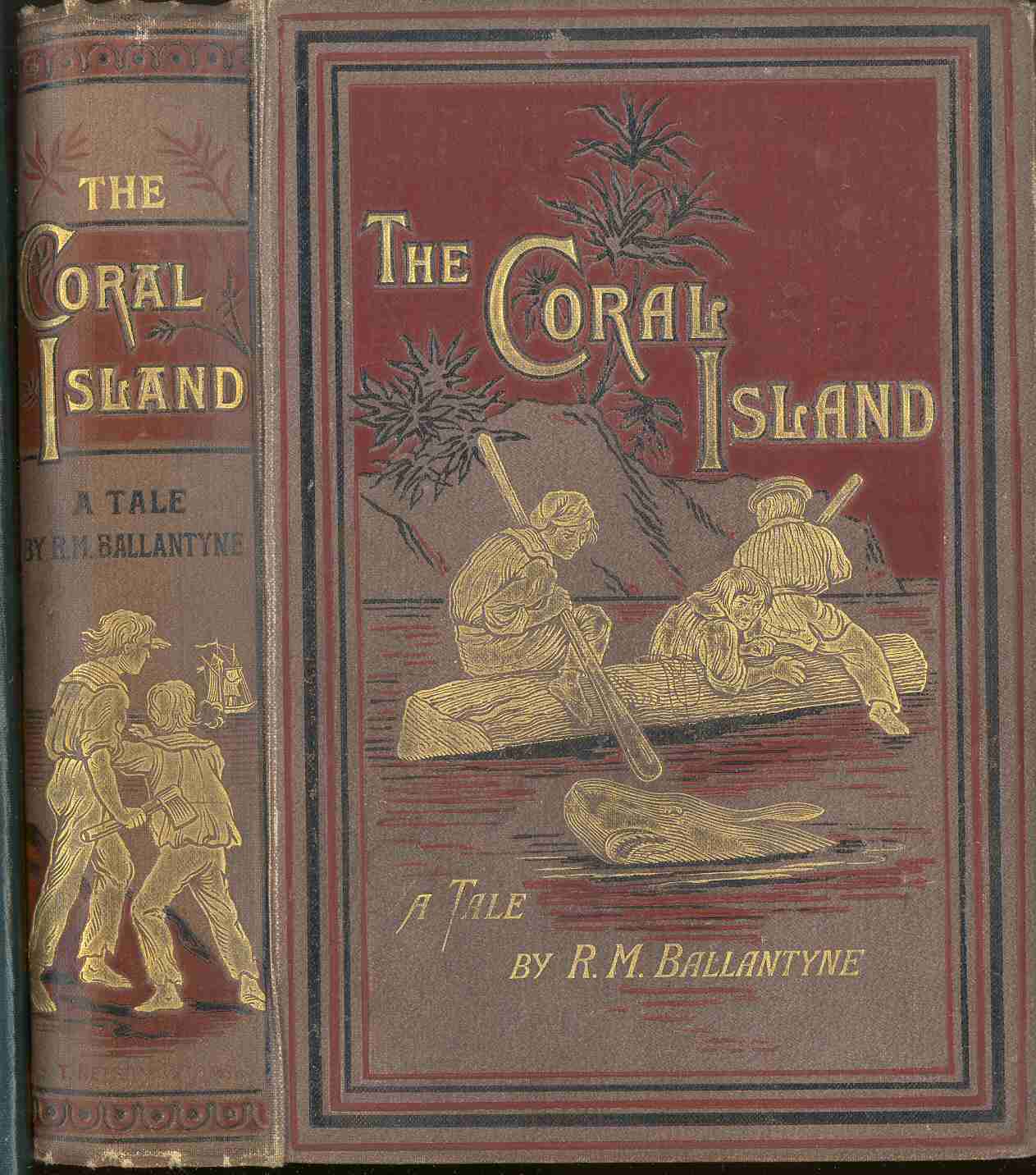
A shipwreck leaves three English boys stranded on a Pacific coral island in this 1858 adventure that helped invent juvenile fiction as we know it. Ralph Rover, Jack Martin, and Peterkin Gay wash ashore with nothing but a telescope and a broken pocketknife, their initial wonder at the island's natural abundance slowly curdling into terror when cannibals and then pirates arrive. What unfolds is a tale of pluck, piety, and providential survival that defined the Robinsonade genre for generations. Yet the book carries a sharper edge than its children's adventure packaging suggests: beneath the story's earnest Christian moralizing lies a fascinating artifact of Victorian imperialism, a portrait of empire's assumptions about civilization, savagery, and the racial hierarchy. It remained a staple of British and American classrooms for over a century, and its true legacy may be the shadow it casts: this is the book William Golding read, loved, and then inverted in Lord of the Flies, asking what happens when the children are the monsters all along.
Editions
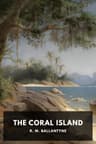
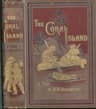
X-Ray
“and I have always found, though I am unable to account for it, that daylight banishes many of the fears that are apt to assail us in the dark.””
— R. M. Ballantyne
“Cat," said Peterkin, turning his head a little on one side, "I love you.””
— R. M. Ballantyne
“I have since learned, however, that this want of observation is a sad and very common infirmity of human nature, there being hundreds of persons before whose eyes the most wonderful things are passing every day who nevertheless, are totally ignorant of them. I therefore have to record my sympathy with such persons, and to recommend to them a course of conduct which I have now for a long time myself adopted”
— R. M. Ballantyne
“The only place among the southern islands where a ship can put in and get what it wants in comfort is where the Gospel has been sent to. For my part, I don't know and I don't care what the Gospel does to them, but I know that when any o' the islands chance to get it, trade goes smooth and easy.””
— R. M. Ballantyne
“we were a very insufficient crew for such a vessel; and if any one had proposed to us to make such a voyage in it before we had been forced to go through so many hardships from necessity, we would have turned away with pity from the individual making such proposal as from a madman. I pondered this a good deal, and at last concluded that men do not know how much they are capable of doing till they try, and that we should never give way to despair in any undertaking, however difficult it may seem”
— R. M. Ballantyne
“From all these things I came at length to understand that things very opposite and dissimilar in themselves, when united, do make an agreeable whole; as, for example, we three on this our island, although most unlike in many things, when united, made a trio so harmonious that I question if there ever met before such an agreeable triumvirate. There was, indeed, no note of discord whatever in the symphony we played together on that sweet Coral Island; and I am now persuaded that this was owing to our having been all tuned to the same key”
— R. M. Ballantyne
“A feathered arrow without a barb,” said he, “is a good weapon, but a barbed arrow without feathers is utterly useless.””
— R. M. Ballantyne
Link to this book
Add a free, dofollow link to Lex on your blog, forum, syllabus, or reading list.

<a href="https://lex-books.com/book/the-coral-island-6c3b45a0-b136-469d-82ef-f16536b0293a"><img src="https://lex-books.com/badges/read-on-lex.svg" alt="Read The Coral Island by R. M. Ballantyne free on Lex" width="160" height="40"></a>[](https://lex-books.com/book/the-coral-island-6c3b45a0-b136-469d-82ef-f16536b0293a)[url=https://lex-books.com/book/the-coral-island-6c3b45a0-b136-469d-82ef-f16536b0293a][img]https://lex-books.com/badges/read-on-lex.svg[/img][/url]Read The Coral Island by R. M. Ballantyne free on Lex: https://lex-books.com/book/the-coral-island-6c3b45a0-b136-469d-82ef-f16536b0293aCite this book
Reading this edition for a paper or guide? Copy a citation.
Ballantyne, R. M.. The Coral Island. Lex, lex-books.com/book/the-coral-island-6c3b45a0-b136-469d-82ef-f16536b0293a.Ballantyne, R. M. (1857). The Coral Island. Lex. https://lex-books.com/book/the-coral-island-6c3b45a0-b136-469d-82ef-f16536b0293aBallantyne, R. M.. The Coral Island. Lex. https://lex-books.com/book/the-coral-island-6c3b45a0-b136-469d-82ef-f16536b0293a.