The Consolation of Philosophy

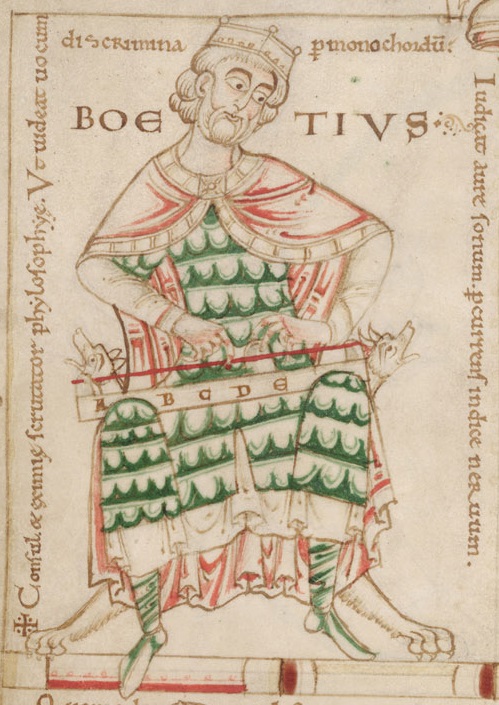
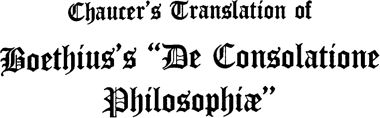
In the spring of 523 AD, the most powerful man in Rome found himself in a dungeon. Boethius had risen from scholar to consul, from teacher to trusted advisor of King Theodoric. Then, on a whisper of treason, he was thrown into prison to wait for death. What he wrote there would outlast the empire that condemned him. The Consolation of Philosophy is not a memoir of injustice, though Boethius has been wronged. It is a dialogue with Lady Philosophy herself, who descends to his cell in various guises to dismantle his complaints and guide him toward clarity. Together they dismantle the tyranny of Fortune, expose the hollowness of worldly success, and arrive at a radical proposition: that true happiness cannot be lost because it does not depend on external things. The work grapples with the oldest wound in Western thought, why evil exists in a world made by a good God, and arrives not at an answer, but at a way of bearing the question. Eight centuries later, Chaucer would translate it into English. Dante placed Boethius in his Paradise. It remains the most profound meditation on misfortune ever written, because it was written by a man who had lost everything except the capacity to think clearly about loss.
Editions


X-Ray
“Nothing is miserable unless you think it so; and on the other hand, nothing brings happiness unless you are content with it.””
— Boethius
“Who would give a law to lovers? Love is unto itself a higher law.””
— Boethius
“Nunc fluens facit tempus,nunc stans facit aeternitatum.(The now that passes produces time, the now that remains produces eternity.)””
— Boethius
“Indeed, the condition of human nature is just this; man towers above the rest of creation so long as he realizes his own nature, and when he forgets it, he sinks lower than the beasts. For other living things to be ignorant of themselves, is natural; but for man it is a defect.””
— Boethius
“Balance out the good things and the bad that have happened in your life and you will have to acknowledge that you are still way ahead. You are unhappy because you have lost those things in which you took pleasure? But you can also take comfort in the likelihood that what is now making you miserable will also pass away.””
— Boethius
“All fortune is good fortune; for it either rewards, disciplines, amends, or punishes, and so is either useful or just.””
— Boethius
“And it is because you don't know the end and purpose of things that you think the wicked and the criminal have power and happiness.””
— Boethius
“If I have fully diagnosed the cause and nature of your condition, you are wasting away in pining and longing for your former good fortune. It is the loss of this which, as your imagination works upon you, has so corrupted your mind. I know the many disguises of that monster, Fortune, and the extent to which she seduces with friendship the very people she is striving to cheat, until she overwhelms them with unbearable grief at the suddenness of her desertion””
— Boethius
“No man is rich who shakes and groansConvinced that he needs more.””
— Boethius
Link to this book
Add a free, dofollow link to Lex on your blog, forum, syllabus, or reading list.

<a href="https://lex-books.com/book/the-consolation-of-philosophy-7daad135-483a-473d-acb1-3186964e1a9e"><img src="https://lex-books.com/badges/read-on-lex.svg" alt="Read The Consolation of Philosophy by Boethius free on Lex" width="160" height="40"></a>[](https://lex-books.com/book/the-consolation-of-philosophy-7daad135-483a-473d-acb1-3186964e1a9e)[url=https://lex-books.com/book/the-consolation-of-philosophy-7daad135-483a-473d-acb1-3186964e1a9e][img]https://lex-books.com/badges/read-on-lex.svg[/img][/url]Read The Consolation of Philosophy by Boethius free on Lex: https://lex-books.com/book/the-consolation-of-philosophy-7daad135-483a-473d-acb1-3186964e1a9eCite this book
Reading this edition for a paper or guide? Copy a citation.
Boethius. The Consolation of Philosophy. Lex, lex-books.com/book/the-consolation-of-philosophy-7daad135-483a-473d-acb1-3186964e1a9e.Boethius (n.d.). The Consolation of Philosophy. Lex. https://lex-books.com/book/the-consolation-of-philosophy-7daad135-483a-473d-acb1-3186964e1a9eBoethius. The Consolation of Philosophy. Lex. https://lex-books.com/book/the-consolation-of-philosophy-7daad135-483a-473d-acb1-3186964e1a9e.