The Blacksmith's Hammer; Or, The Peasant Code: A Tale of the Grand Monarch
1910
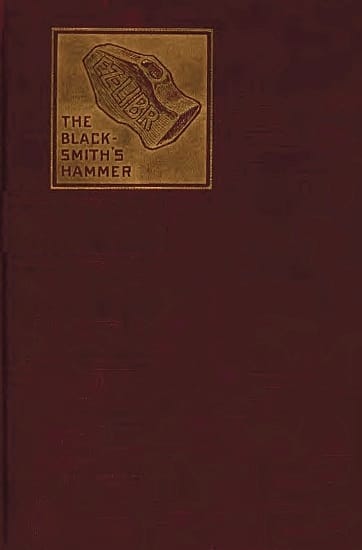
The Blacksmith's Hammer; Or, The Peasant Code: A Tale of the Grand Monarch
1910
Translated by Daniel De Leon
In Louis XIV's France, the peasants of Brittany have learned one lesson above all others: the law belongs to the king, and justice belongs to the lords who hold the king's leash. Into this world of servitude and quiet desperation comes Salaun Lebrenn, a sailor whose blood carries the memory of generations crushed beneath the feudal boot. When a ferocious storm lashes the brigantine St. Eloi, passengers and crew alike must confront not only death by drowning but the reveal of their true characters: the noble-born panicking, the common folk holding together through grim habit, and Mademoiselle Bertha of Plouernel, whose unexpected courage in the face of oblivion poses an uncomfortable question to everyone aboard about what truly separates the worthy from the worthless. Eugène Sue constructs a narrative engine of revolution here, one that uses the storm as metaphor and the slowly building anger of the Breton peasants as prophecy. This is historical fiction as polemic, as warning, as document of a people who have begun to understand that their chains are not divinely ordained but merely held in place by the fear of those who forged them. The prose crackles with the fervor of a writer who believed literature could change the world, and reading it today feels less like nostalgia than like hearing an ancestor's voice from across the centuries, still speaking, still angry, still demanding to be heard.
Editions
Link to this book
Add a free, dofollow link to Lex on your blog, forum, syllabus, or reading list.

<a href="https://lex-books.com/book/the-blacksmith-s-hammer-or-the-peasant-code-a-tale-of-the-grand-monarch-651b4e8a-7f08-4dcd-acd1-38822de1b12e"><img src="https://lex-books.com/badges/read-on-lex.svg" alt="Read The Blacksmith's Hammer; Or, The Peasant Code: A Tale of the Grand Monarch by Eugène Sue free on Lex" width="160" height="40"></a>[](https://lex-books.com/book/the-blacksmith-s-hammer-or-the-peasant-code-a-tale-of-the-grand-monarch-651b4e8a-7f08-4dcd-acd1-38822de1b12e)[url=https://lex-books.com/book/the-blacksmith-s-hammer-or-the-peasant-code-a-tale-of-the-grand-monarch-651b4e8a-7f08-4dcd-acd1-38822de1b12e][img]https://lex-books.com/badges/read-on-lex.svg[/img][/url]Read The Blacksmith's Hammer; Or, The Peasant Code: A Tale of the Grand Monarch by Eugène Sue free on Lex: https://lex-books.com/book/the-blacksmith-s-hammer-or-the-peasant-code-a-tale-of-the-grand-monarch-651b4e8a-7f08-4dcd-acd1-38822de1b12eCite this book
Reading this edition for a paper or guide? Copy a citation.
Sue, Eugène. The Blacksmith's Hammer; Or, The Peasant Code: A Tale of the Grand Monarch. Lex, lex-books.com/book/the-blacksmith-s-hammer-or-the-peasant-code-a-tale-of-the-grand-monarch-651b4e8a-7f08-4dcd-acd1-38822de1b12e.Sue, E. (1910). The Blacksmith's Hammer; Or, The Peasant Code: A Tale of the Grand Monarch. Lex. https://lex-books.com/book/the-blacksmith-s-hammer-or-the-peasant-code-a-tale-of-the-grand-monarch-651b4e8a-7f08-4dcd-acd1-38822de1b12eSue, Eugène. The Blacksmith's Hammer; Or, The Peasant Code: A Tale of the Grand Monarch. Lex. https://lex-books.com/book/the-blacksmith-s-hammer-or-the-peasant-code-a-tale-of-the-grand-monarch-651b4e8a-7f08-4dcd-acd1-38822de1b12e.