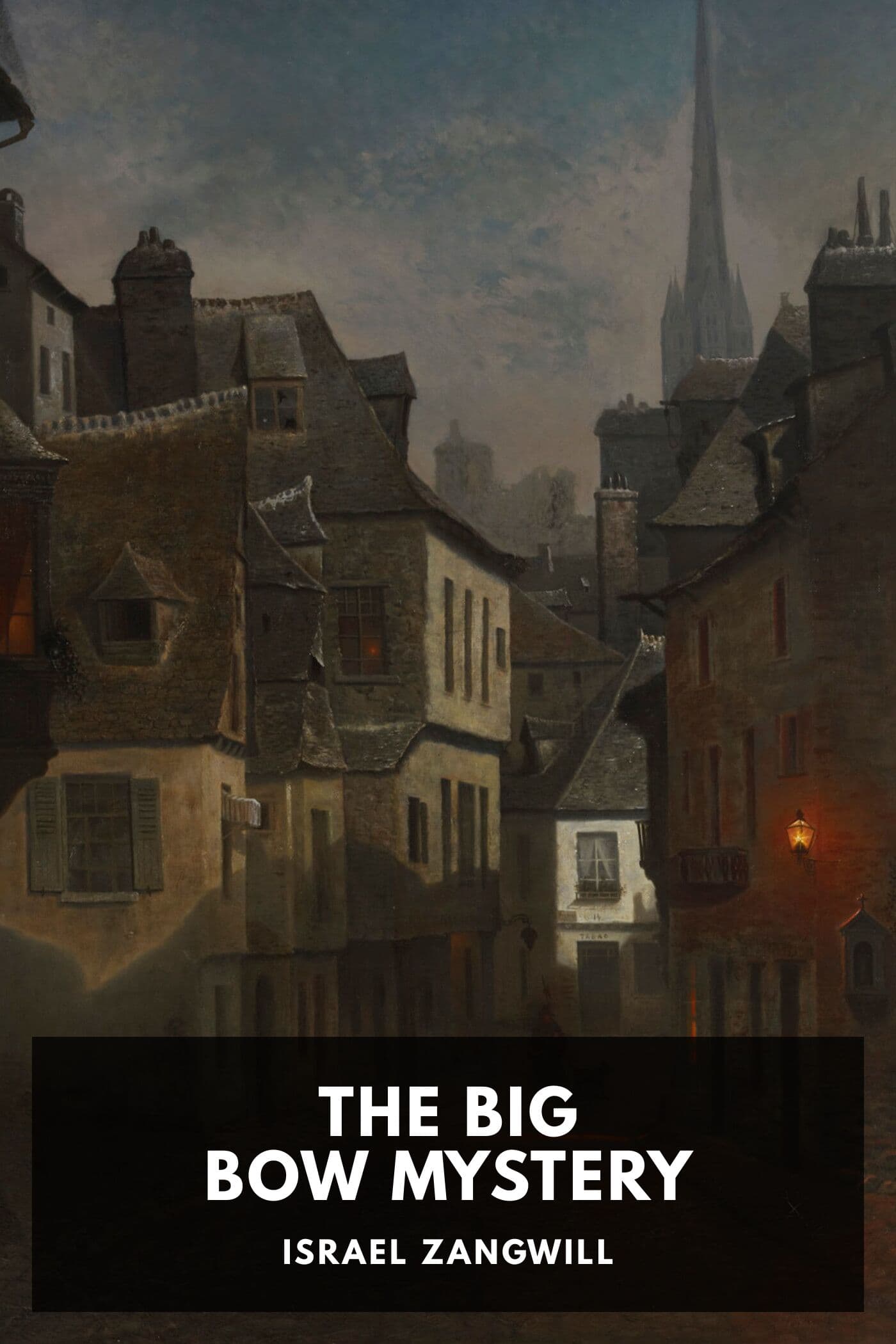
The Big Bow Mystery
It opens with a widow's panicked knock on a retired detective's door: her lodger won't wake. What follows is the genre's founding act. In a fog-drenched Bow boarding house, Arthur Constant lies dead, throat cut, in a room locked from within. No one entered. No one left. The windows were bolted. Yet a man is dead, and London is hungry for answers. Israel Zangwill's 1892 novel invented what would become one of crime fiction's most enduring puzzles: the impossible crime. But this isn't mere puzzle-solving. The humor crackles through the fog, particularly in the fractious partnership between the blustering Grodman and the priggish Inspector Wimp, whose mutual disdain makes them absolutely delightful together. The victim himself seems almost too virtuous to live, a champion of the working class whose murder defies explanation. More than a century before John Dickson Carr or Agatha Christie refined the form, Zangwill laid out every element that would obsess generations of mystery writers: the locked door, the airtight alibi, the solution that seems to demand the impossible. For anyone who's ever stared at a sealed room and wondered how.
Editions

X-Ray
“The cold cut like a many bladed knife””
— Israel Zangwill
“The Creator has – I say it in all reverence - drawn a myriad red herrings across the track, but the true scientist refuses to be baffled by superficial appearances in detecting the secrets of Nature. The vulgar herd catches at the gross apparent fact, but the man of insight knows what lies on the surfaces does lie.””
— Israel Zangwill
“There are three reasons why men of genius have long hair. One is, that they forget it is growing. The second is, that they like it. The third is, that it comes cheaper; they wear it long for the same reason they wear their hats long.””
— Israel Zangwill
“In these electric times the criminal receives a cosmopolitan reputation. It is a privilege he shares with few other artists.””
— Israel Zangwill
“In lower circles it is customary to call your wife your mother; in somewhat superior circles it is the fashion to speak of her as 'the wife' as you speak of 'the Stock Exchange' or 'the Thames', without claiming any peculiar property. Instinctively men are ashamed of being moral and domesticated.””
— Israel Zangwill
“Par," said Wilfred Wimp, "what's a alleybi? A marble?" "No, my lad," said Grodman, "it means being somewhere else when you're supposed to be somewhere." "Ah, playing truant," said Wilfred self-consciously; his schoolmaster had often proved an alibi against him. "Then Denzil will be hanged.””
— Israel Zangwill
Link to this book
Add a free, dofollow link to Lex on your blog, forum, syllabus, or reading list.

<a href="https://lex-books.com/book/the-big-bow-mystery-5cdda67f-587a-452f-b485-77575ab34d31"><img src="https://lex-books.com/badges/read-on-lex.svg" alt="Read The Big Bow Mystery by Israel Zangwill free on Lex" width="160" height="40"></a>[](https://lex-books.com/book/the-big-bow-mystery-5cdda67f-587a-452f-b485-77575ab34d31)[url=https://lex-books.com/book/the-big-bow-mystery-5cdda67f-587a-452f-b485-77575ab34d31][img]https://lex-books.com/badges/read-on-lex.svg[/img][/url]Read The Big Bow Mystery by Israel Zangwill free on Lex: https://lex-books.com/book/the-big-bow-mystery-5cdda67f-587a-452f-b485-77575ab34d31Cite this book
Reading this edition for a paper or guide? Copy a citation.
Zangwill, Israel. The Big Bow Mystery. Lex, lex-books.com/book/the-big-bow-mystery-5cdda67f-587a-452f-b485-77575ab34d31.Zangwill, I. (n.d.). The Big Bow Mystery. Lex. https://lex-books.com/book/the-big-bow-mystery-5cdda67f-587a-452f-b485-77575ab34d31Zangwill, Israel. The Big Bow Mystery. Lex. https://lex-books.com/book/the-big-bow-mystery-5cdda67f-587a-452f-b485-77575ab34d31.