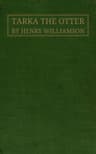
Tarka the Otter: His Joyful Water-Life and Death in the Country of the Two Rivers
1927
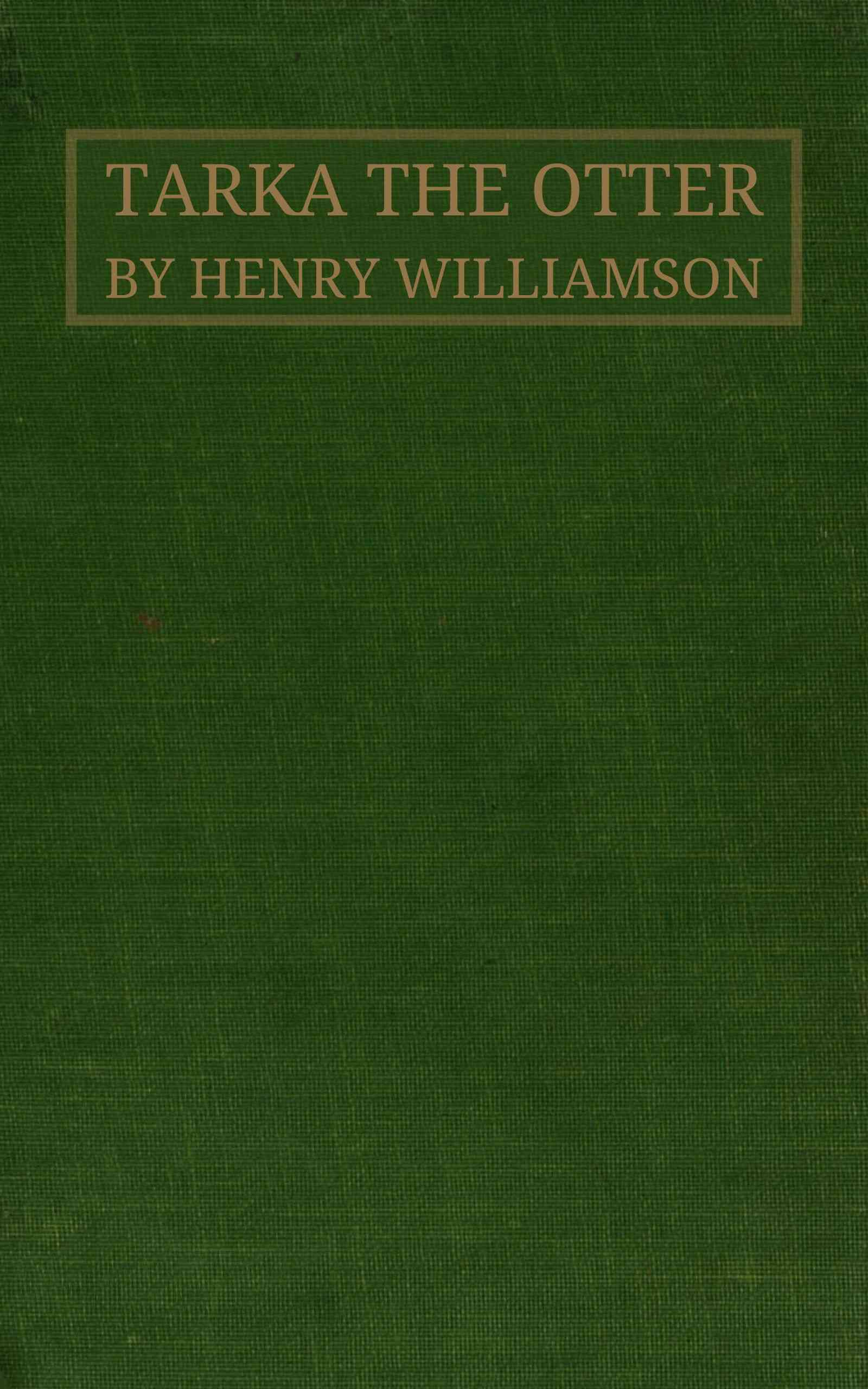
Tarka the Otter: His Joyful Water-Life and Death in the Country of the Two Rivers
1927
Tarka the Otter is a triumph of English nature writing, a book that transformed how we see the wild creatures among us. Henry Williamson spent months observing otters in their Devonshire river habitats before writing this lyrical account of one animal's entire life. The result is neither sentimental nor anthropomorphic: instead, it's a clear-eyed, often beautiful portrait of predation, survival, and the joy of moving through water and woodland. The novel follows Tarka from his first blind moments in an earth by the riverbank, through his learning to swim and hunt, his encounters with pike and heron and humans, and his escalating conflicts with the hounds that will ultimately pursue him to his death. The famous hunt sequences, particularly the final confrontation in the Torridge, build toward a conclusion that feels inevitable and earned rather than tragic in a cheap way. This is a book for readers who want to disappear into the English countryside and emerge understanding something true about what it means to live and die as a wild thing.
Editions
X-Ray
“When the bees’ feet shake the bells of the heather, and the ruddy strings of the sap-stealing dodder are twined about the green spikes of the furze, it is summertime on the commons. Exmoor is the high country of the winds, which are to the falcons and the hawks: clothed by whortleberry bushes and lichens and ferns and mossed trees in the goyals, which are to the foxes, the badgers, and the red deer: served by rain-clouds and drained by rock-littered streams, which are to the otters.””
— Henry Williamson
“Pity acts through the imagination, the higher light of the world, and imagination arises from the world of things, as a rainbow from the sun.””
— Henry Williamson
“Though the birds scolded, the foxes snarled, and his own kind drove him away, Tarka had many friends, whom he played with and forgot – sticks, stones, water-weeds, slain fish, and once an empty cocoa-tin, a bright and curious thing that talked strangely as it moved over the shallows, but sank into the pool beyond, sent up three bubbles, and would play no more.””
— Henry Williamson
“They were among birds what the Irish are among men, always ready in a merry and audacious life to go where there is trouble and not infrequently to be the cause of it.””
— Henry Williamson
“The first otter to go into deep water had felt the same fear that Tarka felt that night; for his ancestors, thousands of years ago, had been hunters in woods and along the banks of rivers, running the scent of blooded creatures on the earth, like all the members of the weasel race to which they belonged. This race had several tribes in the country of the Two Rivers. Biggest were the brocks, a tribe of badgers who lived in holts scratched among the roots of trees and bushes, and rarely went to water except to drink. They were related to the fitches or stoats, who chased rabbits and jumped upon birds on the earth; and to the vairs or weasels, who sucked the blood of mice and dragged fledgelings from the nest; and to the grey fitches or polecats, so rare in the forests; and to the pine-martens, a tribe so harried by men that one only remained, and he had found sanctuary in a wood where a gin was never tilled and a gun was never fired, where the red deer was never roused and the fox never chased. He was old; his canine teeth worn down. Otters knew the ponds in this wood and they played in them by day, while herons stalked in the shallows and nothing feared the old lady who sometimes sat on the bank, watching the wild creatures which she thought of as the small and persecuted kinsfolk of man.””
— Henry Williamson
“The rising sun silvered the mist lying low and dense on the meadow, where cattle stood on unseen legs. Over the mist the white owl was flying, on broad soft wings. It wafted itself along, light as the mist; the sun showed the snowy feathers on breast and underwings and lit the tallow-gold and grey of its back. It sailed under the middle arch of the bridge and pulled itself by its talons into one of the spaces left in the stone-work by masons. Throughout the daylight it stood among the bones and skulls of mice, often blinking, and sometimes yawning.””
— Henry Williamson
“The tarn is deep and brown and still, reflecting rushes and reeds at its sides, the sedges of the hills, and the sky over them.””
— Henry Williamson
“... but in nearly all those who through necessity of life till fields, herd beasts, and keep fowls, these remaining wildings of the moors have enemies who care nothing for their survival. The farmers would exterminate nearly every wild bird and animal of prey, were it not for the land-owners, among whom are some who care for the wildings, because they are sprung from the same land of England, and who would be unhappy if they thought they country would know them no more. For the animal they hunt to kill in its season, or those other animals or birds they cause to be destroyed for the continuance of their pleasure in sport - which they believe to be natural - they have no pity; and since they lack this incipient human instinct, they misunderstand and deride it in others. Pity acts through imagination, the higher light of the world, and imagination arises from the world of things, as a rainbow from the sun. A rainbow may be beautiful and heavenly, but it will not grow corn for bread.””
— Henry Williamson
“Many of the salmon that reached the sea alive were taken in the nets of fishermen rough-fish-catching, in the estuary Pool, to be knocked on the head and thrown back - for the fishermen hated the water-bailiffs who upheld the Conservancy Bye-laws protecting salmon out of season, and secretly killed the fish because of their hatred. The fisherman did not believe that salmon spawned in fresh water, where the rivers were young, but regarded it as a story told to prevent them fishing for salmon throughout the year.””
— Henry Williamson
Link to this book
Add a free, dofollow link to Lex on your blog, forum, syllabus, or reading list.

<a href="https://lex-books.com/book/tarka-the-otter-his-joyful-water-life-and-death-in-the-country-of-the-two-rivers-20d6e30e-0755-4f68-adca-238c58e83ad7"><img src="https://lex-books.com/badges/read-on-lex.svg" alt="Read Tarka the Otter: His Joyful Water-Life and Death in the Country of the Two Rivers by Henry Williamson free on Lex" width="160" height="40"></a>[](https://lex-books.com/book/tarka-the-otter-his-joyful-water-life-and-death-in-the-country-of-the-two-rivers-20d6e30e-0755-4f68-adca-238c58e83ad7)[url=https://lex-books.com/book/tarka-the-otter-his-joyful-water-life-and-death-in-the-country-of-the-two-rivers-20d6e30e-0755-4f68-adca-238c58e83ad7][img]https://lex-books.com/badges/read-on-lex.svg[/img][/url]Read Tarka the Otter: His Joyful Water-Life and Death in the Country of the Two Rivers by Henry Williamson free on Lex: https://lex-books.com/book/tarka-the-otter-his-joyful-water-life-and-death-in-the-country-of-the-two-rivers-20d6e30e-0755-4f68-adca-238c58e83ad7Cite this book
Reading this edition for a paper or guide? Copy a citation.
Williamson, Henry. Tarka the Otter: His Joyful Water-Life and Death in the Country of the Two Rivers. Lex, lex-books.com/book/tarka-the-otter-his-joyful-water-life-and-death-in-the-country-of-the-two-rivers-20d6e30e-0755-4f68-adca-238c58e83ad7.Williamson, H. (1927). Tarka the Otter: His Joyful Water-Life and Death in the Country of the Two Rivers. Lex. https://lex-books.com/book/tarka-the-otter-his-joyful-water-life-and-death-in-the-country-of-the-two-rivers-20d6e30e-0755-4f68-adca-238c58e83ad7Williamson, Henry. Tarka the Otter: His Joyful Water-Life and Death in the Country of the Two Rivers. Lex. https://lex-books.com/book/tarka-the-otter-his-joyful-water-life-and-death-in-the-country-of-the-two-rivers-20d6e30e-0755-4f68-adca-238c58e83ad7.