Science and the Modern World
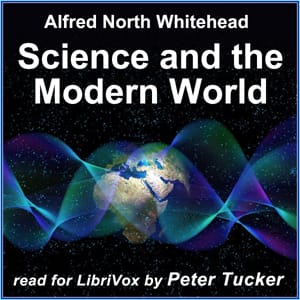
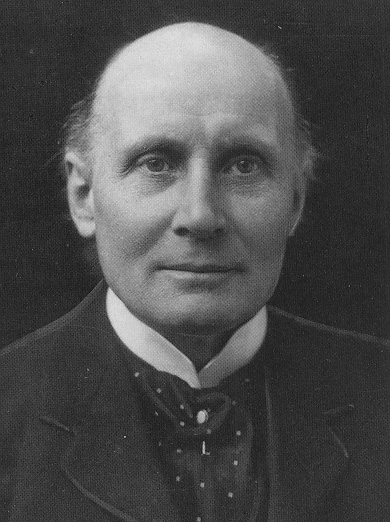
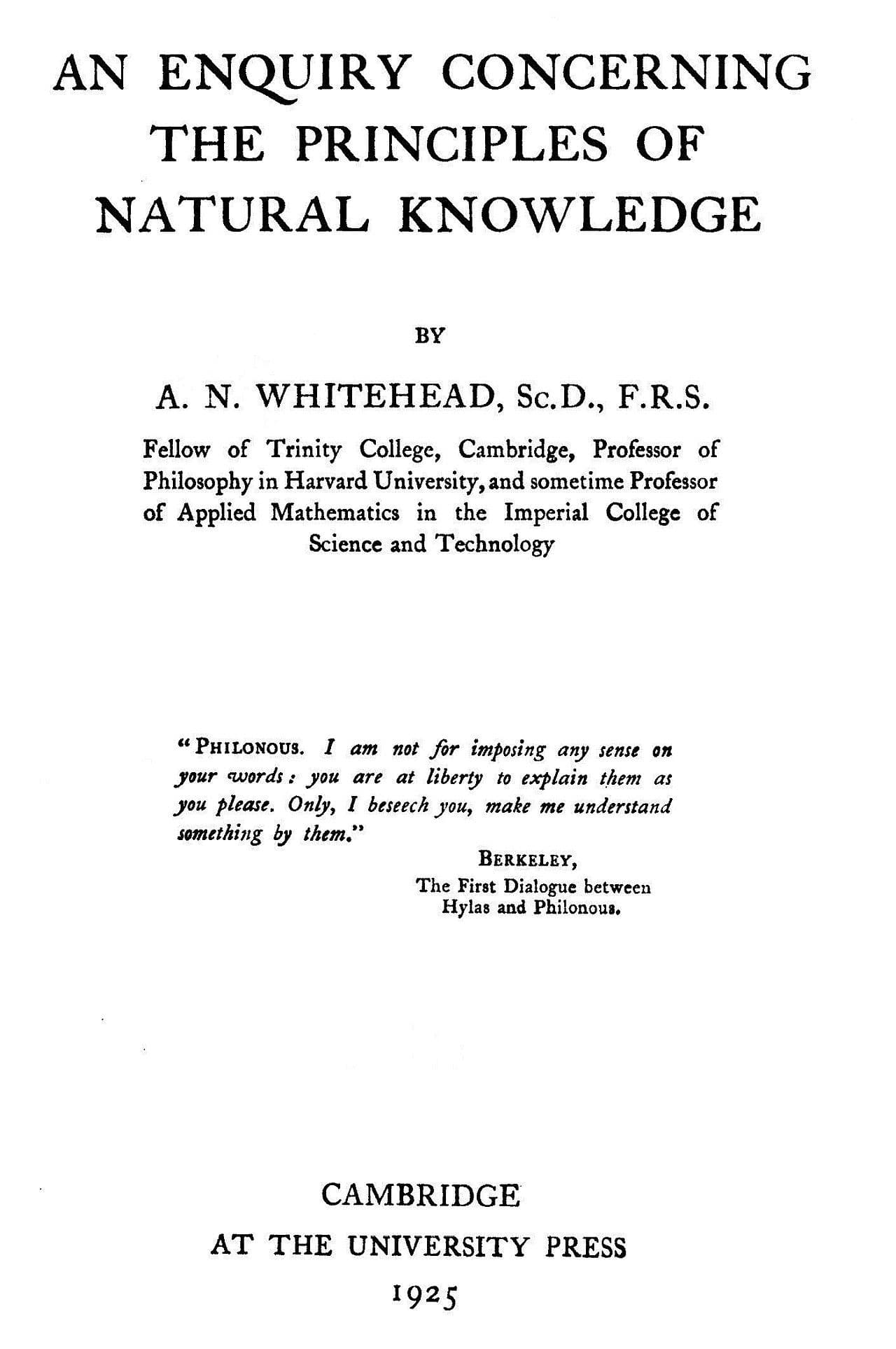
In this landmark 1925 Gifford Lectures, the mathematician and philosopher Alfred North Whitehead offers a sweeping re-examination of how scientific thought has shaped, and distorted, our understanding of reality. Tracing the evolution of science from medieval Scholasticism through the mechanistic revolution of the seventeenth century and into the romantic reaction of the nineteenth, Whitehead argues that modern civilization has inherited a fragmented vision of nature that privileges analysis over wholeness, matter over process, and mechanism over organism. He famously critiques the "bifurcation of nature", the split between primary qualities (measurable, mathematical) and secondary qualities (sensory, subjective), as a philosophical error with profound consequences for how we live. Yet this is not an attack on science. Rather, Whitehead calls for a new synthesis: a philosophy of organism that honors scientific rigor while recovering the aesthetic, moral, and spiritual dimensions of experience that mechanistic materialism cannot explain. The result is a work of remarkable intellectual ambition, written with a literary grace that makes complex ideas pulse with life. It remains essential for anyone who senses that something vital has been lost in our civilization's surrender to scientific materialism, and wonders how we might find it again.
Editions

Link to this book
Add a free, dofollow link to Lex on your blog, forum, syllabus, or reading list.

<a href="https://lex-books.com/book/science-and-the-modern-world-51d03154-021a-462e-9825-a20d77c83e0b"><img src="https://lex-books.com/badges/read-on-lex.svg" alt="Read Science and the Modern World by Alfred North Whitehead free on Lex" width="160" height="40"></a>[](https://lex-books.com/book/science-and-the-modern-world-51d03154-021a-462e-9825-a20d77c83e0b)[url=https://lex-books.com/book/science-and-the-modern-world-51d03154-021a-462e-9825-a20d77c83e0b][img]https://lex-books.com/badges/read-on-lex.svg[/img][/url]Read Science and the Modern World by Alfred North Whitehead free on Lex: https://lex-books.com/book/science-and-the-modern-world-51d03154-021a-462e-9825-a20d77c83e0bCite this book
Reading this edition for a paper or guide? Copy a citation.
Whitehead, Alfred North. Science and the Modern World. Lex, lex-books.com/book/science-and-the-modern-world-51d03154-021a-462e-9825-a20d77c83e0b.Whitehead, A. N. (n.d.). Science and the Modern World. Lex. https://lex-books.com/book/science-and-the-modern-world-51d03154-021a-462e-9825-a20d77c83e0bWhitehead, Alfred North. Science and the Modern World. Lex. https://lex-books.com/book/science-and-the-modern-world-51d03154-021a-462e-9825-a20d77c83e0b.