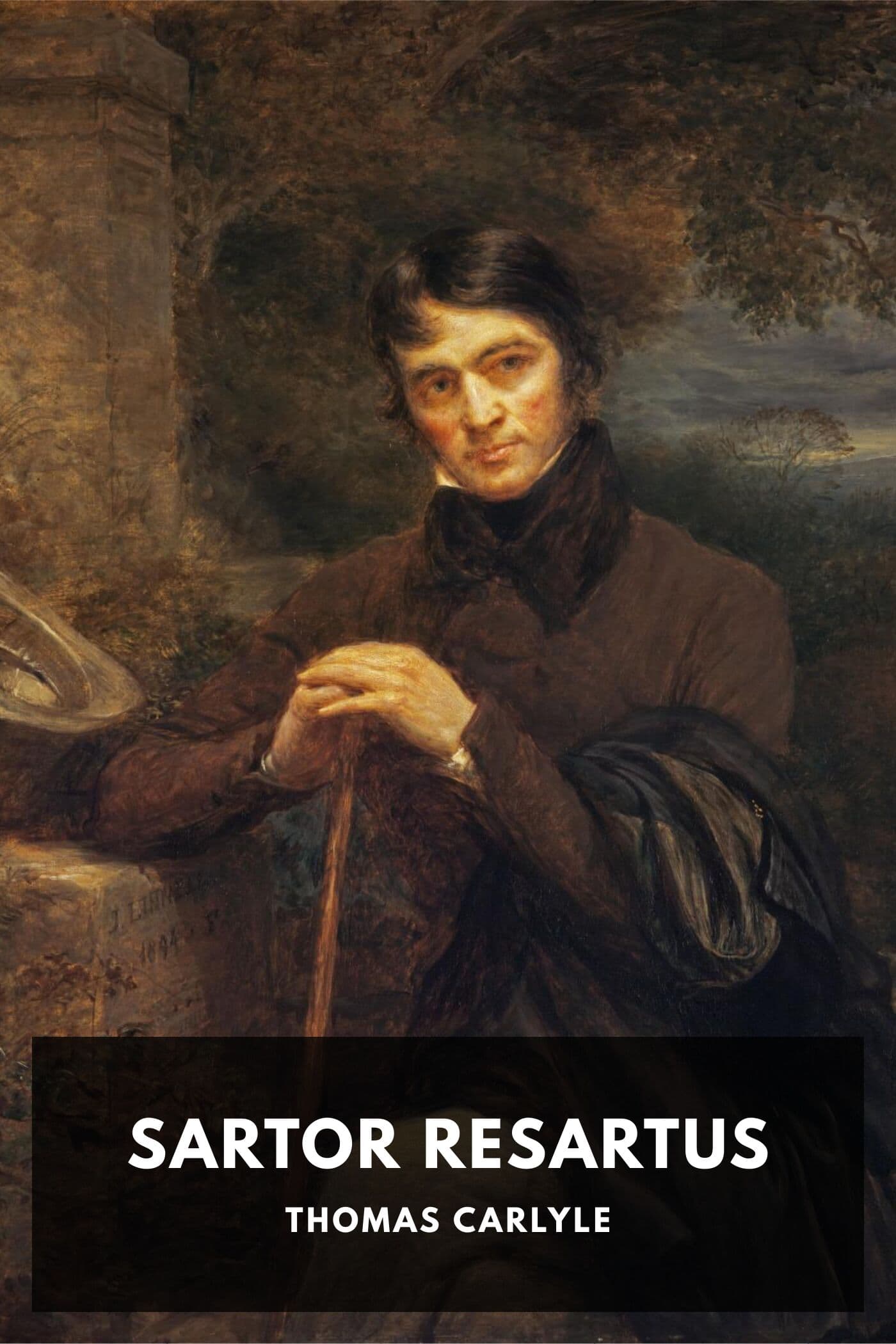
Sartor Resartus: The Life and Opinions of Herr Teufelsdröckh
1833
Sartor Resartus: The Life and Opinions of Herr Teufelsdröckh
1833
Sartor Resartus is either the most brilliant philosophical joke in English literature or an elaborate hoax on the reader, and the ambiguity is precisely the point. Carlyle constructs an endless Chinese box of commentary on the supposed writings of the fictional German professor Diogenes Teufelsdröckh, whose 'philosophy of clothes' is really an excuse to excavate everything from the nature of identity to the spiritual crisis of modernity. The book follows Teufelsdröckh through despair, doubt, and what Carlyle calls the 'Everlasting Yea', a kind of existential resurrection achieved through embracing life in all its absurdity. It is dense, chaotic, frequently contradictory, and often seemingly mocking the reader's attempts to extract a coherent meaning. Yet within this labyrinth lies one of the nineteenth century's most radical explorations of how we construct ourselves, how societies fabricate their truths, and whether genuine faith is possible after Enlightenment. Not for the patient alone, but for readers who delight in being challenged, perplexed, and ultimately transformed.
Editions
X-Ray
“Silence is the element in which great things fashion themselves together; that at length they may emerge, full-formed and majestic, into the daylight of Life, which they are thenceforth to rule. Not William the Silent only, but all the considerable men I have known, and the most undiplomatic and unstrategic of these, forbore to babble of what they were creating and projecting. Nay, in thy own mean perplexities, do thou thyself but hold thy tongue for one day: on the morrow, how much clearer are thy purposes and duties; what wreck and rubbish have those mute workmen within thee swept away, when intrusive noises were shut out! Speech is too often not, as the Frenchman defined it, the art of concealing Thought; but of quite stifling and suspending Thought, so that there is none to conceal. Speech too is great, but not the greatest. As the Swiss Inscription says: Sprecfien ist silbern, Schweigen ist golden (Speech is silvern, Silence is golden); or as I might rather express it: Speech is of Time, Silence is of Eternity.””
— Thomas Carlyle
“Nature alone is antique, and the oldest art a mushroom.””
— Thomas Carlyle
“Some comfort it would have been, could I, like a Faust, have fancied myself tempted and tormented of the Devil; for a Hell, as I imagine, without Life, though only Diabolic Life, were more frightful: but in our age of Downpulling and Disbelief, the very Devil has been pulled down, you cannot so much as believe in a Devil. To me the Universe was all void of Life, of Purpose, of Volition, even of Hostility: it was one huge, dead, immeasurable Steam-engine, rolling on, in its dead indifference, to grind me limb from limb.””
— Thomas Carlyle
“Well at ease are the Sleepers for whom Existence is a shallow Dream.””
— Thomas Carlyle
“Strange enough how creatures of the human-kind shut their eyes to plainest facts; and by the mere inertia of Oblivion and Stupidity, live at ease in the midst of Wonders and Terrors. But indeed man is, and was always, a blockhead and dullard; much readier to feel and digest, than to think and consider.””
— Thomas Carlyle
“Speech is of Time, Silence is of Eternity.””
— Thomas Carlyle
“Wondrous indeed is the virtue of a true Book.””
— Thomas Carlyle
“know a Work of Art from a Daub of Artifice)””
— Thomas Carlyle
“the worst waste, that of time.””
— Thomas Carlyle
Link to this book
Add a free, dofollow link to Lex on your blog, forum, syllabus, or reading list.

<a href="https://lex-books.com/book/sartor-resartus-the-life-and-opinions-of-herr-teufelsdr-ckh-408b177b-04fe-46d8-bf6e-0955b165613d"><img src="https://lex-books.com/badges/read-on-lex.svg" alt="Read Sartor Resartus: The Life and Opinions of Herr Teufelsdröckh by Thomas Carlyle free on Lex" width="160" height="40"></a>[](https://lex-books.com/book/sartor-resartus-the-life-and-opinions-of-herr-teufelsdr-ckh-408b177b-04fe-46d8-bf6e-0955b165613d)[url=https://lex-books.com/book/sartor-resartus-the-life-and-opinions-of-herr-teufelsdr-ckh-408b177b-04fe-46d8-bf6e-0955b165613d][img]https://lex-books.com/badges/read-on-lex.svg[/img][/url]Read Sartor Resartus: The Life and Opinions of Herr Teufelsdröckh by Thomas Carlyle free on Lex: https://lex-books.com/book/sartor-resartus-the-life-and-opinions-of-herr-teufelsdr-ckh-408b177b-04fe-46d8-bf6e-0955b165613dCite this book
Reading this edition for a paper or guide? Copy a citation.
Carlyle, Thomas. Sartor Resartus: The Life and Opinions of Herr Teufelsdröckh. Lex, lex-books.com/book/sartor-resartus-the-life-and-opinions-of-herr-teufelsdr-ckh-408b177b-04fe-46d8-bf6e-0955b165613d.Carlyle, T. (1833). Sartor Resartus: The Life and Opinions of Herr Teufelsdröckh. Lex. https://lex-books.com/book/sartor-resartus-the-life-and-opinions-of-herr-teufelsdr-ckh-408b177b-04fe-46d8-bf6e-0955b165613dCarlyle, Thomas. Sartor Resartus: The Life and Opinions of Herr Teufelsdröckh. Lex. https://lex-books.com/book/sartor-resartus-the-life-and-opinions-of-herr-teufelsdr-ckh-408b177b-04fe-46d8-bf6e-0955b165613d.