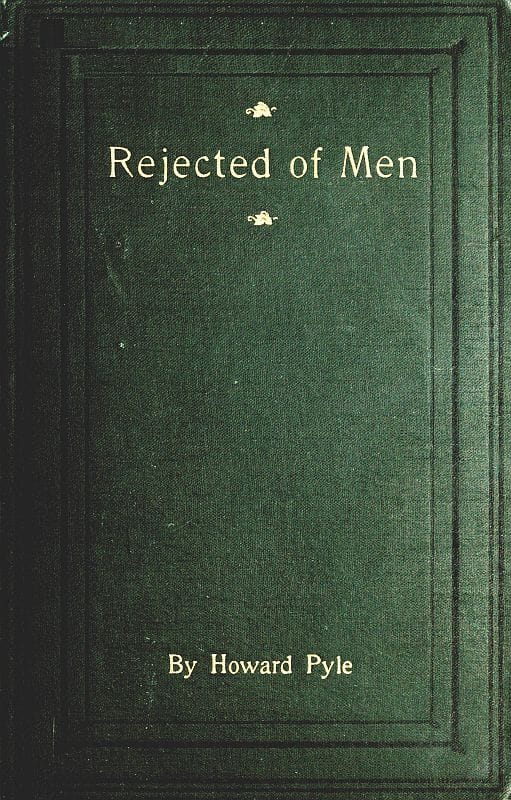
Rejected of Men: A Story of To-Day
1903
What happens when you tell the story from the other side? Howard Pyle's daring 1903 novel reimagines the crucifixion narrative entirely through the eyes of those who rejected Christ: the scribes, Pharisees, priests, and Roman officials. Rather than depicting them as simple villains, Pyle grants them genuine human complexity, exploring the social anxieties, political pressures, and sincere (if mistaken) convictions that led ordinary men to demand an innocent man's death. The story opens with the religious establishment grappling with John the Baptist's growing influence, watching their authority erode as crowds flock to the wilderness preacher. Pyle's radical act of empathy asks readers to consider how circumstances shape moral compromise, how institutional self-interest can masquerade as righteous duty, and how decent people can participate in injustice. Written with Pyle's characteristic vividness and psychological depth, this is a novel about the stories we tell ourselves to sleep at night.
Editions
X-Ray
“We were born to crucify the truth; it is our mission in life, and we must not be blamed when we fulfill our destiny.””
— Howard Pyle
Link to this book
Add a free, dofollow link to Lex on your blog, forum, syllabus, or reading list.

<a href="https://lex-books.com/book/rejected-of-men-a-story-of-to-day-5b71491d-09db-4995-b3ba-e4b9c52233ec"><img src="https://lex-books.com/badges/read-on-lex.svg" alt="Read Rejected of Men: A Story of To-Day by Howard Pyle free on Lex" width="160" height="40"></a>[](https://lex-books.com/book/rejected-of-men-a-story-of-to-day-5b71491d-09db-4995-b3ba-e4b9c52233ec)[url=https://lex-books.com/book/rejected-of-men-a-story-of-to-day-5b71491d-09db-4995-b3ba-e4b9c52233ec][img]https://lex-books.com/badges/read-on-lex.svg[/img][/url]Read Rejected of Men: A Story of To-Day by Howard Pyle free on Lex: https://lex-books.com/book/rejected-of-men-a-story-of-to-day-5b71491d-09db-4995-b3ba-e4b9c52233ecCite this book
Reading this edition for a paper or guide? Copy a citation.
Pyle, Howard. Rejected of Men: A Story of To-Day. Lex, lex-books.com/book/rejected-of-men-a-story-of-to-day-5b71491d-09db-4995-b3ba-e4b9c52233ec.Pyle, H. (1903). Rejected of Men: A Story of To-Day. Lex. https://lex-books.com/book/rejected-of-men-a-story-of-to-day-5b71491d-09db-4995-b3ba-e4b9c52233ecPyle, Howard. Rejected of Men: A Story of To-Day. Lex. https://lex-books.com/book/rejected-of-men-a-story-of-to-day-5b71491d-09db-4995-b3ba-e4b9c52233ec.