Ramona
1884
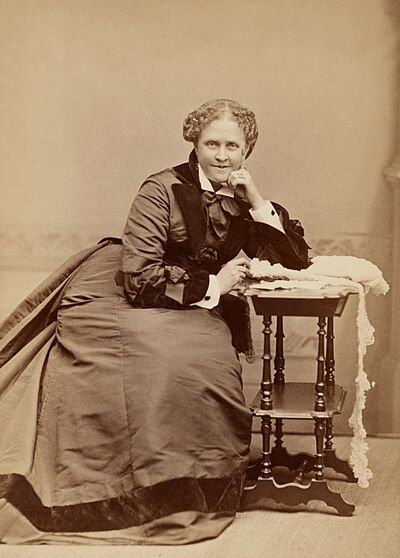
The novel opens in the dying light of Old California, where the Spanish ranchos are fading and the old order crumbles beneath the weight of American expansion. Ramona, the mixed-race orphan raised in the Moreno household, has never known where she belongs. She is cherished by the Senora yet haunted by questions of her birth, her blood, her right to claim any identity at all. Then she meets Alessandro, a young Native American shepherd, and everything changes. Their love is not merely forbidden, it is impossible in a world determined to erase them both. Helen Hunt Jackson wrote Ramona with the fury of an activist and the tearful force of a melodramatist, demanding that her readers confront the brutal reality of displacement and the violence done to Indigenous peoples. Yet what elevates the novel beyond polemic is its aching romantic heart. Ramona becomes a fugitive, driven from the only home she has known, fleeing with Alessandro across a landscape that is itself being transformed. The novel has the pulse of a great love story and the conscience of a social reckoning. It endures because it asks what it means to belong, to love, to survive when the world is remade over your destroyed body.
Editions
X-Ray
“We have flattered ourselves by inventing proverbs of comparison in matter of blindness,--"blind as a bat," for instance. It would be safe to say that there cannot be found in the animal kingdom a bat, or any other creature, so blind in its own range of circumstance and connection, as the greater majority of human beings are in the bosoms of their families. Tempers strain and recover, hearts break and heal, strength falters, fails, and comes near to giving way altogether, every day, without being noted by the closest lookers-on.””
— Helen Hunt Jackson
“Next time!" In what calendar are kept the records of those next times which never come?””
— Helen Hunt Jackson
“The wild mustard in Southern California is like that spoken of in the New Testament. . . . Its gold is as distinct a value to the eye as the nugget gold is in the pocket.””
— Helen Hunt Jackson
“Gazing around, looking up at the lofty pinnacles above, which seemed to pierce the sky, looking down upon the world,--it seemed the whole world, so limitless it stretched away at her feet,--feeling that infinite unspeakable sense of nearness to Heaven, remoteness from earth which comes only on mountain heights, she drew in a long breath of delight, and cried: "At last! at last, Alessandro! Here we are safe! This is freedom! This is joy!””
— Helen Hunt Jackson
“There was the whole world; if she loved him like this, nothing could make them wretched; his love would be enough for her, - and for him hers was an empire.””
— Helen Hunt Jackson
“But pride carries its banner to the last; and fast as it is driven from one field unfurls it in another, never admitting that there is a shade less honor in the second field than in the first, or in the third than in the second; and so on till death.””
— Helen Hunt Jackson
“There had been no crises of incident, or marked movements of experience such as in Felipe's imaginations of love were essential to the fulness of its growth. This is a common mistake on the part of those who have never felt love's true bonds. Once in those chains, one perceives that they are not of the sort full forged in a day. They are made as the great iron cables are made, on which bridges are swung across the widest water-channels,--not of single huge rods, or bars, which would be stronger, perhaps, to look at; but myriads of the finest wires, each one by itself so fine, so frail, it would barely hold a child's kite in the wind: by hundreds, hundreds of thousands of such, twisted, re-twisted together, are made the mighty cables, which do not any more swerve from their place in the air, under the weight and jar of the ceaseless traffic and tread of two cities, than the solid earth swerves under the same ceaseless weight and jar. Such cables do not break.””
— Helen Hunt Jackson
“Will not the Senorita trust me?"Ramona smiled faintly through her tears. "Yes," she said. "I will trust you. You are Alessandro, are you not?""Yes, Senorita," he answered, greatly surprised, "I am Alessandro.””
— Helen Hunt Jackson
“But undying memories stood like sentinels in her breast. When the notes of doves, calling to each other, fell on her ear, her eyes sought the sky, and she heard a voice saying, "Majella!””
— Helen Hunt Jackson
Link to this book
Add a free, dofollow link to Lex on your blog, forum, syllabus, or reading list.

<a href="https://lex-books.com/book/ramona-431d80c6-14b2-442f-8470-2111f8292e82"><img src="https://lex-books.com/badges/read-on-lex.svg" alt="Read Ramona by Helen Hunt Jackson free on Lex" width="160" height="40"></a>[](https://lex-books.com/book/ramona-431d80c6-14b2-442f-8470-2111f8292e82)[url=https://lex-books.com/book/ramona-431d80c6-14b2-442f-8470-2111f8292e82][img]https://lex-books.com/badges/read-on-lex.svg[/img][/url]Read Ramona by Helen Hunt Jackson free on Lex: https://lex-books.com/book/ramona-431d80c6-14b2-442f-8470-2111f8292e82Cite this book
Reading this edition for a paper or guide? Copy a citation.
Jackson, Helen Hunt. Ramona. Lex, lex-books.com/book/ramona-431d80c6-14b2-442f-8470-2111f8292e82.Jackson, H. H. (1884). Ramona. Lex. https://lex-books.com/book/ramona-431d80c6-14b2-442f-8470-2111f8292e82Jackson, Helen Hunt. Ramona. Lex. https://lex-books.com/book/ramona-431d80c6-14b2-442f-8470-2111f8292e82.