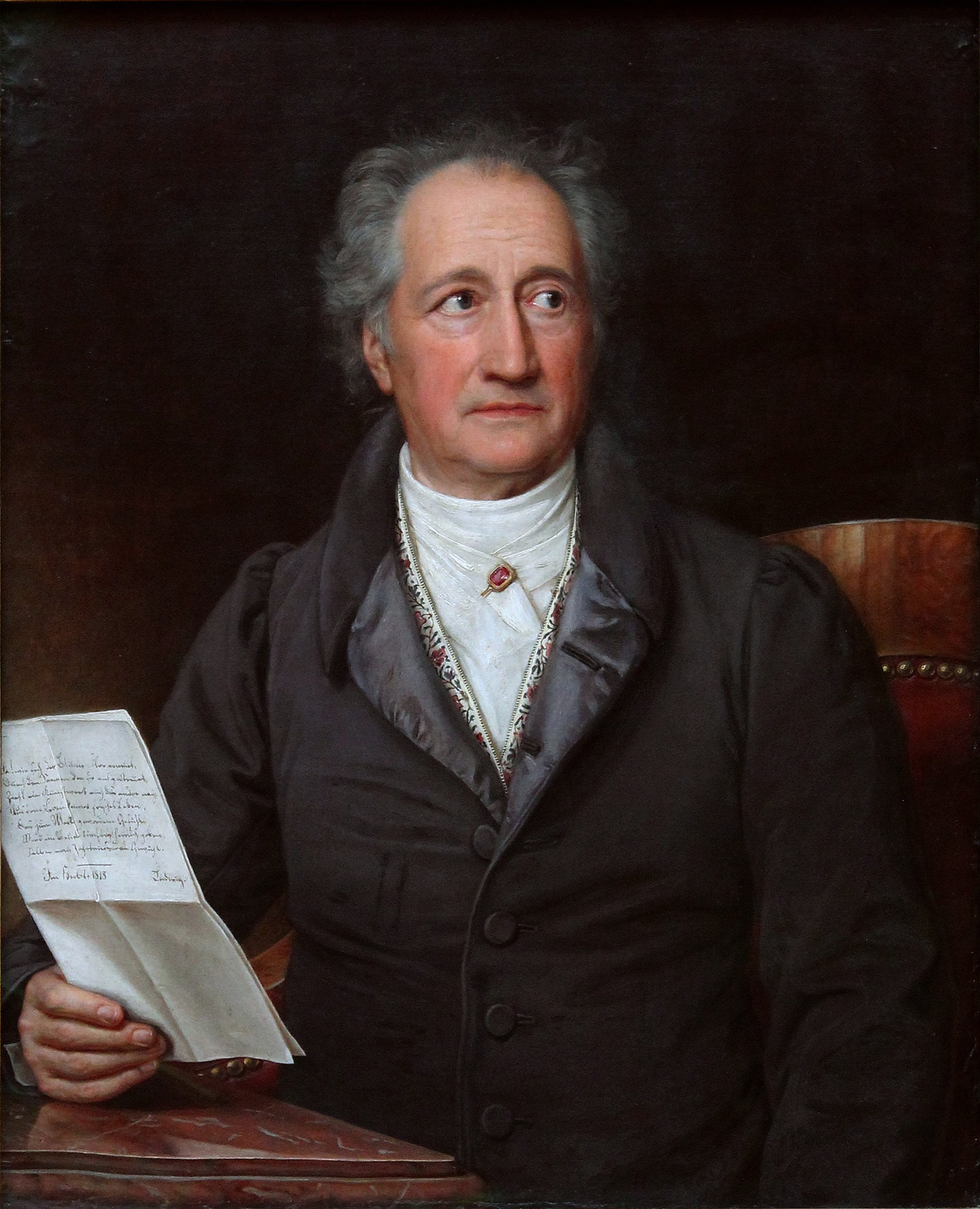
Römische Elegien
1795
Goethe wrote these twenty elegies in the passionate aftermath of his Italian journey, and they remain among the most sensuous poetry in the German language. In classically precise couplets, the speaker celebrates physical love amid Rome's ancient ruins, weaving personal desire with mythological allusion until past and present blur into something timeless. The poems pulse with erotic frankness: lovers meet in gardens, the city becomes a landscape of longing, and the poet openly endorses pleasure as a path to artistic insight. This openness proved scandalous at publication, prompting Herder to quip that Schiller's journal should be retitled with a "u." Four poems were suppressed for their explicit content and only appeared a century later. Yet the Römische Elegien are no mere provocations. Beneath their celebration of desire lies a meditations on transience: beauty fades, lovers depart, even Rome's monuments crumble. Goethe revised the poems with August Wilhelm Schlegel, refining their classical form while preserving their rawness. For readers who want poetry that is learned, passionate, and unapologetically bodily.
Editions
X-Ray
“People though are rarely all good or all evil but often a mixture of both and we all make mistakes.””
— Johann Wolfgang von Goethe
Link to this book
Add a free, dofollow link to Lex on your blog, forum, syllabus, or reading list.

<a href="https://lex-books.com/book/r-mische-elegien-490ade81-aa29-4eb9-8015-7812404dbb4e"><img src="https://lex-books.com/badges/read-on-lex.svg" alt="Read Römische Elegien by Johann Wolfgang von Goethe free on Lex" width="160" height="40"></a>[](https://lex-books.com/book/r-mische-elegien-490ade81-aa29-4eb9-8015-7812404dbb4e)[url=https://lex-books.com/book/r-mische-elegien-490ade81-aa29-4eb9-8015-7812404dbb4e][img]https://lex-books.com/badges/read-on-lex.svg[/img][/url]Read Römische Elegien by Johann Wolfgang von Goethe free on Lex: https://lex-books.com/book/r-mische-elegien-490ade81-aa29-4eb9-8015-7812404dbb4eCite this book
Reading this edition for a paper or guide? Copy a citation.
Goethe, Johann Wolfgang von. Römische Elegien. Lex, lex-books.com/book/r-mische-elegien-490ade81-aa29-4eb9-8015-7812404dbb4e.Goethe, J. W. V. (1795). Römische Elegien. Lex. https://lex-books.com/book/r-mische-elegien-490ade81-aa29-4eb9-8015-7812404dbb4eGoethe, Johann Wolfgang von. Römische Elegien. Lex. https://lex-books.com/book/r-mische-elegien-490ade81-aa29-4eb9-8015-7812404dbb4e.