West-Östlicher Divan
1819
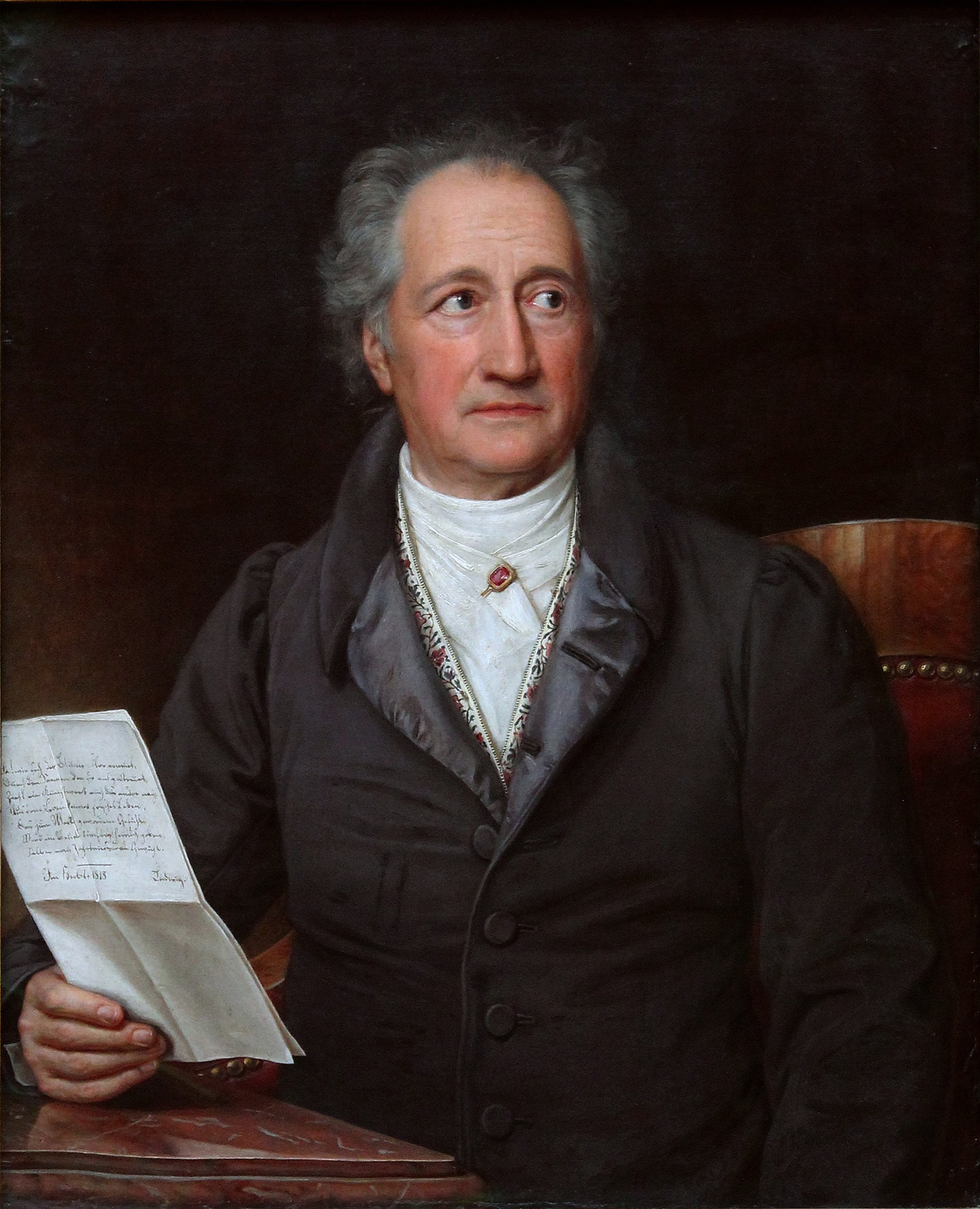
Goethe encountered Hafiz in the summer of 1814 and was electrified. At 65, the old master discovered a new voice, one that blended Persian mysticism with German lyricism in ways no one had attempted. The West-Östlicher Divan is his love letter to the East, but also his most intimate confession, a collection where the poet becomes bridegroom to his own words, where wine and love and God dissolve into each other like smoke and wine. The collection moves through books of varying moods: the Book of the Singer, the Book of Hafiz, the Book of Suleika. That final section contains Goethe's most personal work, poems addressed to Marianne von Willemer, the young woman who would become his love. What readers discovered later is that Marianne wrote several of these poems herself, making their dialogue a genuine exchange between the aging poet and his muse. The verses celebrate sensuality with an urgency that surprises even those who know Goethe's other work. Heine called these poems "the most intoxicating enjoyment of life," so light and happy and ethereal that one wonders how such things are possible in German. This is poetry as seduction, as prayer, as intoxication.
Editions
X-Ray
“Wer das Dichten will verstehen,muß ins Land der Dichtung gehen;wer den Dichter will verstehen,muß in Dichters Lande gehen.””
— Johann Wolfgang von Goethe
“GOD is of the East possess’d, God is ruler of the West; North and South alike, each land Rests within His gentle hand. He, the only righteous one, Wills that right to each be done. ’Mongst His hundred titles, then, Highest praise be this!”
— Johann Wolfgang von Goethe
Link to this book
Add a free, dofollow link to Lex on your blog, forum, syllabus, or reading list.

<a href="https://lex-books.com/book/west-stlicher-divan-32d7674d-e2fe-41b5-a7fc-6f49959af50b"><img src="https://lex-books.com/badges/read-on-lex.svg" alt="Read West-Östlicher Divan by Johann Wolfgang von Goethe free on Lex" width="160" height="40"></a>[](https://lex-books.com/book/west-stlicher-divan-32d7674d-e2fe-41b5-a7fc-6f49959af50b)[url=https://lex-books.com/book/west-stlicher-divan-32d7674d-e2fe-41b5-a7fc-6f49959af50b][img]https://lex-books.com/badges/read-on-lex.svg[/img][/url]Read West-Östlicher Divan by Johann Wolfgang von Goethe free on Lex: https://lex-books.com/book/west-stlicher-divan-32d7674d-e2fe-41b5-a7fc-6f49959af50bCite this book
Reading this edition for a paper or guide? Copy a citation.
Goethe, Johann Wolfgang von. West-Östlicher Divan. Lex, lex-books.com/book/west-stlicher-divan-32d7674d-e2fe-41b5-a7fc-6f49959af50b.Goethe, J. W. V. (1819). West-Östlicher Divan. Lex. https://lex-books.com/book/west-stlicher-divan-32d7674d-e2fe-41b5-a7fc-6f49959af50bGoethe, Johann Wolfgang von. West-Östlicher Divan. Lex. https://lex-books.com/book/west-stlicher-divan-32d7674d-e2fe-41b5-a7fc-6f49959af50b.