Proposed Roads to Freedom
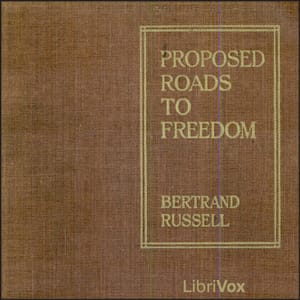
In 1918, with Europe in ruins and the old order crumbling, Bertrand Russell sat down to answer a question that haunted the post-war world: what kind of society should replace the one that had just consumed itself? Russell, the philosopher who would later win the Nobel Prize, had already spent years in prison for opposing the First World War. He wrote this book not from an ivory tower but from the wreckage of civilization's latest catastrophe. "Proposed Roads to Freedom" examines three competing visions for a better world: Marxian socialism, which looked to revolutionary seizure of state power; anarchism, which rejected the state entirely; and syndicalism, which placed its faith in worker-controlled industry. Russell subjects each to rigorous philosophical scrutiny, weighing their promises against their practical dangers. He was no neutral observer, Russell had championed radical causes throughout his life, but here he functions as something more valuable than a partisan: a philosopher applying logic to the most dangerous ideologies of his age. A century later, the questions Russell asked refuse to die. For readers seeking to understand the intellectual foundations of modern political thought, or anyone wondering how idealists become tyrants, this remains essential reading.
Editions

Read by
Group Narration
6 readers
Todd Garrison, Roger Melin, John Kooz, Thinking +2 more
Link to this book
Add a free, dofollow link to Lex on your blog, forum, syllabus, or reading list.

<a href="https://lex-books.com/book/proposed-roads-to-freedom-16c0de75-75d6-4397-a525-59e5423f19f2"><img src="https://lex-books.com/badges/read-on-lex.svg" alt="Read Proposed Roads to Freedom by Bertrand Russell free on Lex" width="160" height="40"></a>[](https://lex-books.com/book/proposed-roads-to-freedom-16c0de75-75d6-4397-a525-59e5423f19f2)[url=https://lex-books.com/book/proposed-roads-to-freedom-16c0de75-75d6-4397-a525-59e5423f19f2][img]https://lex-books.com/badges/read-on-lex.svg[/img][/url]Read Proposed Roads to Freedom by Bertrand Russell free on Lex: https://lex-books.com/book/proposed-roads-to-freedom-16c0de75-75d6-4397-a525-59e5423f19f2Cite this book
Reading this edition for a paper or guide? Copy a citation.
Russell, Bertrand. Proposed Roads to Freedom. Lex, lex-books.com/book/proposed-roads-to-freedom-16c0de75-75d6-4397-a525-59e5423f19f2.Russell, B. (n.d.). Proposed Roads to Freedom. Lex. https://lex-books.com/book/proposed-roads-to-freedom-16c0de75-75d6-4397-a525-59e5423f19f2Russell, Bertrand. Proposed Roads to Freedom. Lex. https://lex-books.com/book/proposed-roads-to-freedom-16c0de75-75d6-4397-a525-59e5423f19f2.