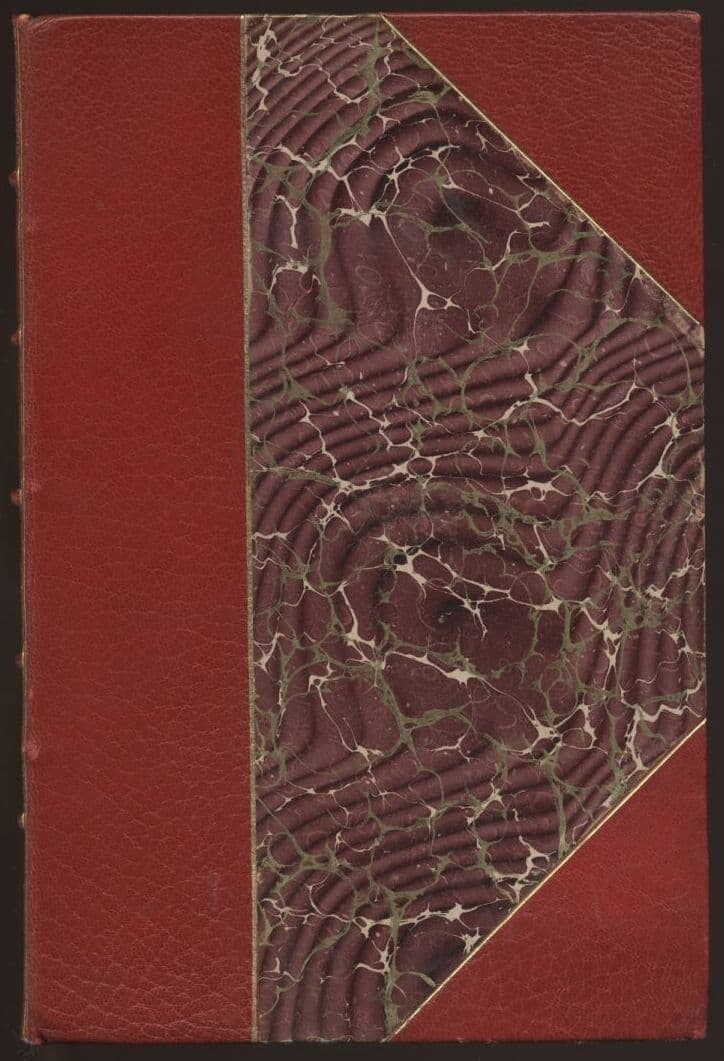
Poems by Currer, Ellis, and Acton Bell
1846
In 1846, three sisters published their poems under male pseudonyms, not as a literary game, but as a survival strategy in a world that would have dismissed female voices. This is that first, daring act: a collection that preceded Jane Eyre, Wuthering Heights, and Agnes Grey by a single year, revealing three distinct poetic sensibilities already fully formed. Charlotte's poems pulse with religious unrest and intellectual longing. Emily's verse cracks open with wild, almost violent emotion, stormy, defiant, unreachable. Anne offers quieter, more disciplined reflections on faith and suffering. The collection opens with "Pilate's Wife's Dream," a haunting meditation on conscience and prophecy that sets the tone for what follows: intimate struggles with morality, mortality, and the heart's contradictions. Reading these poems now feels like discovering a secret door into the Brontës' private world before fame transformed them. They didn't yet know they would become the most famous siblings in English literature. They simply wrote, together, in a small parsonage, and dared to be heard.
Editions
X-Ray
“I sought her eye, desirous to read there the intelligence which I could not discern in her face or hear in her conversation; it was merry, rather small; by turns I saw vivacity, vanity, coquetry, look out through its irid, but I watched in vain for a glimpse of soul. I am no Oriental; white necks, carmine lips and cheeks, clusters of bright curls, do not suffice for me without that Promethean spark which will live after the roses and lilies are faded, the burnished hair grown grey. In sunshine, in prosperity, the flowers are very well; but how many wet days are there in life--November seasons of disaster, when a man's hearth and home would be cold indeed, without the clear, cheering gleam of intellect.””
— Charlotte Brontë
“You know full well as I do the value of sisters' affections: There is nothing like it in this world.””
— Charlotte Brontë
“That to begin with; let respect be the foundation, affection the first floor, love the superstructure.””
— Charlotte Brontë
“In sunshine, in prosperity, the flowers are very well; but how many wet days are there in life”
— Charlotte Brontë
“Monsieur, if a wife's nature loathes that of the man she is wedded to, marriage must be slavery. Against slavery all right thinkers revolt, and though torture be the price of resistance, torture must be dared: though the only road to freedom lie through the gates of death, those gates must be passed; for freedom is indispensable. Then, monsieur, I would resist as far as my strength permitted; when that strength failed I should be sure of a refuge. Death would certainly screen me both from bad laws and their consequences.””
— Charlotte Brontë
“Tact, if it be genuine, never sleeps.””
— Charlotte Brontë
“Human beings -- human children especially -- seldom deny themselves the pleasure of exercising a power which they are conscious of possessing, even though that power consist only in a capacity to make others wretched””
— Charlotte Brontë
“No man likes to acknowledge that he has made a mistake in the choice of his profession, and every man, worthy of the name, will row long against wind and tide before he allows himself to cry out, 'I am baffled!' and submits to be floated passively back to land.””
— Charlotte Brontë
“I know that a pretty doll, a fair fool, might do well enough for the honeymoon; but when passion cooled, how dreadful to find a lump of wax and wood laid in my bosom, a half-idiot clasped in my arms, and to remember that I had made of this my equal- nay, my idol- to know that I must pass the rest of my dreary life with a creature incapable of understanding what I said, of appreciating what I thought, or of sympathising with what I felt!””
— Charlotte Brontë
Link to this book
Add a free, dofollow link to Lex on your blog, forum, syllabus, or reading list.

<a href="https://lex-books.com/book/poems-by-currer-ellis-and-acton-bell-e65dc6fb-f499-4250-b5ab-7286c593acae"><img src="https://lex-books.com/badges/read-on-lex.svg" alt="Read Poems by Currer, Ellis, and Acton Bell by Charlotte Brontë free on Lex" width="160" height="40"></a>[](https://lex-books.com/book/poems-by-currer-ellis-and-acton-bell-e65dc6fb-f499-4250-b5ab-7286c593acae)[url=https://lex-books.com/book/poems-by-currer-ellis-and-acton-bell-e65dc6fb-f499-4250-b5ab-7286c593acae][img]https://lex-books.com/badges/read-on-lex.svg[/img][/url]Read Poems by Currer, Ellis, and Acton Bell by Charlotte Brontë free on Lex: https://lex-books.com/book/poems-by-currer-ellis-and-acton-bell-e65dc6fb-f499-4250-b5ab-7286c593acaeCite this book
Reading this edition for a paper or guide? Copy a citation.
Brontë, Charlotte. Poems by Currer, Ellis, and Acton Bell. Lex, lex-books.com/book/poems-by-currer-ellis-and-acton-bell-e65dc6fb-f499-4250-b5ab-7286c593acae.Brontë, C. (1846). Poems by Currer, Ellis, and Acton Bell. Lex. https://lex-books.com/book/poems-by-currer-ellis-and-acton-bell-e65dc6fb-f499-4250-b5ab-7286c593acaeBrontë, Charlotte. Poems by Currer, Ellis, and Acton Bell. Lex. https://lex-books.com/book/poems-by-currer-ellis-and-acton-bell-e65dc6fb-f499-4250-b5ab-7286c593acae.