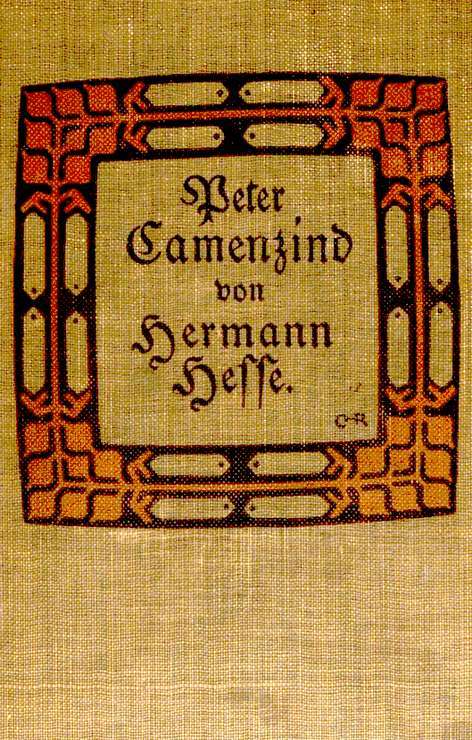
Peter Camenzind
1904
Peter Camenzind is a young man who cannot stop dreaming beyond his Swiss mountain village. When he finally leaves, he carries his ideals into Italy and France like a sacred burden, believing he is destined for something extraordinary. What he finds instead is suffering: failed love, a friendship that ends in tragedy, and a creeping despair that strips away every romantic notion he held about life and art. Hesse writes with devastating clarity about what happens when sensitivity meets reality, when the dreamer discovers that the world does not rearrange itself for those who love it most. But this is not a story of defeat. Peter returns to the Alps broken and hollow, only to find unexpected salvation in caring for Boppi, a disabled child who cannot speak or walk. In these simplest of acts, feeding, holding, sitting in silence, Peter discovers that meaning is not found in grand quests but in the small, daily demonstrations of human connection. It is a quiet, aching novel about the cost of idealism and the strange grace of learning to love what is actually in front of you.
Editions
X-Ray
“I began to understand that suffering and disappointments and melancholy are there not to vex us or cheapen us or deprive us of our dignity but to mature and transfigure us.””
— Hermann Hesse
“The diabolical thing about melancholy is not that it makes you ill but that it makes you conceited and shortsighted; yes almost arrogant. You lapse into bad taste, thinking of yourself as Heine's Atlas, whose shoulders support all the world's puzzles and agonies, as if thousands, lost in the same maze, did not endure the same agonies.””
— Hermann Hesse
“That's the way it is when you love. It makes you suffer, and I have suffered much in the years since. But it matters little that you suffer, so long as you feel alive with a sense of the close bond that connects all living things, so long as love does not die!””
— Hermann Hesse
“الألم وألوان الخيبة والكآبة لا توجد لتحزننا ولتجردنا من القيمة والكرامة، وإنما وجدت لتزيدنا نضجاً وصفاءً””
— Hermann Hesse
“I began to sense that I would be a stranger in society for the rest of my life, and the desire was born in me to lead my life outside this society.””
— Hermann Hesse
“I would lie for hours by the window gazing down upon the black lake and up at the mountains silhouetted against the wan sky, with stars suspended above. Then a fearfully sweet, overpowering emotion would take hold of me”
— Hermann Hesse
“I wanted … people to listen to the pulse of nature, to partake of the wholeness of life and not forget, under the pressure of their petty destinies, that we are not gods and have not created ourselves but are the children of the earth, part of the cosmos.””
— Hermann Hesse
“It enraged and exhausted me to observe how the common daily life callously demanded its due and devoured the abundance of optimism I had brought with me.””
— Hermann Hesse
Link to this book
Add a free, dofollow link to Lex on your blog, forum, syllabus, or reading list.

<a href="https://lex-books.com/book/peter-camenzind-4d03d9e0-9a1f-4e99-82b6-bcd3b1b1c6c9"><img src="https://lex-books.com/badges/read-on-lex.svg" alt="Read Peter Camenzind by Hermann Hesse free on Lex" width="160" height="40"></a>[](https://lex-books.com/book/peter-camenzind-4d03d9e0-9a1f-4e99-82b6-bcd3b1b1c6c9)[url=https://lex-books.com/book/peter-camenzind-4d03d9e0-9a1f-4e99-82b6-bcd3b1b1c6c9][img]https://lex-books.com/badges/read-on-lex.svg[/img][/url]Read Peter Camenzind by Hermann Hesse free on Lex: https://lex-books.com/book/peter-camenzind-4d03d9e0-9a1f-4e99-82b6-bcd3b1b1c6c9Cite this book
Reading this edition for a paper or guide? Copy a citation.
Hesse, Hermann. Peter Camenzind. Lex, lex-books.com/book/peter-camenzind-4d03d9e0-9a1f-4e99-82b6-bcd3b1b1c6c9.Hesse, H. (1904). Peter Camenzind. Lex. https://lex-books.com/book/peter-camenzind-4d03d9e0-9a1f-4e99-82b6-bcd3b1b1c6c9Hesse, Hermann. Peter Camenzind. Lex. https://lex-books.com/book/peter-camenzind-4d03d9e0-9a1f-4e99-82b6-bcd3b1b1c6c9.