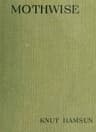
Mothwise
1904
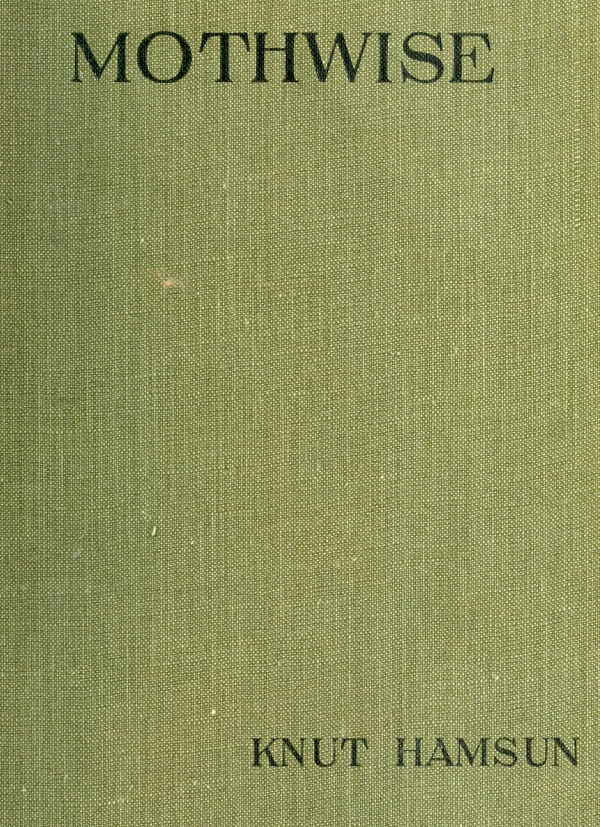
Published in 1904, 'Mothwise' is a novel by Knut Hamsun that follows Ove Rolandsen, a telegraph operator in a small Norwegian village. The story delves into his romantic entanglements with Marie van Loos and Elise Mack, set against a backdrop of social intrigue and personal ambition. Hamsun, who later won the Nobel Prize for Literature, captures the humor and complexities of village life, showcasing the interplay of love, class dynamics, and the aspirations of his characters.
Editions
X-Ray
“But now it was spring again, and spring was almost unbearable for sensitive hearts. It drove creation to its utmost limits, it wafted its spice-laden breath even into the nostrils of the innocent.””
— Knut Hamsun
“Man sværmer om sommeren, så holder man op for den gang. Men nogen sværmer hele sitt liv og står ikke til å forandre.””
— Knut Hamsun
“That room was Rolandsen’s world. Rolandsen was not just irresponsibility and inebriation, he was also great thinker and inventor. There was a smell of acids that permeated the corridor and came to the notice of every visitor. Rolandsen made no secret of the fact that he had all these medicaments there solely to disguise the aroma of all the brandy he consumed. But this was part of an act designed purely to give himself an air of inscrutability.””
— Knut Hamsun
“It was weather for dreams; for little fluttering quests of the heart.””
— Knut Hamsun
“He was quite a Casanova, no doubt about it. He was in a very good mood today and stopped longer than usual. The girls could see he was gloriously drunk. ’Well, Ragna, why do you think I come here so often?’ asked Rolandsen. ’I’ve no idea,’ Ragna answered. ’You must think I’m sent by old Laban.’The girls giggled. ’When he says Laban he really means Adam.’’I’ve come to save you,’ said Rolandsen. ’You have to beware of the fishermen around here, they’re out-and-out seducers!’’There’s no greater seducer than you,’ said another girl. ’You’ve got two kids already. You ought to be ashamed of yourself.’ ’How can you talk like that, Nicoline? You’ve always been a thorn in my flesh and you’ll be the death of me, you know damned well. But as for you, Ragna, I’m going to save your soul wether you like it or not!””
— Knut Hamsun
“They walked away from the sea, Rolandsen in the lead. He kept to the edge of the road, in the snow, to leave room for the others. He was wearing light, fashionable shoes, but seemed unperturbed; he even had his coat unbuttoned in the chilly May wind. ’So that’s the church!’ said the curate. ’It looks old. I don’t suppose there’s a stove in it?’ asked his wife. ’I couldn’t say,’ Rolandsen replied, ’but I don’t think so.””
— Knut Hamsun
“He was hungry, and his first thought was to collect a dozen or two gulls’ eggs to make a meal. But embryo chicks were forming in all of them. So he rowed out to do some fishing and was more succesful. He lived on fish from day to day and sang and whiled the time away and ruled over the island. When it rained he too shelter beneath a splendid overhangig rock. At night he slept on a patch of grass and the sun never set.””
— Knut Hamsun
“Was it really right to look the way he did? His prominent nose was altogether too immodest for his humble position in life; and he let his hair grow right through the winter so that he appeared more and more artistic. His fiancée reacted by saying that he looked like a painter who had ended up as a photographer.””
— Knut Hamsun
“What was the point of spelling out the details? And anyway, wasn’t a poor soul allowed to have a little genuine lovesickness to cope with on top of everything else? Without further ado, Rolandsen went up to his office, straight to the instrument, and asked one of the operators at the Rosengaard telegraph station to send him half a cask of cognac at the first opportunity. There was no sense in carrying on like this forever.””
— Knut Hamsun
Link to this book
Add a free, dofollow link to Lex on your blog, forum, syllabus, or reading list.

<a href="https://lex-books.com/book/mothwise-b1042f82-60ca-473d-8fac-2f6dd7c3b6d6"><img src="https://lex-books.com/badges/read-on-lex.svg" alt="Read Mothwise by Knut Hamsun free on Lex" width="160" height="40"></a>[](https://lex-books.com/book/mothwise-b1042f82-60ca-473d-8fac-2f6dd7c3b6d6)[url=https://lex-books.com/book/mothwise-b1042f82-60ca-473d-8fac-2f6dd7c3b6d6][img]https://lex-books.com/badges/read-on-lex.svg[/img][/url]Read Mothwise by Knut Hamsun free on Lex: https://lex-books.com/book/mothwise-b1042f82-60ca-473d-8fac-2f6dd7c3b6d6Cite this book
Reading this edition for a paper or guide? Copy a citation.
Hamsun, Knut. Mothwise. Lex, lex-books.com/book/mothwise-b1042f82-60ca-473d-8fac-2f6dd7c3b6d6.Hamsun, K. (1904). Mothwise. Lex. https://lex-books.com/book/mothwise-b1042f82-60ca-473d-8fac-2f6dd7c3b6d6Hamsun, Knut. Mothwise. Lex. https://lex-books.com/book/mothwise-b1042f82-60ca-473d-8fac-2f6dd7c3b6d6.