Look Back on Happiness
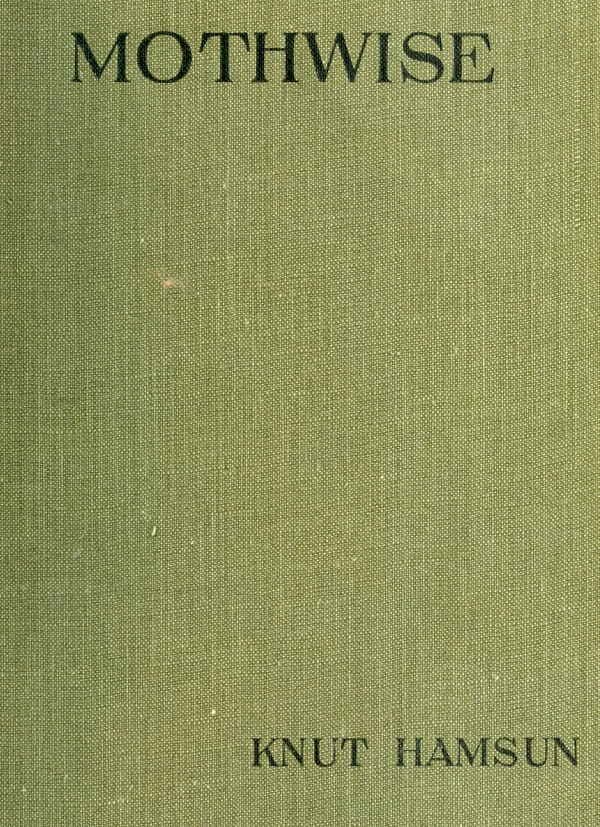
In 1912, Nobel laureate Knut Hamsun crafted this quietly radical meditation on what it means to be content. A man flees the ambitions and pretensions of civilization for a humble peat hut in the forest, where he lives alone with only a mouse he names Madame for company. What follows is part pastoral memoir, part philosophical inquiry into the difference between the happiness we chase and the happiness we actually find. Hamsun's masterful psychological precision turns what could be a simple escape narrative into a rigorous interrogation of desire, social performance, and the peace that eludes us. The novel bubbles with eccentric humor even as it poses questions with genuine existential weight. It stands at a pivotal moment in Hamsun's career, bridging his intense early studies of individuals against society and the broader social tapestries of his later masterpieces.
Editions
X-Ray
“I was telling my wife a story about a rich man who was curious, too. He shot himself just to find out what comes after death. Ha, ha, ha! That's the height of curiosity, isn't it? Shooting yourself to find out what comes after death!””
— Knut Hamsun
“Och med en annan sak blir jag aldrig färdig: Att draga mig tillbaka och sitta i ensamheten i skogen och ha det gott och mörkt omkring mig. Det är den sista glädjen. Det är det höga, det religiösa i ensamheten och mörkret, som gör att man har behov av dem, det är däremot icke därför man söker sig bort från de andra, att det bara är sig själv man härdar ut med, nej, nej. Men det är det mystiska, att allt brusar fjärran och dock så nära en, man sitter i mitten av en allestädes närvarande. Det är väl Gud. Det är väl en själv som är en del av allt.””
— Knut Hamsun
“Mens gryten koker lægger jeg mig litt og ser på bålet og sovner. Jeg tar min middagssøvn før maten. Og når jeg våkner er gryten kokt, det lukter kjøt og tyri i gammen.””
— Knut Hamsun
“Who am I now among men? Or am I lost already? Am I nothing already?" And I cry out and call my name to hear if it still lives.””
— Knut Hamsun
“an overexertion to which one is driven by inner content is easy to bear.””
— Knut Hamsun
“I remembered her father, the old man from another world, the man with mittens, who had to be spoon-fed on porridge because he was ninety, who smelled like an unburied corpse.””
— Knut Hamsun
“This is my desolate period; my wheels stop, my hair stops growing, my nails stop growing, everything stops growing but the days of my life.””
— Knut Hamsun
“This is a life you do not understand. Yes, your home is in the city, and you have furnished it with vanities, with pictures and books; but you have a wife and a servant and a hundred expenses. Asleep or awake you must keep pace with the world and are never at peace. I have peace. You are welcome to your intellectual pastimes and books and art and newspapers; welcome, too, to your bars and your whisky that only makes me ill. Here am I in the forest, quite content. If you ask me intellectual questions and try to trip me up, then I will reply, for example, that God is the origin of all things and that truly men are mere specks and atoms in the universe. You are no wiser than I. But if you should go so far as to ask me what is eternity, then I know quite as much in this matter, too, and reply thus: Eternity is merely unborn time, nothing but unborn time.””
— Knut Hamsun
“Kaffe av skålen, et forsvarlig smørogbrød med snedkeren, ingen unatur og kunster, det var akkurat som et lite fotfæste for hende her i denne kroken.””
— Knut Hamsun
Link to this book
Add a free, dofollow link to Lex on your blog, forum, syllabus, or reading list.

<a href="https://lex-books.com/book/look-back-on-happiness-2826d31c-5360-49b0-bb4b-f806f073df9a"><img src="https://lex-books.com/badges/read-on-lex.svg" alt="Read Look Back on Happiness by Knut Hamsun free on Lex" width="160" height="40"></a>[](https://lex-books.com/book/look-back-on-happiness-2826d31c-5360-49b0-bb4b-f806f073df9a)[url=https://lex-books.com/book/look-back-on-happiness-2826d31c-5360-49b0-bb4b-f806f073df9a][img]https://lex-books.com/badges/read-on-lex.svg[/img][/url]Read Look Back on Happiness by Knut Hamsun free on Lex: https://lex-books.com/book/look-back-on-happiness-2826d31c-5360-49b0-bb4b-f806f073df9aCite this book
Reading this edition for a paper or guide? Copy a citation.
Hamsun, Knut. Look Back on Happiness. Lex, lex-books.com/book/look-back-on-happiness-2826d31c-5360-49b0-bb4b-f806f073df9a.Hamsun, K. (n.d.). Look Back on Happiness. Lex. https://lex-books.com/book/look-back-on-happiness-2826d31c-5360-49b0-bb4b-f806f073df9aHamsun, Knut. Look Back on Happiness. Lex. https://lex-books.com/book/look-back-on-happiness-2826d31c-5360-49b0-bb4b-f806f073df9a.