Mehalah: A Story of the Salt Marshes
1880
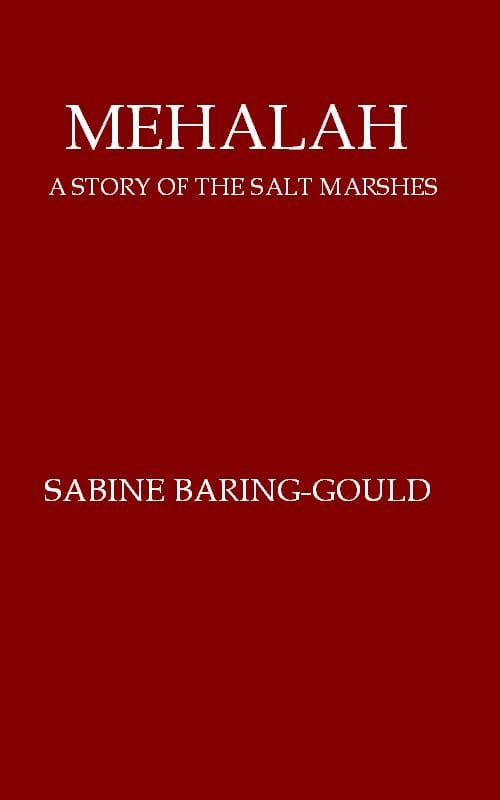
The salt marshes of Essex are not kind to the weak. Here, where the land rises in lonely islands from miles of treacherous water, where superstition threads through daily life like marsh fog, a young woman named Mehalah Sharland refuses to bow. Her mother is sick. Their tenancy is precarious. Into their lives rides Elijah Rebow, the new landlord - a man of violent passions and relentless will. He wants Mehalah, and what Rebow wants, he takes. But Mehalah possesses a spirit that cannot be bought or broken, and she has already given her heart to another. What follows is a story of obsession, pride, and the terrible beauty of resistance. The novel crackles with raw energy, its characters fierce and primitive, never agreeable but always absorbing. Critics in 1880 immediately drew parallels to Brontë's masterpiece, and they were right: these Essex marshes hold a similar wildness, a landscape that mirrors the torments of the heart.
Editions

X-Ray
“Once I turned the key in the lock carelessly, and he who was bound by this chain escaped. I have fastened it firmly now, it will not fall apart for all eternity. Now Glory! Now we are bound together for everlasting.””
— Unknown
“Whilst we are on the earth we cannot be united, because he intercepts the current which runs from my heart to yours, and from yours to mine. Although he might be far away, a thousand miles distant, yet the tide of your affection would set to him. The moon they tell us is some hundreds of thousands of miles from the ocean, and yet the water throbs and rises, and falls and retreats responsive to the impulse of the moon, because moon and earth are both in one sphere. As long as you and he are together in one orb, there is no peace for me, your love will never flow to me and dance and sparkle about me. I must look elsewhere for peace, elsewhere for union, without which there is no peace.””
— Unknown
“They can't understand the ways and workings of those that have souls. They are bodies, ruled by bodily wants, and look at all things out of bodily eyes, and interpret by bodily instincts all things done by those spiritually above them. But you understand me, and I understand you. Soul speaks to soul.””
— Unknown
“She could see into his heart as into clear water, to the ugly snags and creeping things at the bottom.””
— Unknown
“I put a little plant once in a pot and filled the vessel with rich mould, and the plant grew and at last broke the pot into a hundred pieces, and I found within a dense mat of fibres; the root had eaten up and displaced all the soil and swelled till it rent the vessel. It has been so with my love of you. It got planted, how I know not, in my heart, and it has thrown its roots through the whole chamber, and devoured all the substance, and woven a net of fibres in and out and up and down, and has swelled and is thrusting against the walls, till there is scarce love there any more but horrible, biting, wearing pain. I cannot kill the plant and pluck it out, or it will leave a great void. I must let it grow till it has broken up the vessel. It grows and makes root, but will not flower. There has been scarce leaf, certainly no blossom, to my love. It is all downward, inward, clogging, bursting tangle of fibre.””
— Unknown
“I don't care if you die and I die, but parted we shall not be. You and I must find our heaven in each other and nowhere else.””
— Unknown
“Look here, Glory!' he said, 'when iron is taken from the smelting furnace it is crystalline and brittle; there is no thread and texture in it, but we burn it and beat it, and as we work we beat our stubborn purpose into the metal, and it is the will of the smith which goes through his arm and hammer into the iron and converts it to steel; he drives his will into the metal, and that becomes the fibre in it. You don't find it so in nature. The human soul must part with something and transfuse it into the inanimate iron, and there it will lie and last, for the will of man is divine and eternal. It is much the same with all with which we have to do. I have spent time and labour over you, and thought and purpose have been consumed in making you my wife; they are none of them lost, they are all in you, they have become fibres in your soul.””
— Unknown
“There is passion in us”
— Unknown
“Elijah and I understand each other,' answered Mehalah. 'I suppose there is something of truth in what he says over and over again, that he and I are different from others, and that there's none can understand us but our two selves.””
— Unknown
Link to this book
Add a free, dofollow link to Lex on your blog, forum, syllabus, or reading list.

<a href="https://lex-books.com/book/mehalah-a-story-of-the-salt-marshes-6c2f69b2-f59e-49b8-974f-e7a6ccf5c4a0"><img src="https://lex-books.com/badges/read-on-lex.svg" alt="Read Mehalah: A Story of the Salt Marshes by Unknown free on Lex" width="160" height="40"></a>[](https://lex-books.com/book/mehalah-a-story-of-the-salt-marshes-6c2f69b2-f59e-49b8-974f-e7a6ccf5c4a0)[url=https://lex-books.com/book/mehalah-a-story-of-the-salt-marshes-6c2f69b2-f59e-49b8-974f-e7a6ccf5c4a0][img]https://lex-books.com/badges/read-on-lex.svg[/img][/url]Read Mehalah: A Story of the Salt Marshes by Unknown free on Lex: https://lex-books.com/book/mehalah-a-story-of-the-salt-marshes-6c2f69b2-f59e-49b8-974f-e7a6ccf5c4a0Cite this book
Reading this edition for a paper or guide? Copy a citation.
Unknown. Mehalah: A Story of the Salt Marshes. Lex, lex-books.com/book/mehalah-a-story-of-the-salt-marshes-6c2f69b2-f59e-49b8-974f-e7a6ccf5c4a0.Unknown (1880). Mehalah: A Story of the Salt Marshes. Lex. https://lex-books.com/book/mehalah-a-story-of-the-salt-marshes-6c2f69b2-f59e-49b8-974f-e7a6ccf5c4a0Unknown. Mehalah: A Story of the Salt Marshes. Lex. https://lex-books.com/book/mehalah-a-story-of-the-salt-marshes-6c2f69b2-f59e-49b8-974f-e7a6ccf5c4a0.