Marcella
1894
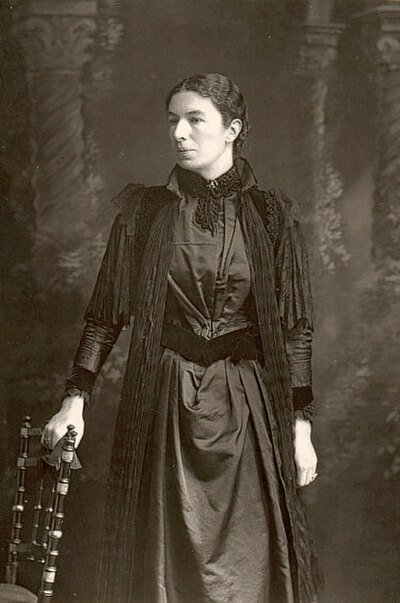
Marcella Boyce has just inherited Mellor Park, and with it, a world of expectations she never asked for. She's not your typical Victorian heiress. When a gamekeeper is murdered on the estate, Marcella's investigations force her to confront uncomfortable truths about power, property, and justice in the very world she has inherited. Her engagement to the wealthy Sir John places her in direct opposition to the man she loves, as his defense of the status quo collides with her growing conviction that something is fundamentally wrong. Marcella turns to nursing as her answer, her days spent moving between village cottages, London slums, hospital wards, and the Ladies' Gallery of Parliament. Mrs. Humphry Ward constructs a narrative where personal conscience meets social convention, where a young woman must decide what she believes and what she is willing to lose for it. The murder mystery provides the engine, but the real tension lies in Marcella's refusal to be the quiet, compliant figure her world demands. For readers who want their fiction with teeth: a novel that was controversial in its own time precisely because it refused to look away from poverty, injustice, and the high cost of holding unpopular beliefs.
Editions

X-Ray
“One of the things that most tormented him indeed in this recent existence was a perpetual pricking sense of the contrast between this small world of his ancestral possessions and traditions, with all its ceremonial and feudal usage, and the great rushing world outside it of action and of thought. Do what he would, he could not un-king himself within the limits of the Maxwell estate. To the people living upon it he was the man of most importance within their ken, was inevitably their potentate and earthly providence. He confessed that there was a real need of him, if he did his duty. But on this need the class-practice of generations had built up a deference, a sharpness of class-distinction, which any modern must find more and more irksome in proportion to his modernness. What was in Aldous's mind, as he stood with drawn brows looking out over the view which showed him most of his domain, was a sort of hot impatience of being made day by day, in a hundred foolish ways, to play at greatness.Yet, as we know, he was no democrat by conviction, had no comforting faith in what seemed to him the rule of a multitudinous ignorance. Still every sane man of to-day knows, at any rate, that the world has taken the road of democracy, and that the key to the future, for good or ill, lies not in the revolts and speculations of the cultivated few, but in the men and movements that can seize the many. Aldous's temper was despondently critical towards the majority of these, perhaps; he had, constitutionally, little of that poet's sympathy with the crowd, as such, which had given Hallin his power. But, at any rate, they filled the human stage”
— Mrs. Humphry Ward
Link to this book
Add a free, dofollow link to Lex on your blog, forum, syllabus, or reading list.

<a href="https://lex-books.com/book/marcella-49f426fd-ddfc-481a-b7bc-8f8b3c33ec3e"><img src="https://lex-books.com/badges/read-on-lex.svg" alt="Read Marcella by Mrs. Humphry Ward free on Lex" width="160" height="40"></a>[](https://lex-books.com/book/marcella-49f426fd-ddfc-481a-b7bc-8f8b3c33ec3e)[url=https://lex-books.com/book/marcella-49f426fd-ddfc-481a-b7bc-8f8b3c33ec3e][img]https://lex-books.com/badges/read-on-lex.svg[/img][/url]Read Marcella by Mrs. Humphry Ward free on Lex: https://lex-books.com/book/marcella-49f426fd-ddfc-481a-b7bc-8f8b3c33ec3eCite this book
Reading this edition for a paper or guide? Copy a citation.
Ward, Mrs. Humphry. Marcella. Lex, lex-books.com/book/marcella-49f426fd-ddfc-481a-b7bc-8f8b3c33ec3e.Ward, M. H. (1894). Marcella. Lex. https://lex-books.com/book/marcella-49f426fd-ddfc-481a-b7bc-8f8b3c33ec3eWard, Mrs. Humphry. Marcella. Lex. https://lex-books.com/book/marcella-49f426fd-ddfc-481a-b7bc-8f8b3c33ec3e.