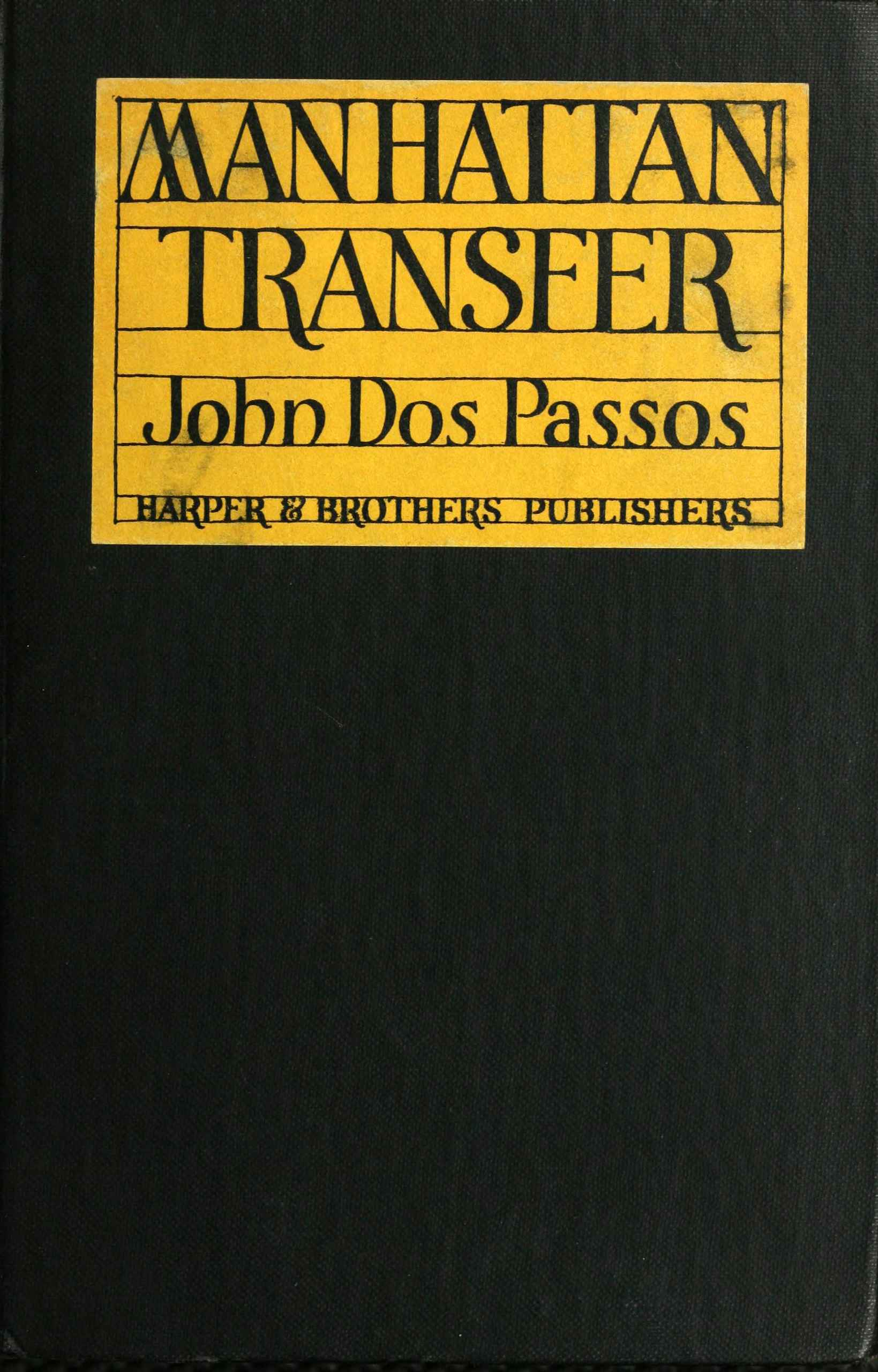
Manhattan Transfer
1925
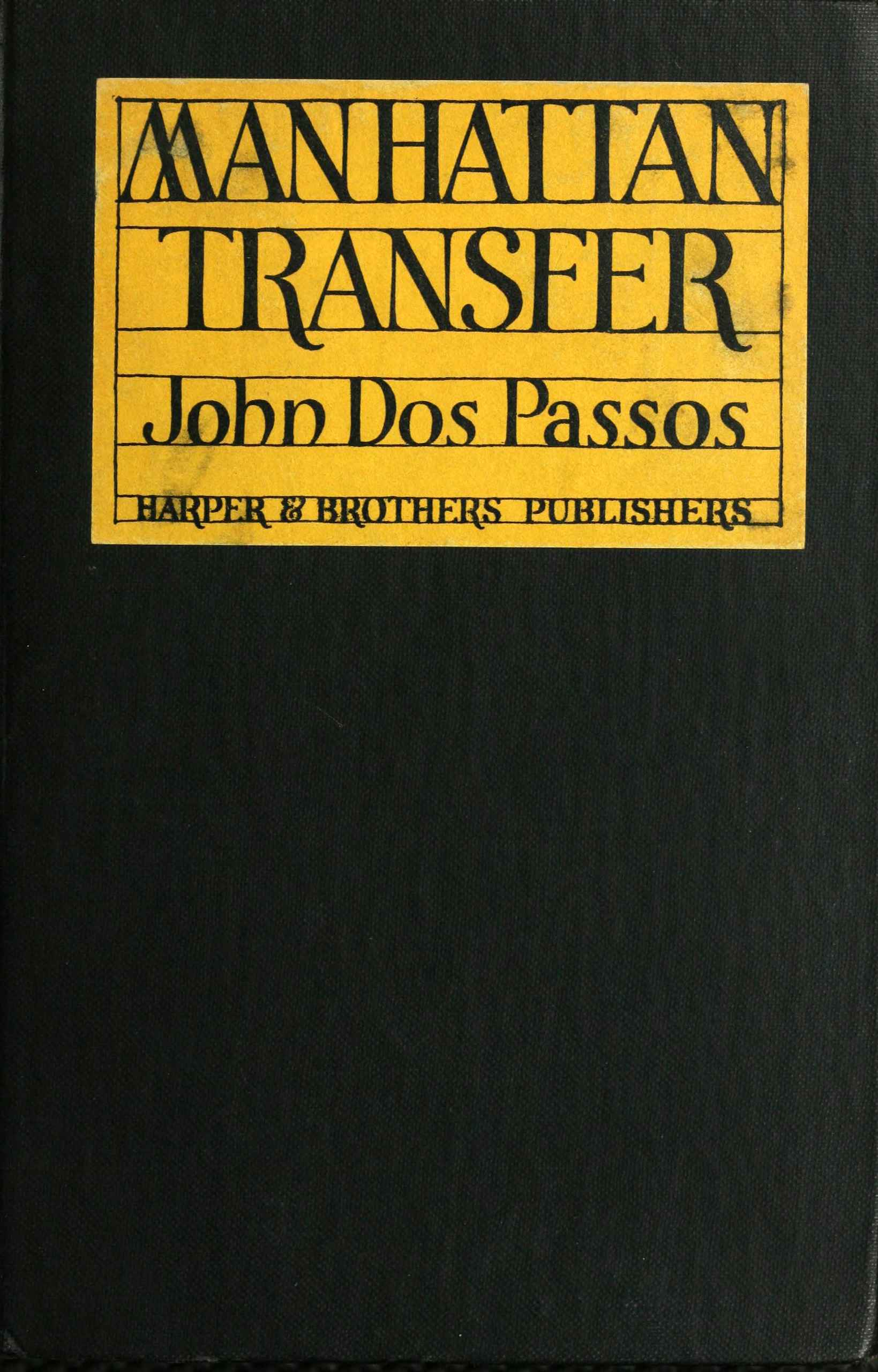
Manhattan Transfer fractures the American dream into a dozen colliding lives. John Dos Passos weaves together the stories of ambitious strivers, fallen beauties, corrupt politicians, and desperate immigrants, each grasping for their piece of New York as the city devours the unwary. The novel moves like the city itself: restless, fragmented, accumulating lives the way crowds accumulate on subway platforms at rush hour. From the glittering restaurants of Delmonico's to the grim waterfront flophouses, Dos Passos captures a metropolis that promises everything and delivers only motion. The experimental technique draws from Joyce's interior monologues and Eisenstein's film editing, creating a collage of perspectives that mirrors the overwhelming sensory assault of urban modernity. Bud Korpenning arrives at the ferry terminal seeking a fresh start; Ed Thatcher waits for his first child to be born; women sell their charm for survival and men sell their souls for power. These lives intersect and pass each other on crowded streets, connected only by proximity, never by understanding. The city absorbs them all with equal indifference. More than a portrait of 1920s Manhattan, this is a reckoning with what America costs those who pursue it. The prose crackles with energy and despair in equal measure, rendering the city's ceaseless ambition and the human wreckage left in its wake. For readers who loved The Great Gatsby's meditation on desire and ruin, Manhattan Transfer offers an even harsher truth: the dream was never the point.
Editions

X-Ray
“The terrible thing about having New York go stale on you is that there's nowhere else. It's the top of the world.””
— John Dos Passos
“How do I get to Broadway?...I want to get to the center of things.””
— John Dos Passos
“I read and keep silent. I am one of the silent watchers. I know that every sentence, every word, every picayune punctuation that appears in the public press is perused and revised and deleted in the interests of advertisers and bondholders. The fountain of national life is poisoned at the source.””
— John Dos Passos
“Do you know how long God took to destroy the Tower of Babel, folks? Seven minutes. Do you know how long the Lord God took to destroy Babylon and Nineveh? Seven minutes. There’s more wickedness in one block in New York City than there was in a square mile in Nineveh, and how long do you think the Lord God of Sabboath will take to destroy New York City and Brooklyn and the Bronx? Seven seconds. Seven Seconds.””
— John Dos Passos
“There was Babylon and Nineveh; they were built of brick. Athens was gold marble columns. Rome was held up on broad arches of rubble. In Constantinople the minarets flame like great candles round the Golden Horn… Steel, glass, tile, concrete will be the materials of the skyscraper. Crammed on the narrow island the millionwindowed buildings will just glittering, pyramid on pyramid like the white cloudhead above a thunderstorm.””
— John Dos Passos
“But what can you do with success when you get it? You cant eat it or drink it. Of course I understand that people who havent enough money to feed their faces and all that should scurry round and get it. But success . . .” “The trouble with me is I cant decide what I want most, so my motion is circular, helpless and confoundedly discouraging.” “Oh but God decided that for you. You know all the time, but you wont admit it to yourself.” “I imagine what I want most is to get out of this town, preferably first setting off a bomb under the Times Building.””
— John Dos Passos
“There’s a rattle of chains and a clatter from the donkeyengine where a tall man in blue overalls stands at a lever in the middle of a cloud of steam that wraps round your face like a wet towel.””
— John Dos Passos
“Bud edged up next to a young man in a butcher’s apron who had a baseball cap on backwards.””
— John Dos Passos
“There are lives to be lived if only you didn't care. Care for what, for what; the opinion of mankind, money, success, hotel lobbies, health, umbrellas, Uneeda biscuits . . .?””
— John Dos Passos
Link to this book
Add a free, dofollow link to Lex on your blog, forum, syllabus, or reading list.

<a href="https://lex-books.com/book/manhattan-transfer-c9559179-63a8-4789-9ad2-7e1a214f1696"><img src="https://lex-books.com/badges/read-on-lex.svg" alt="Read Manhattan Transfer by John Dos Passos free on Lex" width="160" height="40"></a>[](https://lex-books.com/book/manhattan-transfer-c9559179-63a8-4789-9ad2-7e1a214f1696)[url=https://lex-books.com/book/manhattan-transfer-c9559179-63a8-4789-9ad2-7e1a214f1696][img]https://lex-books.com/badges/read-on-lex.svg[/img][/url]Read Manhattan Transfer by John Dos Passos free on Lex: https://lex-books.com/book/manhattan-transfer-c9559179-63a8-4789-9ad2-7e1a214f1696Cite this book
Reading this edition for a paper or guide? Copy a citation.
Passos, John Dos. Manhattan Transfer. Lex, lex-books.com/book/manhattan-transfer-c9559179-63a8-4789-9ad2-7e1a214f1696.Passos, J. D. (1925). Manhattan Transfer. Lex. https://lex-books.com/book/manhattan-transfer-c9559179-63a8-4789-9ad2-7e1a214f1696Passos, John Dos. Manhattan Transfer. Lex. https://lex-books.com/book/manhattan-transfer-c9559179-63a8-4789-9ad2-7e1a214f1696.