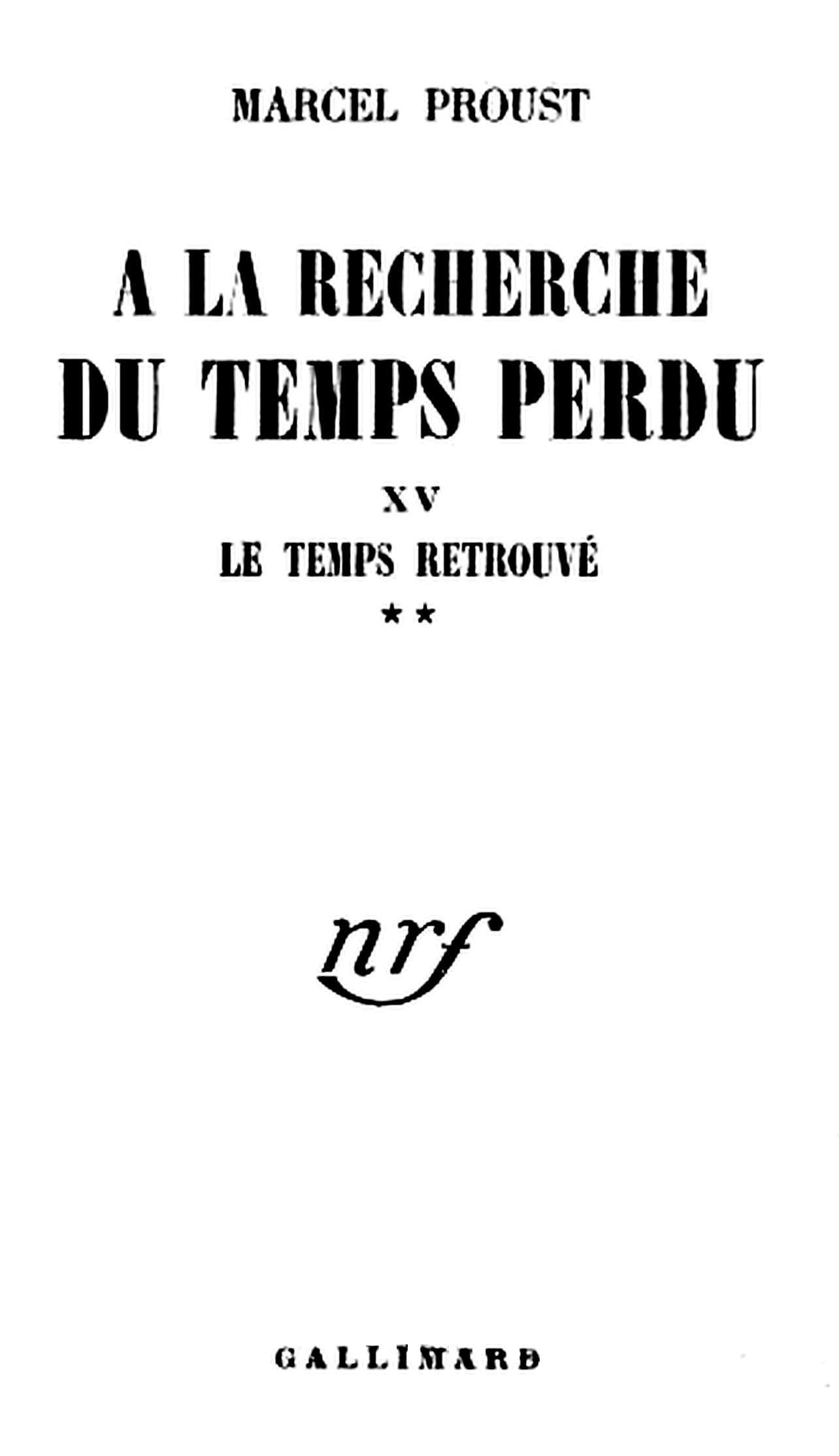
Le Temps Retrouvé Tome 1 (de 2): À La Recherche Du Temps Perdu Vol.vii
1927
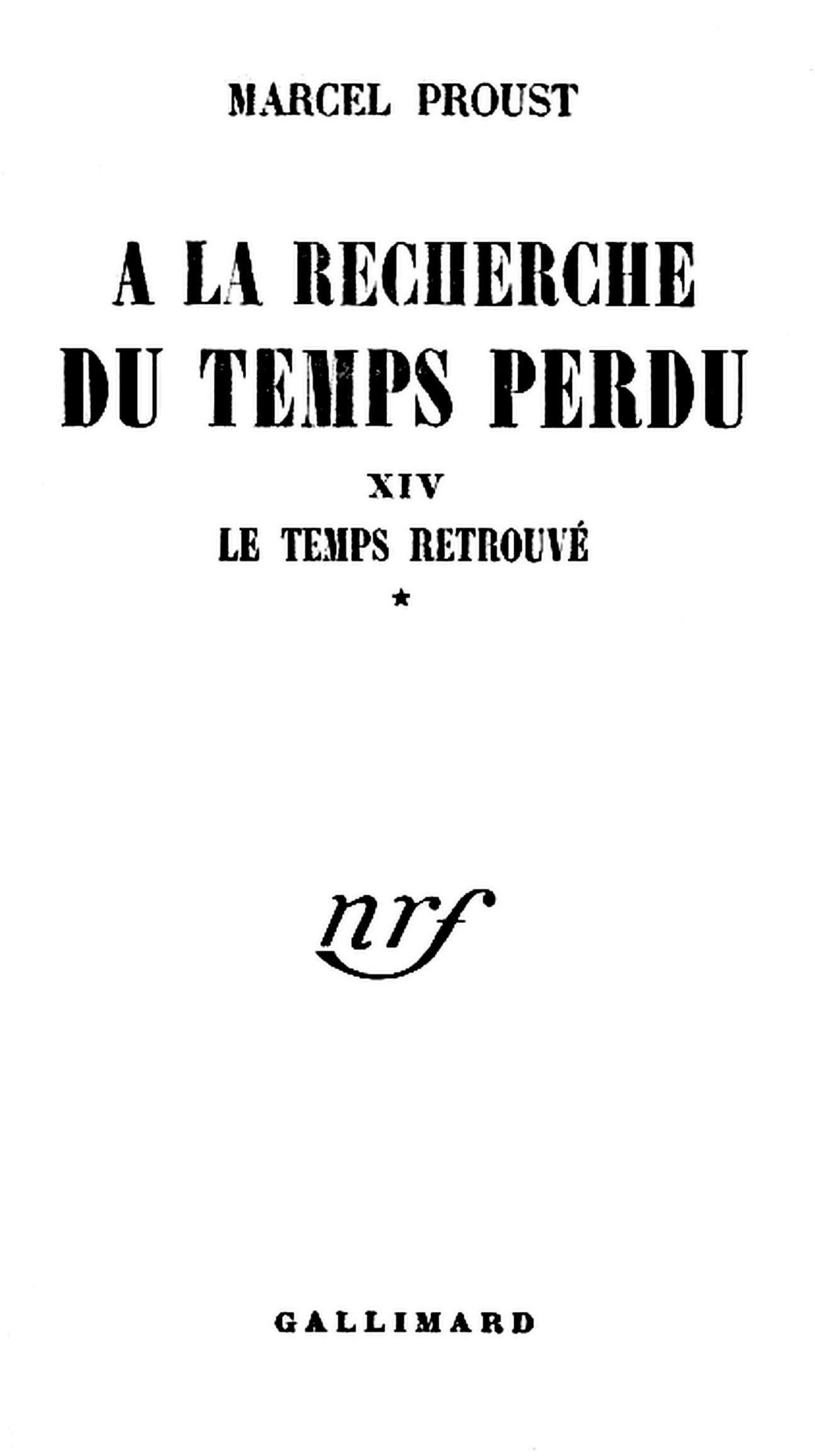
Le Temps Retrouvé Tome 1 (de 2): À La Recherche Du Temps Perdu Vol.vii
1927
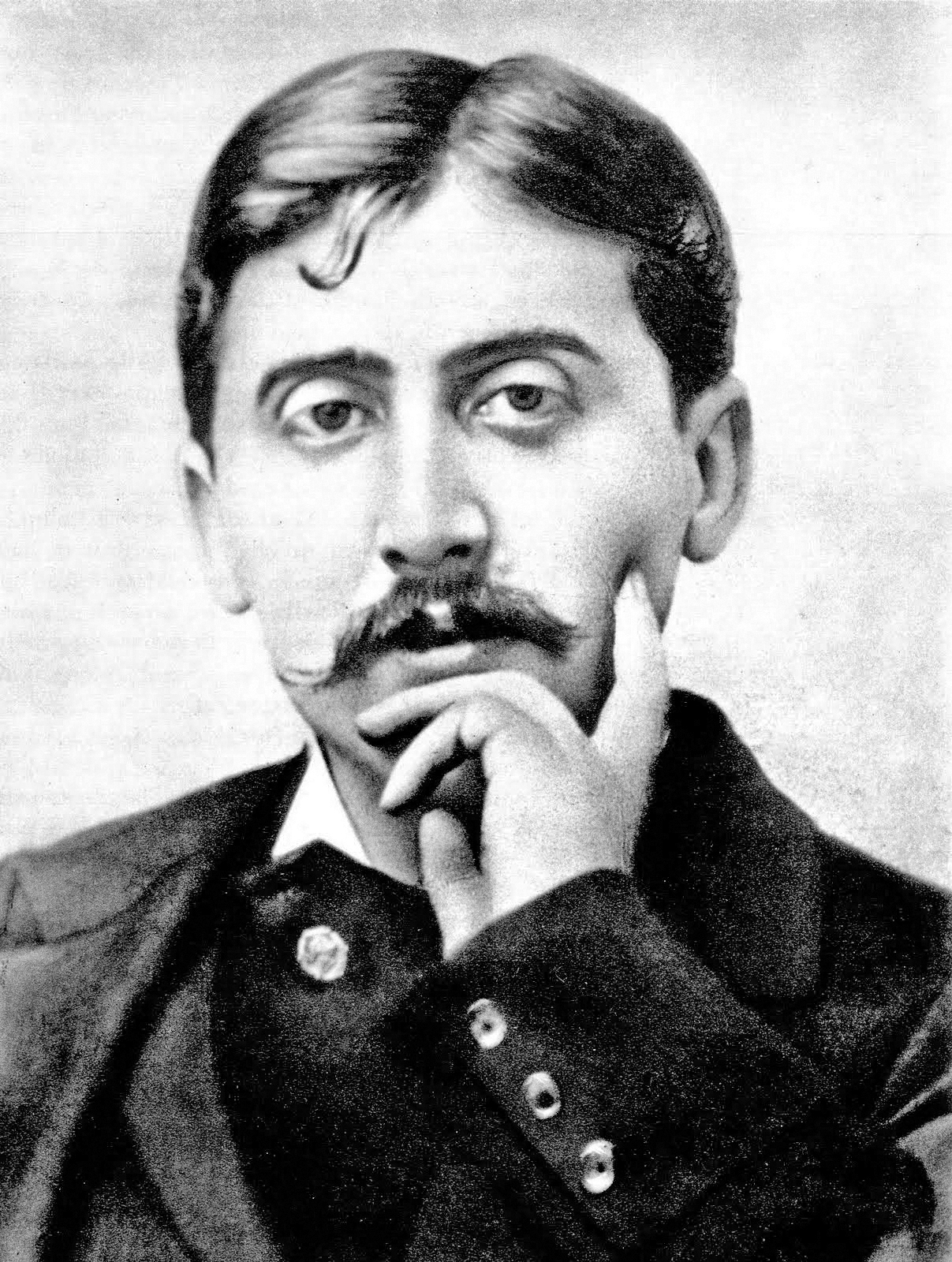
Le Temps Retrouvé Tome 1, published in 1927, is the final volume of Marcel Proust's monumental series 'In Search of Lost Time.' This autobiographical novel explores themes of memory, love, and the passage of time through the protagonist's reflections on his past and the transformations of those around him. Set in Tansonville, it captures the complexities of human relationships and the impact of time on identity and society, making it a significant work in French literature.
Editions
X-Ray
“Every reader, as he reads, is actually the reader of himself. The writer's work is only a kind of optical instrument he provides the reader so he can discern what he might never have seen in himself without this book. The reader's recognition in himself of what the book says is the proof of the book's truth.””
— Marcel Proust
“Every reader finds himself. The writer's work is merely a kind of optical instrument that makes it possible for the reader to discern what, without this book, he would perhaps never have seen in himself.””
— Marcel Proust
“Through art alone are we able to emerge from ourselves, to know what another person sees of a universe which is not the same as our own and of which, without art, the landscapes would remain as unknown to us as those that may exist on the moon. Thanks to art, instead of seeing one world only, our own, we see that world multiply itself and we have at our disposal as many worlds as there are original artists, worlds more different one from the other than those which revolve in infinite space, worlds which, centuries after the extinction of the fire from which their light first emanated, whether it is called Rembrandt or Vermeer, send us still each one its special radiance.””
— Marcel Proust
“Our vanity, our passions, our spirit of imitation, our abstract intelligence, our habits have long been at work, and it is the task of art to undo this work of theirs, making us travel back in the direction from which we have come to the depths where what has really existed lies unknown within us.””
— Marcel Proust
“For although we know that the years pass, that youth gives way to old age, that fortunes and thrones crumble (even the most solid among them) and that fame is transitory, the manner in which”
— Marcel Proust
“And it is because they contain thus within themselves the hours of the past that human bodies have the power to hurt so terribly those who love them, because they contain the memories of so many joys and desires already effaced for them, but still cruel for the lover who contemplates and prolongs in the dimension of Time the beloved body of which he is jealous, so jealous that he may even wish for its destruction. For after death Time withdraws from the body, and the memories, so indifferent, grown so pale, are effaced in her who no longer exists, as they soon will be in the lover whom for a while they continue to torment but in whom before long they will perish, once the desire that owed their inspiration to a living body is no longer there to sustain them. Profound Albertine, whom I at once saw sleeping, and who was dead.””
— Marcel Proust
“What we have not had to decipher, to elucidate by our own efforts, what was clear before we looked at it, is not ours. From ourselves comes only that which we drag forth from the obscurity which lies within us, that which to others is unknown.””
— Marcel Proust
“In reality, every reader when he is reading, is the reader of his own self. The writer’s work is merely a kind of optical instrument which he offers to the reader to permit him to discern what, without the book, he would perhaps never have seen in himself. The reader’s recognition in his own self of what the book says is the proof of its truth.””
— Marcel Proust
“For everyone who, having no artistic sense-that is to say, no submission to subjective reality-may have the knack of reasoning about art till doomsday, especially if he be, in addition, a diplomat or financier in contact with the 'realities' of the present day, is only too ready to believe literature is an intellectual game which is destined to gradually be abandoned as time goes on.””
— Marcel Proust
Link to this book
Add a free, dofollow link to Lex on your blog, forum, syllabus, or reading list.

<a href="https://lex-books.com/book/le-temps-retrouv-tome-1-de-2-la-recherche-du-temps-perdu-vol-vii-c91d2520-ef1d-4910-a973-8cf53290caa0"><img src="https://lex-books.com/badges/read-on-lex.svg" alt="Read Le Temps Retrouvé Tome 1 (de 2): À La Recherche Du Temps Perdu Vol.vii by Marcel Proust free on Lex" width="160" height="40"></a>[](https://lex-books.com/book/le-temps-retrouv-tome-1-de-2-la-recherche-du-temps-perdu-vol-vii-c91d2520-ef1d-4910-a973-8cf53290caa0)[url=https://lex-books.com/book/le-temps-retrouv-tome-1-de-2-la-recherche-du-temps-perdu-vol-vii-c91d2520-ef1d-4910-a973-8cf53290caa0][img]https://lex-books.com/badges/read-on-lex.svg[/img][/url]Read Le Temps Retrouvé Tome 1 (de 2): À La Recherche Du Temps Perdu Vol.vii by Marcel Proust free on Lex: https://lex-books.com/book/le-temps-retrouv-tome-1-de-2-la-recherche-du-temps-perdu-vol-vii-c91d2520-ef1d-4910-a973-8cf53290caa0Cite this book
Reading this edition for a paper or guide? Copy a citation.
Proust, Marcel. Le Temps Retrouvé Tome 1 (de 2): À La Recherche Du Temps Perdu Vol.vii. Lex, lex-books.com/book/le-temps-retrouv-tome-1-de-2-la-recherche-du-temps-perdu-vol-vii-c91d2520-ef1d-4910-a973-8cf53290caa0.Proust, M. (1927). Le Temps Retrouvé Tome 1 (de 2): À La Recherche Du Temps Perdu Vol.vii. Lex. https://lex-books.com/book/le-temps-retrouv-tome-1-de-2-la-recherche-du-temps-perdu-vol-vii-c91d2520-ef1d-4910-a973-8cf53290caa0Proust, Marcel. Le Temps Retrouvé Tome 1 (de 2): À La Recherche Du Temps Perdu Vol.vii. Lex. https://lex-books.com/book/le-temps-retrouv-tome-1-de-2-la-recherche-du-temps-perdu-vol-vii-c91d2520-ef1d-4910-a973-8cf53290caa0.