Le Corbeau = the Raven
1875
Le Corbeau = the Raven
1875
Translated by Stéphane Mallarmé
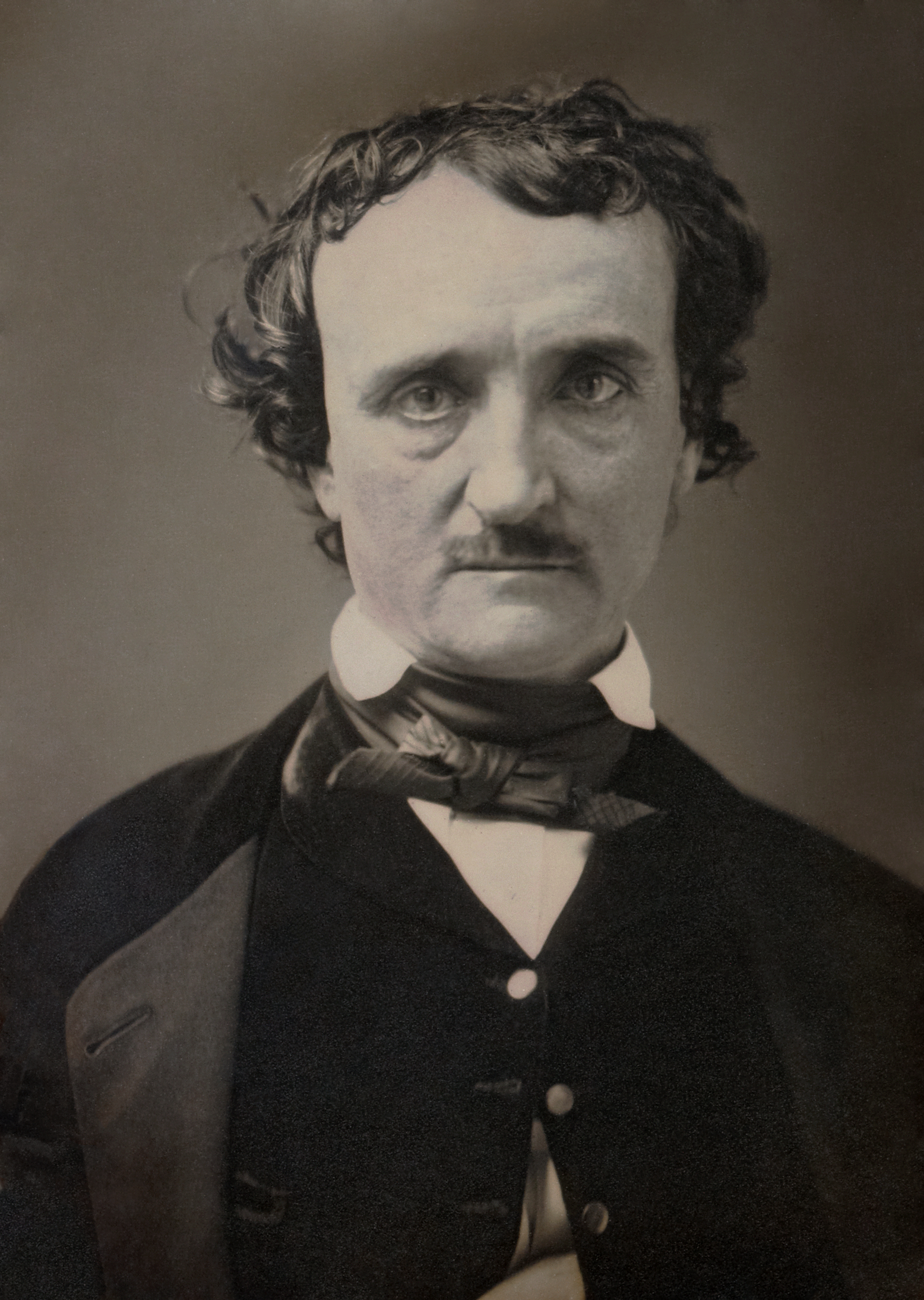
"Nevermore." That single word, spoken by a bird with eyes like a demon's, becomes an abyss into which a grieving man throws himself, again and again, willingly. Edgar Allan Poe's 1845 poem achieves something rare in literature: it captures grief not as a passing sorrow but as a form of madness, a descent that feels inevitable and almost pleasurable in its destructiveness. The narrator sits in December darkness, drunk and desolate, rapping on his chamber door not for rescue but for confirmation of his despair. When the raven arrives, he doesn't silence it. He asks it questions designed to wound, each "Nevermore" a knife he presses deeper into his own chest. The genius lies in how we recognize ourselves in this man who would rather be shattered than healed. This 1875 edition presents Poe's masterpiece alongside Gustave Doré's ethereal, grief-laden engravings. Doré renders the shadow, the bust of Pallas, the midnight December with the precision of nightmare. Here is the poem as it was always meant to be felt: visual and visceral, a monument to the stubbornness of sorrow and the terrible comfort of hearing what we refuse to accept.
Editions
X-Ray
“Once upon a midnight dreary, while I pondered, weak and weary,Over many a quaint and curious volume of forgotten lore,While I nodded, nearly napping, suddenly there came a tapping,As of some one gently rapping, rapping at my chamber door.Tis some visitor," I muttered, "tapping at my chamber door”
— Edgar Allan Poe
“Deep into that darkness peering, long I stood there, wondering, fearing, doubting, dreaming dreams no mortal ever dared to dream before.””
— Edgar Allan Poe
“Quoth the Raven, "Nevermore.””
— Edgar Allan Poe
“Leave my loneliness unbroken””
— Edgar Allan Poe
“Let my heart be still a moment and this mystery explore...””
— Edgar Allan Poe
“Here I opened wide the door;”
— Edgar Allan Poe
“Then, methought, the air grew denser, perfumed from an unseen censerSwung by Seraphim whose footfalls tinkled on the tufted floor."Wretch," I cried, "thy God hath lent thee--by these angels he hath sent thee--Respite--respite and nepenthe from thy memories of Lenore!Quaff, oh quaff this kind nepenthe, and forget this lost Lenore!"Quothe the Raven, "Nevermore.””
— Edgar Allan Poe
“Deep into that darkness peering, long I stood there wondering, fearing,Doubting, dreaming dreams no mortals ever dared to dream before;But the silence was unbroken, and the stillness gave no token,And the only word there spoken was the whispered word, "Lenore?"This I whispered, and an echo murmured back the word, "Lenore!"”
— Edgar Allan Poe
“Darkness there, and nothing more.””
— Edgar Allan Poe
Link to this book
Add a free, dofollow link to Lex on your blog, forum, syllabus, or reading list.

<a href="https://lex-books.com/book/le-corbeau-the-raven-23e2d398-0f90-4ce5-b88f-cc35fb3a3873"><img src="https://lex-books.com/badges/read-on-lex.svg" alt="Read Le Corbeau = the Raven by Edgar Allan Poe free on Lex" width="160" height="40"></a>[](https://lex-books.com/book/le-corbeau-the-raven-23e2d398-0f90-4ce5-b88f-cc35fb3a3873)[url=https://lex-books.com/book/le-corbeau-the-raven-23e2d398-0f90-4ce5-b88f-cc35fb3a3873][img]https://lex-books.com/badges/read-on-lex.svg[/img][/url]Read Le Corbeau = the Raven by Edgar Allan Poe free on Lex: https://lex-books.com/book/le-corbeau-the-raven-23e2d398-0f90-4ce5-b88f-cc35fb3a3873Cite this book
Reading this edition for a paper or guide? Copy a citation.
Poe, Edgar Allan. Le Corbeau = the Raven. Lex, lex-books.com/book/le-corbeau-the-raven-23e2d398-0f90-4ce5-b88f-cc35fb3a3873.Poe, E. A. (1875). Le Corbeau = the Raven. Lex. https://lex-books.com/book/le-corbeau-the-raven-23e2d398-0f90-4ce5-b88f-cc35fb3a3873Poe, Edgar Allan. Le Corbeau = the Raven. Lex. https://lex-books.com/book/le-corbeau-the-raven-23e2d398-0f90-4ce5-b88f-cc35fb3a3873.