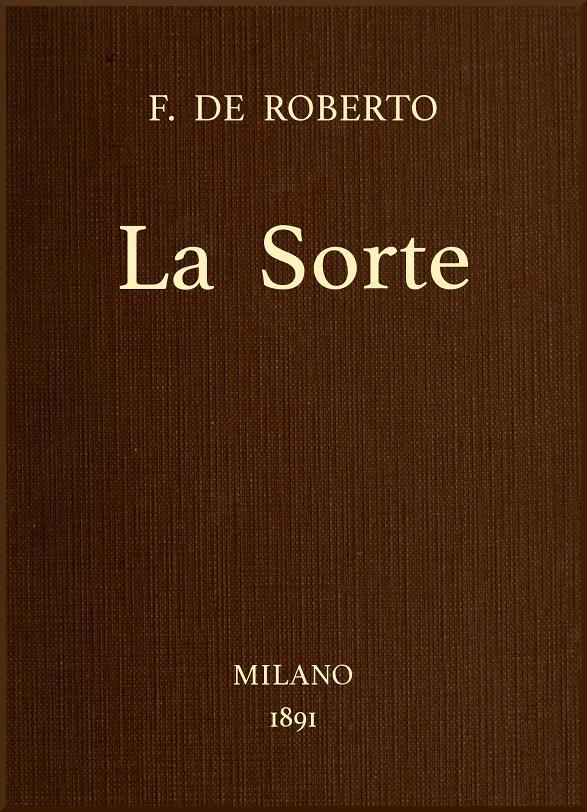
La Sorte
1887
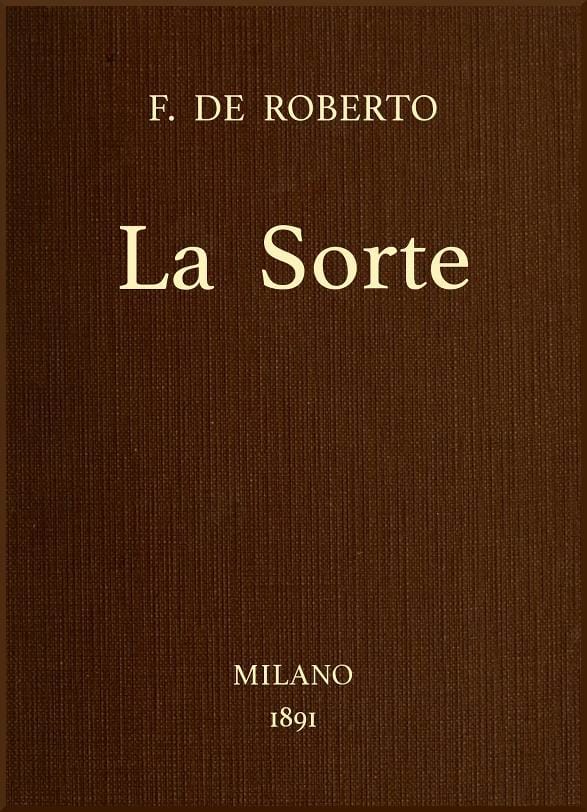
The Princess of Roccasciano sits at the gaming table, watching her fortunes evaporate with every turn of the card. In Federico De Roberto's bracing 1887 novel, gambling is not merely a vice but a metaphor for existence itself, a desperate grasp at agency in a world that offers none. The Italian aristocracy, its mansions crumbling, its coffers emptying, finds itself at the same table as the Princess: wagering what remains against impossible odds. La Sorte traces the Princess's descent into financial and moral ruin with unflinching precision. Her companions at the table, the Cavalier Fornari and the scheming Father Agatino, circle like vultures, each with their own ambitions and failures. What emerges is a portrait of a class consuming itself, mistaking luck for skill, compulsion for choice. De Roberto, writing at the height of Italian Verismo, strips away the romanticism of his contemporaries to reveal the raw machinery of fate at work. For readers who loved The Great Gatsby's meditation on wealth and decline, or Crime and Punishment's psychological excavation of a mind unmoored from morality, this novel offers similar intensity: a damning portrait of a society playing for stakes it cannot afford to lose.
Editions
Link to this book
Add a free, dofollow link to Lex on your blog, forum, syllabus, or reading list.

<a href="https://lex-books.com/book/la-sorte-1a9df31a-fa81-447e-8052-a1cc3afce746"><img src="https://lex-books.com/badges/read-on-lex.svg" alt="Read La Sorte by Federico De Roberto free on Lex" width="160" height="40"></a>[](https://lex-books.com/book/la-sorte-1a9df31a-fa81-447e-8052-a1cc3afce746)[url=https://lex-books.com/book/la-sorte-1a9df31a-fa81-447e-8052-a1cc3afce746][img]https://lex-books.com/badges/read-on-lex.svg[/img][/url]Read La Sorte by Federico De Roberto free on Lex: https://lex-books.com/book/la-sorte-1a9df31a-fa81-447e-8052-a1cc3afce746Cite this book
Reading this edition for a paper or guide? Copy a citation.
Roberto, Federico De. La Sorte. Lex, lex-books.com/book/la-sorte-1a9df31a-fa81-447e-8052-a1cc3afce746.Roberto, F. D. (1887). La Sorte. Lex. https://lex-books.com/book/la-sorte-1a9df31a-fa81-447e-8052-a1cc3afce746Roberto, Federico De. La Sorte. Lex. https://lex-books.com/book/la-sorte-1a9df31a-fa81-447e-8052-a1cc3afce746.