Green Carnation
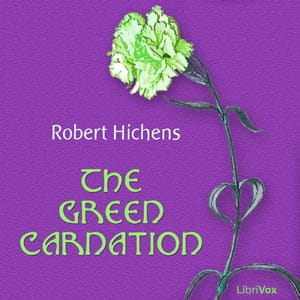
Published anonymously in 1894, The Green Carnation detonated a literary scandal that still reverberates. Robert Hichens drew on his personal acquaintance with Oscar Wilde and Lord Alfred Douglas to create Esmé Amarinth and Lord Reggie Hastings, two characters so thinly disguised that contemporary readers instantly recognized their real-life counterparts. The novel captures the poisonous sweetness of that legendary friendship: its intellectual showmanship, its aesthetic posturing, and the devastating emotional dependency that would ultimately destroy Wilde. Hichens spent a year observing the pair in their natural habitat, transcribing their actual sayings into his characters' mouths with devastating accuracy. The book was withdrawn in 1895, but not before it became evidence in Wilde's infamous trials for gross indecency. What makes this novel endure is not merely its historical curiosity value, but its sharp portrait of how love becomes leverage, how art becomes armor, and how a circle of friends can become an execution. It's a document of betrayal and beauty, written in the dying light of the 1890s aesthetic movement.
Editions

Read by
Group Narration
3 readers
ElleyKat, James K. White, Lisa Reichert
Link to this book
Add a free, dofollow link to Lex on your blog, forum, syllabus, or reading list.

<a href="https://lex-books.com/book/green-carnation-536d2c85-e9d8-4d00-9956-5b95184a3fbd"><img src="https://lex-books.com/badges/read-on-lex.svg" alt="Read Green Carnation by Robert Smythe Hichens free on Lex" width="160" height="40"></a>[](https://lex-books.com/book/green-carnation-536d2c85-e9d8-4d00-9956-5b95184a3fbd)[url=https://lex-books.com/book/green-carnation-536d2c85-e9d8-4d00-9956-5b95184a3fbd][img]https://lex-books.com/badges/read-on-lex.svg[/img][/url]Read Green Carnation by Robert Smythe Hichens free on Lex: https://lex-books.com/book/green-carnation-536d2c85-e9d8-4d00-9956-5b95184a3fbdCite this book
Reading this edition for a paper or guide? Copy a citation.
Hichens, Robert Smythe. Green Carnation. Lex, lex-books.com/book/green-carnation-536d2c85-e9d8-4d00-9956-5b95184a3fbd.Hichens, R. S. (n.d.). Green Carnation. Lex. https://lex-books.com/book/green-carnation-536d2c85-e9d8-4d00-9956-5b95184a3fbdHichens, Robert Smythe. Green Carnation. Lex. https://lex-books.com/book/green-carnation-536d2c85-e9d8-4d00-9956-5b95184a3fbd.