General Principle of Relativity: In Its Philosophical and Historical Aspect

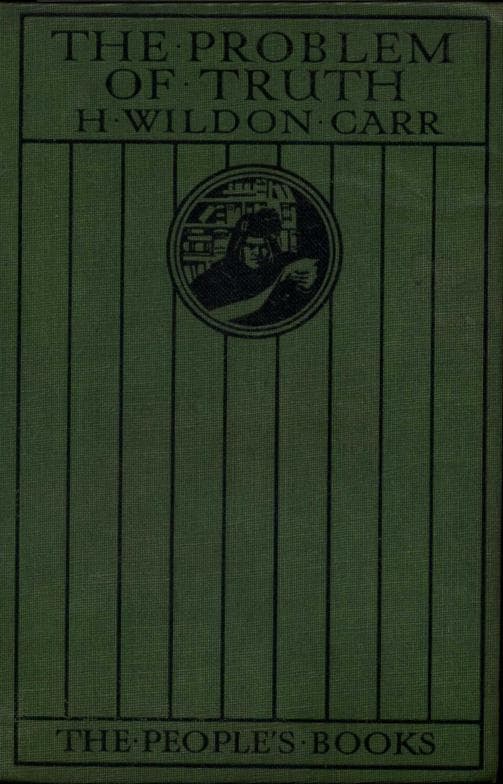
Einstein's General Theory of Relativity revolutionized our understanding of gravity, space, and time. But what philosophical foundations did it rest upon, and how did it transform humanity's conception of the cosmos? Herbert Wildon Carr examines these profound questions in this rigorous philosophical treatise. Carr traces the historical development of ideas about space and time from Newton through the scientific revolution, showing how Einstein's revolutionary insight, that gravity is not a force but a curvature of spacetime, resolved contradictions that had haunted physics for centuries. He explores the philosophical implications with clarity: what does it mean for space to be curved? How does matter tell spacetime how to bend, and how does spacetime tell matter how to move? The book illuminates how relativity forced philosophers to abandon centuries-old assumptions about the nature of reality itself. Written with philosophical precision yet accessible to serious readers, this work remains essential for anyone seeking to understand not just what relativity says, but what it means.
Editions

Read by
Group Narration
4 readers
Tommy Hersant, Diane Castillo, SKwanlada, Availle
Link to this book
Add a free, dofollow link to Lex on your blog, forum, syllabus, or reading list.

<a href="https://lex-books.com/book/general-principle-of-relativity-in-its-philosophical-and-historical-aspect-35b7bd62-c144-4a73-9331-39dcdc6e7b51"><img src="https://lex-books.com/badges/read-on-lex.svg" alt="Read General Principle of Relativity: In Its Philosophical and Historical Aspect by Herbert Wildon Carr free on Lex" width="160" height="40"></a>[](https://lex-books.com/book/general-principle-of-relativity-in-its-philosophical-and-historical-aspect-35b7bd62-c144-4a73-9331-39dcdc6e7b51)[url=https://lex-books.com/book/general-principle-of-relativity-in-its-philosophical-and-historical-aspect-35b7bd62-c144-4a73-9331-39dcdc6e7b51][img]https://lex-books.com/badges/read-on-lex.svg[/img][/url]Read General Principle of Relativity: In Its Philosophical and Historical Aspect by Herbert Wildon Carr free on Lex: https://lex-books.com/book/general-principle-of-relativity-in-its-philosophical-and-historical-aspect-35b7bd62-c144-4a73-9331-39dcdc6e7b51Cite this book
Reading this edition for a paper or guide? Copy a citation.
Carr, Herbert Wildon. General Principle of Relativity: In Its Philosophical and Historical Aspect. Lex, lex-books.com/book/general-principle-of-relativity-in-its-philosophical-and-historical-aspect-35b7bd62-c144-4a73-9331-39dcdc6e7b51.Carr, H. W. (n.d.). General Principle of Relativity: In Its Philosophical and Historical Aspect. Lex. https://lex-books.com/book/general-principle-of-relativity-in-its-philosophical-and-historical-aspect-35b7bd62-c144-4a73-9331-39dcdc6e7b51Carr, Herbert Wildon. General Principle of Relativity: In Its Philosophical and Historical Aspect. Lex. https://lex-books.com/book/general-principle-of-relativity-in-its-philosophical-and-historical-aspect-35b7bd62-c144-4a73-9331-39dcdc6e7b51.