Ferragus Eli Salaliittolaisten Päällikkö
1833
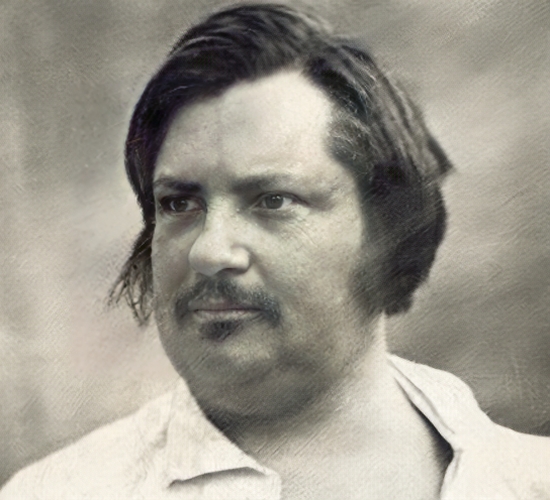
''Ferragus eli Salaliittolaisten päällikkö'' by Honoré de Balzac is a novel written in the early 19th century. This work explores the intricacies of Parisian society, weaving a narrative rich in character and moral conflict, with a focus on the young officer Auguste de Maulincour and his infatuation with the enigmatic woman, Madame Jules. Central to the story is the representation of the darker, hidden aspects of Paris, where love and betrayal intermingle amidst the city's vibrant streets. The opening of the novel intricately paints a portrait of various Parisian streets, each reflecting different facets of society, from the respectable to the morally dubious. As the young officer, Auguste, walks through these streets, he encounters a woman resembling his secret love, leading him into a turbulent emotional conflict as he grapples with feelings of love, jealousy, and betrayal. The narrative sets the stage for a deeper exploration of romantic and societal complexities, hinting at darker secrets that will unfold as the story progresses. Balzac’s vivid descriptions and insight into human nature invite readers into the alluring yet perilous world of Paris during a time of social upheaval.
Editions
X-Ray
“What a thing of fantasy a woman may become after dusk.””
— Honoré de Balzac
“Nel momento in cui l'anima è ancora tanto giovane da concepire la melanconia, le speranze lontane, e sa trovare nella donna più che una donna, la maggiore felicità che possa capitare ad un uomo non è forse quella di amare tanto da provare più gioia a toccare un guanto bianco, a sfiorare una chioma, ad ascoltare una frase, a gettare uno sguardo, di quando di quanta non ne dia a un amante felice più completo possesso? Perciò, gl'innamorati respinti, le donne brutte, gl'infelici, gli amanti ignorati, i timidi, sono i soli a conoscere quali tesori racchiuda la voce della persona amata. Traendo la fonte e il principio dall'anima stessa, le vibrazioni dell'aria carica di fuoco fanno comunicare i cuori così violentemente, vi portano così lucidamente il pensiero, e sanno così poco mentire, che una sola inflessione vale spesso più di un discorso concluso. Quale incanto prodiga al cuore di un poeta di timbro armonioso in una dolce voce! Quante idee vi risveglia! Quale freschezza vi spande! Prima di essere confessato dallo sguardo, l'amore è già nella voce.””
— Honoré de Balzac
“Ma chi può lusingarsi di essere compreso? Moriamo tutti incompresi. È il detto delle donne e quello degli scrittori.””
— Honoré de Balzac
“Vi sono Parigi certe vie disonorate quanto può esserlo un uomo macchiato d'infamia; ed esistono vie nobili, e vie semplicemente oneste, e giovani vie sulla cui moralità il pubblico non si è ancora pronunciato; vi sono vie assassine, vie più vecchie di quanto non sia vecchia una vecchia matrona, vie stimabili, vie sempre pulite, vie sempre sporche, vie operaie, lavoratrici, mercantili. Insomma, le vie di Parigi hanno qualità umane, ed imprimono in noi con la loro fisionomia certe idee da cui non possiamo difenderci.””
— Honoré de Balzac
“This article of furniture, in which the old creature was floating down the river of life, was not unlike the encyclopedic bag which a woman carries with her when she travels; in which may be found a compendium of her household belongings, from the portrait of her husband to eau de Melisse for faintness, sugarplums for the children, and English court-plaster in case of cuts.””
— Honoré de Balzac
“This “demoiselle” was the type of a woman who is never to be met with except in Paris. She is made in Paris, like the mud, like the pavement, like the water of the Seine, such as it becomes in Paris before human industry filters it ten times ere it enters the cut-glass decanters and sparkles pure and bright from the filth it has been. She is therefore a being who is truly original. Depicted scores of times by the painter’s brush, the pencil of the caricaturist, the charcoal of the etcher, she still escapes analysis, because she cannot be caught and rendered in all her moods, like Nature, like this fantastic Paris itself.””
— Honoré de Balzac
“It is from such crises that the maxim has come, “All women lie.” Falsehood, kindly falsehood, venial falsehood, sublime falsehood, horrible falsehood,”
— Honoré de Balzac
“Thirteen men were banded together in Paris under the Empire, all imbued with one and the same sentiment, all gifted with sufficient energy to be faithful to the same thought, with sufficient honor among themselves never to betray one another even if their interests clashed; and sufficiently wily and politic to conceal the sacred ties that united them, sufficiently strong to maintain themselves above the law, bold enough to undertake all things, and fortunate enough to succeed, nearly always, in their undertakings; having run the greatest dangers, but keeping silence if defeated; inaccessible to fear; trembling neither before princes, nor executioners, not even before innocence; accepting each other for such as they were, without social prejudices,”
— Honoré de Balzac
Link to this book
Add a free, dofollow link to Lex on your blog, forum, syllabus, or reading list.

<a href="https://lex-books.com/book/ferragus-eli-salaliittolaisten-p-llikk-f33ceb17-b1c9-4781-ba74-f592b4c1075d"><img src="https://lex-books.com/badges/read-on-lex.svg" alt="Read Ferragus Eli Salaliittolaisten Päällikkö by Honoré de Balzac free on Lex" width="160" height="40"></a>[](https://lex-books.com/book/ferragus-eli-salaliittolaisten-p-llikk-f33ceb17-b1c9-4781-ba74-f592b4c1075d)[url=https://lex-books.com/book/ferragus-eli-salaliittolaisten-p-llikk-f33ceb17-b1c9-4781-ba74-f592b4c1075d][img]https://lex-books.com/badges/read-on-lex.svg[/img][/url]Read Ferragus Eli Salaliittolaisten Päällikkö by Honoré de Balzac free on Lex: https://lex-books.com/book/ferragus-eli-salaliittolaisten-p-llikk-f33ceb17-b1c9-4781-ba74-f592b4c1075dCite this book
Reading this edition for a paper or guide? Copy a citation.
Balzac, Honoré de. Ferragus Eli Salaliittolaisten Päällikkö. Lex, lex-books.com/book/ferragus-eli-salaliittolaisten-p-llikk-f33ceb17-b1c9-4781-ba74-f592b4c1075d.Balzac, H. D. (1833). Ferragus Eli Salaliittolaisten Päällikkö. Lex. https://lex-books.com/book/ferragus-eli-salaliittolaisten-p-llikk-f33ceb17-b1c9-4781-ba74-f592b4c1075dBalzac, Honoré de. Ferragus Eli Salaliittolaisten Päällikkö. Lex. https://lex-books.com/book/ferragus-eli-salaliittolaisten-p-llikk-f33ceb17-b1c9-4781-ba74-f592b4c1075d.