Eversti Chabert
1832
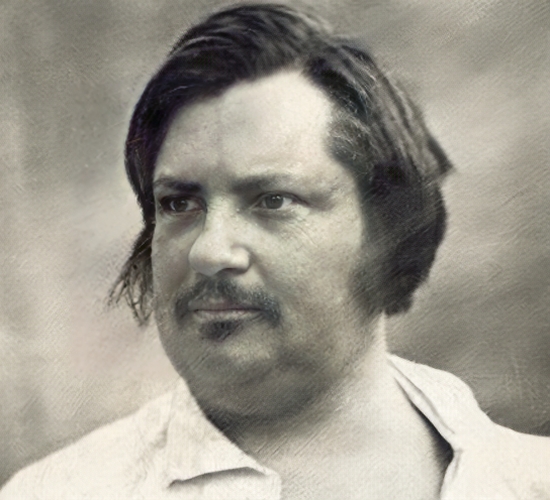
''Eversti Chabert'' by Honoré de Balzac is a novel written in the early 19th century. This work resonates with themes of identity, social status, and personal struggle as it follows the tragic story of Colonel Chabert, a man who is believed to have died in battle but instead returns to find his life has drastically changed. The narrative explores Chabert's quest for recognition and justice, underscored by the societal indifference and scorn he faces. At the start of the story, readers are introduced to an unnamed old soldier, later revealed to be Colonel Chabert, who struggles to make himself heard amidst the bustling atmosphere of a law office in Paris. The tone is one of frustration and despair as the old colonel attempts to speak with the lawyer Derville about his plight, only to be overlooked and mocked by the younger clerks in the office. Despite the indifference shown to him, Chabert remains steadfast in his need to confront the reality of his situation, as he feels lost and abandoned, battling against the perceptions and assumptions of those around him. The opening effectively sets the stage for a poignant exploration of loss, identity, and the quest for dignity in a dismissive society.
Editions
X-Ray
“Misfortune is a kind of talisman whose virtue consists in its power to confirm our original nature; in some men it increases their distrust and malignancy, just as it improves the goodness of those who have a kind heart.””
— Honoré de Balzac
“Mais que peuvent les malheureux? Ils aiment, voilà tout.””
— Honoré de Balzac
“Do you know, my dear fellow,” Derville went on after a pause, “there are in modern society three men who can never think well of the world”
— Honoré de Balzac
“Truth is less complete in its utterance; it does not put everything on the outside; it allows us to see what is within.””
— Honoré de Balzac
“J’ai été enterré sous les morts ; mais, maintenant, je suis enterré sous des vivants, sous des actes, sous des faits, sous la société tout entière, qui veut me faire rentrer sous terre!””
— Honoré de Balzac
“Physical pain pales beside moral suffering, but arouses more pity since it can be seen.””
— Honoré de Balzac
“an old mother with whom he shares the thirty or forty francs allocated to him per month. “If he’s a man, why do you call him ‘old greatcoat’?” said Simonnin, with the expression of a schoolboy catching his teacher out. And he went back to eating his bread and cheese, leaning his shoulder against the stile of the window, since he took his rest standing up, like the cab-horses of Paris, with one of his legs bent and propped on his other shoe’s toe. “Think of the fun we could have with that old codger!” muttered the third clerk, Godeschal by name, as he paused in the middle of a line of argument he was developing in a petition to be copied out in a fair hand by the fourth clerk, the draft copies of which were””
— Honoré de Balzac
“acabo de ouvir uma história que me custará talvez vinte e cinco luíses. Se for roubado, não lamentarei o dinheiro, porque vi o mais talentoso comediante da nossa época””
— Honoré de Balzac
“Enfim, todos os horrores que os romancistas pensam que inventam estão sempre aquém da verdade””
— Honoré de Balzac
Link to this book
Add a free, dofollow link to Lex on your blog, forum, syllabus, or reading list.

<a href="https://lex-books.com/book/eversti-chabert-edae85f7-2533-4566-a737-0c735bdc9e11"><img src="https://lex-books.com/badges/read-on-lex.svg" alt="Read Eversti Chabert by Honoré de Balzac free on Lex" width="160" height="40"></a>[](https://lex-books.com/book/eversti-chabert-edae85f7-2533-4566-a737-0c735bdc9e11)[url=https://lex-books.com/book/eversti-chabert-edae85f7-2533-4566-a737-0c735bdc9e11][img]https://lex-books.com/badges/read-on-lex.svg[/img][/url]Read Eversti Chabert by Honoré de Balzac free on Lex: https://lex-books.com/book/eversti-chabert-edae85f7-2533-4566-a737-0c735bdc9e11Cite this book
Reading this edition for a paper or guide? Copy a citation.
Balzac, Honoré de. Eversti Chabert. Lex, lex-books.com/book/eversti-chabert-edae85f7-2533-4566-a737-0c735bdc9e11.Balzac, H. D. (1832). Eversti Chabert. Lex. https://lex-books.com/book/eversti-chabert-edae85f7-2533-4566-a737-0c735bdc9e11Balzac, Honoré de. Eversti Chabert. Lex. https://lex-books.com/book/eversti-chabert-edae85f7-2533-4566-a737-0c735bdc9e11.