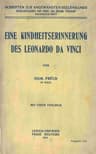
Eine Kindheitserinnerung Des Leonardo Da Vinci
1910
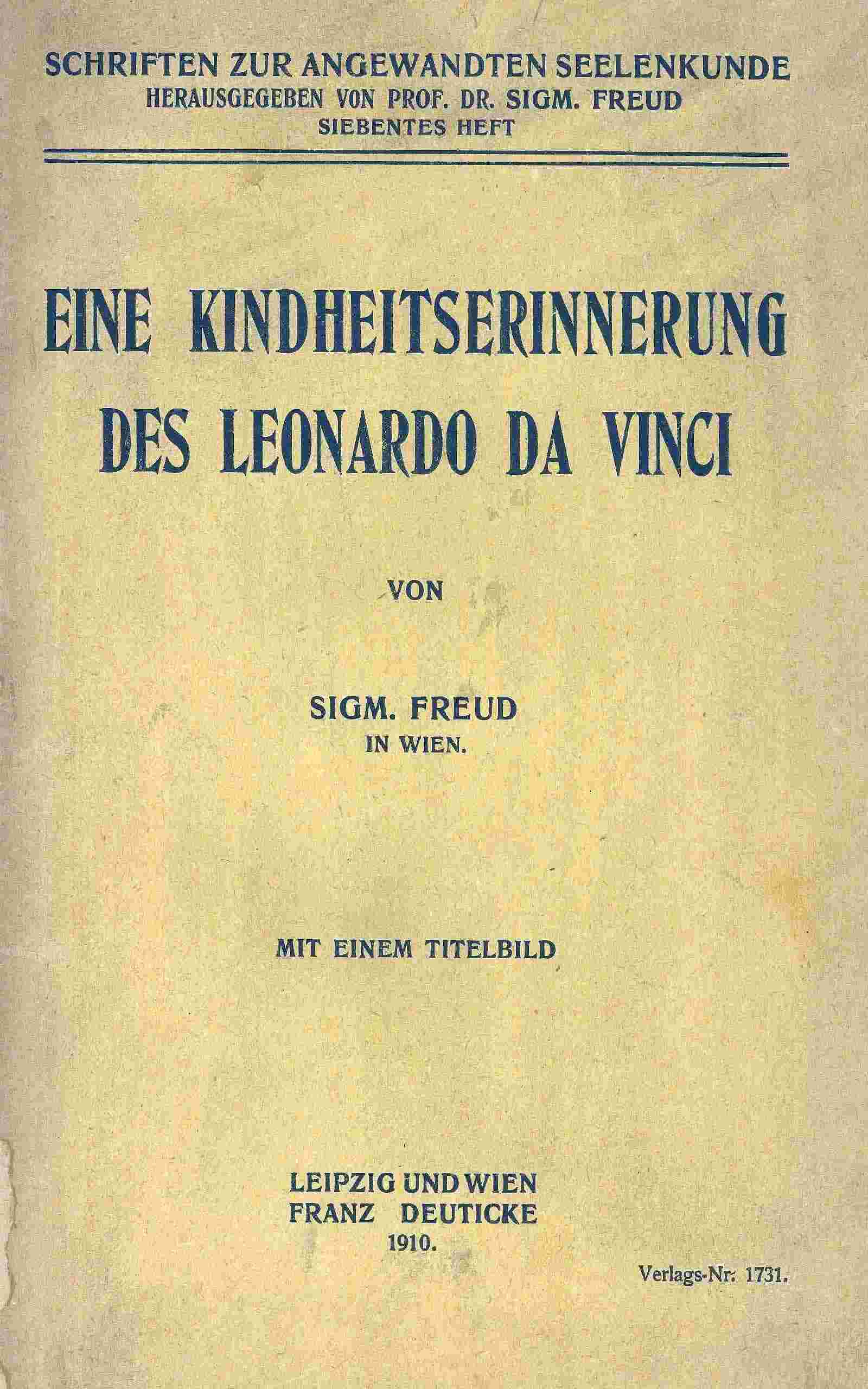
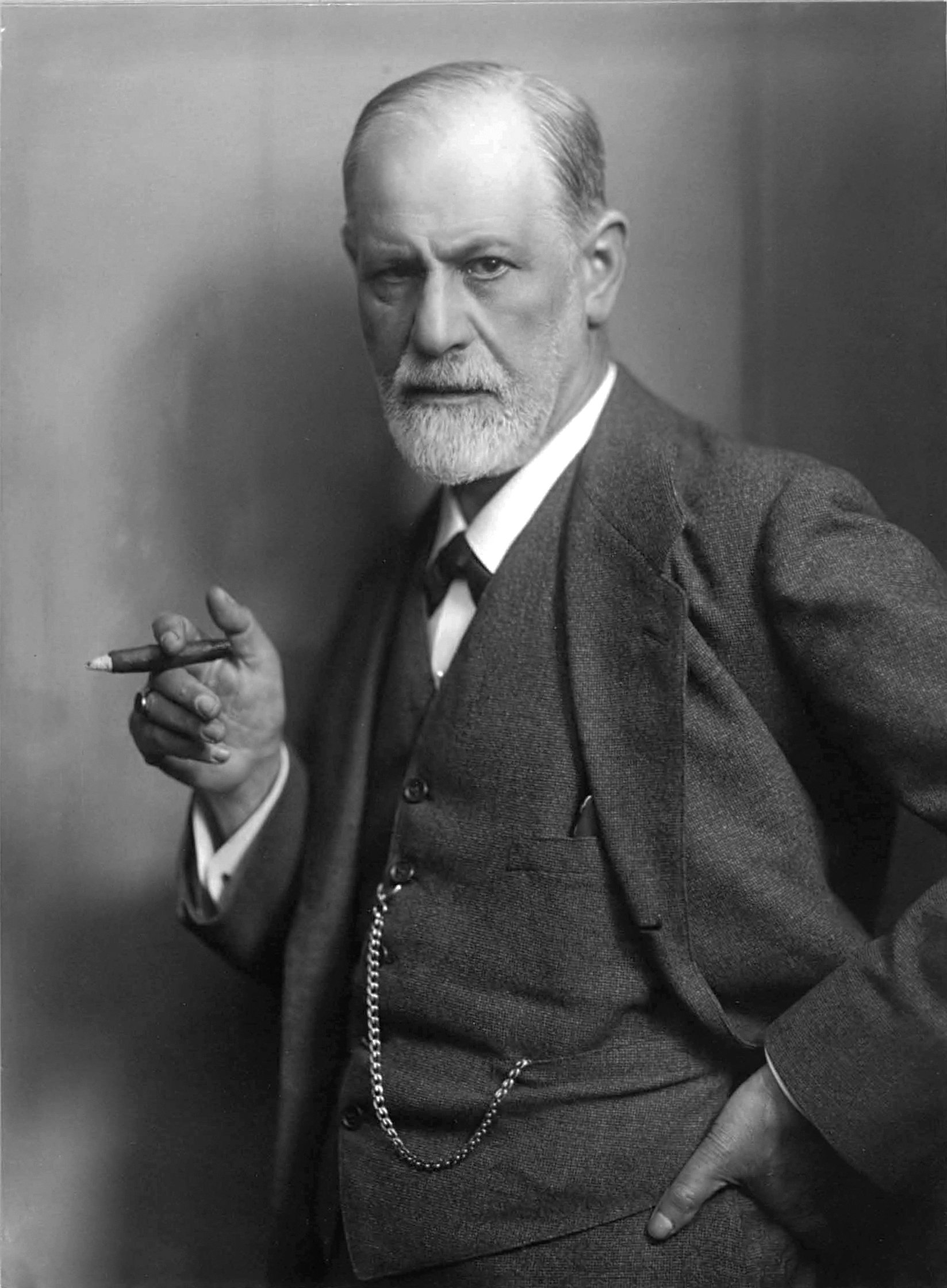
Published in 1910, Sigmund Freud's 'Eine Kindheitserinnerung Des Leonardo Da Vinci' is a psychoanalytical exploration of the childhood experiences of the iconic artist and scientist. Freud examines a peculiar memory from da Vinci's infancy involving a vulture, analyzing its psychological implications and how it may have influenced his artistic and scientific pursuits. This work highlights the interplay between personal history and broader cultural context, suggesting that even great figures like da Vinci can provide insights into human memory and creativity through psychoanalysis.
Editions
X-Ray
“Historical writing, which had begun to keep a continuous record of the present, now also cast a glance back to the past, gathered traditions and legends, interpreted the traces of antiquity that survived in customs and usages, and in this way created a history of the past. It was inevitable that this early history should have been an expression of present beliefs and wishes rather than a true picture of the past; for many things had been dropped from the nation's memory, while others were distorted, and some remains of the past were given a wrong interpretation in order to fit in with contemporary ideas. Moreover people's motive for writing history was not objective curiosity but a desire to influence their contemporaries, to encourage and inspire them, or to hold a mirror up before them. A man's conscious memory of the events of his maturity is in every way comparable to the first kind of historical writing [which was a chronicle of current events]; while the memories that he has of his childhood correspond, as far as their origins and reliability are concerned, to the history of a nation's earliest days, which was compiled later and for tendentious reasons.””
— Sigmund Freud
“We all still show too little respect for nature, which in Leonardo's deep words recalling Hamlet's speech "is full of infinite reasons which never appeared in experience." Every one of us human beings corresponds to one of the infinite experiments in which these "reasons of nature" force themselves into experience.””
— Sigmund Freud
“We are naturally grieved over the fact that a just God and a kindly providence do not guard us better against such influences in our most defenseless age. We thereby gladly forget that as a matter of fact everything in our life is accident from our very origin through the meeting of spermatozoa and ovum, accident, which nevertheless participates in the lawfulness and fatalities of nature, and lacks only the connection to our wishes and illusions.””
— Sigmund Freud
“It would be futile to delude ourselves that at present, readers find every pathography unsavory. This attitude is excused with the reproach that from a pathographic elaboration of a great man one never obtains an understanding of his importance and his attainments, that it is therefore useless mischief to study in him things which could just as well be found in the first comer. However, this criticism is so clearly unjust that it can only be grasped when viewed as a pretext and a disguise for something. As a matter of fact pathography does not aim at making comprehensible the attainments of the great man; no one should really be blamed for not doing something which one never promised. The real motives for the opposition are quite different. One finds them when one bears in mind that biographers are fixed on their heroes in quite a peculiar manner. Frequently they take the hero as the object of study because, for reasons of their personal emotional life, they bear him a special affection from the very outset. They then devote themselves to a work of idealization which strives to enroll the great men among their infantile models, and to revive through him, as it were, the infantile conception of the father. For the sake of this wish they wipe out the individual features in his physiognomy, they rub out the traces of his life's struggle with inner and outer resistances, and do not tolerate in him anything of human weakness or imperfection; they then give us a cold, strange, ideal form instead of the man to whom we could feel distantly related. It is to be regretted that they do this, for they thereby sacrifice the truth to an illusion, and for the sake of their infantile phantasies they let slip the opportunity to penetrate into the most attractive secrets of human nature.””
— Sigmund Freud
“Least of all should the artist be held responsible for the fate which befalls his works.””
— Sigmund Freud
“Quite unlike conscious memories from the time of maturity, they are not fixed at the moment of being experienced and afterwards repeated, but are only elicited at a later age when childhood is already past; in the process they are altered and falsified, and are put into the service of later trends, so that generally speaking they cannot be sharply distinguished from phantasies. Their nature is perhaps best illustrated by a comparison with the way in which the writing of history originated among the peoples of antiquity. As long as a nation was small and weak it gave no thought to the writing of its history. Men tilled the soil of their land, fought for their existence against their neighbours, and tried to gain territory from them and to acquire wealth. It was an age of heroes not of historians. Then came another age, an age of reflection: men felt themselves to be rich and powerful, and now felt a need to learn where they had come from and how they had developed.””
— Sigmund Freud
“sometimes a digar is just a cigar””
— Sigmund Freud
Link to this book
Add a free, dofollow link to Lex on your blog, forum, syllabus, or reading list.

<a href="https://lex-books.com/book/eine-kindheitserinnerung-des-leonardo-da-vinci-7903d454-7406-4c5e-b677-f699b140721a"><img src="https://lex-books.com/badges/read-on-lex.svg" alt="Read Eine Kindheitserinnerung Des Leonardo Da Vinci by Sigmund Freud free on Lex" width="160" height="40"></a>[](https://lex-books.com/book/eine-kindheitserinnerung-des-leonardo-da-vinci-7903d454-7406-4c5e-b677-f699b140721a)[url=https://lex-books.com/book/eine-kindheitserinnerung-des-leonardo-da-vinci-7903d454-7406-4c5e-b677-f699b140721a][img]https://lex-books.com/badges/read-on-lex.svg[/img][/url]Read Eine Kindheitserinnerung Des Leonardo Da Vinci by Sigmund Freud free on Lex: https://lex-books.com/book/eine-kindheitserinnerung-des-leonardo-da-vinci-7903d454-7406-4c5e-b677-f699b140721aCite this book
Reading this edition for a paper or guide? Copy a citation.
Freud, Sigmund. Eine Kindheitserinnerung Des Leonardo Da Vinci. Lex, lex-books.com/book/eine-kindheitserinnerung-des-leonardo-da-vinci-7903d454-7406-4c5e-b677-f699b140721a.Freud, S. (1910). Eine Kindheitserinnerung Des Leonardo Da Vinci. Lex. https://lex-books.com/book/eine-kindheitserinnerung-des-leonardo-da-vinci-7903d454-7406-4c5e-b677-f699b140721aFreud, Sigmund. Eine Kindheitserinnerung Des Leonardo Da Vinci. Lex. https://lex-books.com/book/eine-kindheitserinnerung-des-leonardo-da-vinci-7903d454-7406-4c5e-b677-f699b140721a.