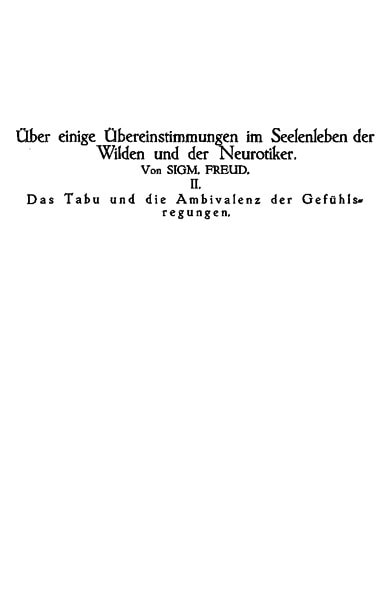
Das Tabu Und Die Ambivalenz Der Gefühlsregungenüber Einige Übereinstimmungen Im Seelenleben Der Wilden Und Der Neurotiker II
1913
Das Tabu Und Die Ambivalenz Der Gefühlsregungenüber Einige Übereinstimmungen Im Seelenleben Der Wilden Und Der Neurotiker II
1913
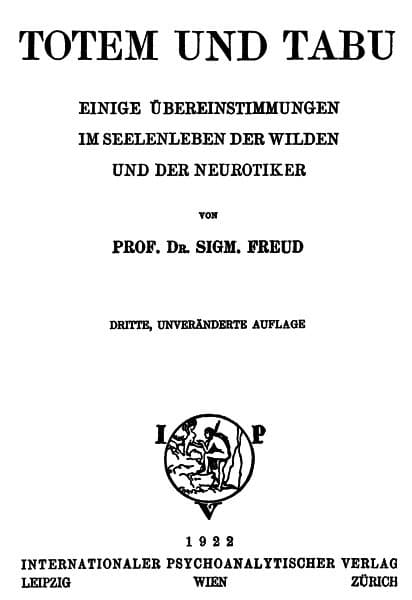
A scientific publication written in the early 20th century. The work delves into the intricate concept of the ''taboo,'' connecting primitive social restrictions to complex emotional responses observed in both primitive cultures and neurotic individuals. Freud aims to explore how these taboos reflect deeper psychological processes and conflicts. The opening of the text introduces the concept of ''tabu,'' tracing its linguistic roots and highlighting its dual meanings of sacredness and danger. Freud discusses the nature of taboos as unarticulated prohibitions that exist outside religious or moral justifications, existing instead as primal codes of conduct inherited by societies over time. He points out that taboos often evoke fear and fascination, and he hints at the underlying psychological mechanisms that drive these functions, setting the stage for a detailed exploration of their implications for both collective societies and individual neuroses. Freud emphasizes the need for a further analysis of taboos to reveal their connections to modern moral codes and psychological health.
Editions
Link to this book
Add a free, dofollow link to Lex on your blog, forum, syllabus, or reading list.

<a href="https://lex-books.com/book/das-tabu-und-die-ambivalenz-der-gef-hlsregungen-ber-einige-bereinstimmungen-im-s-d9ea2d0e-9a7d-49a8-ba07-b2ae1ff921db"><img src="https://lex-books.com/badges/read-on-lex.svg" alt="Read Das Tabu Und Die Ambivalenz Der Gefühlsregungenüber Einige Übereinstimmungen Im Seelenleben Der Wilden Und Der Neurotiker II by Sigmund Freud free on Lex" width="160" height="40"></a>[](https://lex-books.com/book/das-tabu-und-die-ambivalenz-der-gef-hlsregungen-ber-einige-bereinstimmungen-im-s-d9ea2d0e-9a7d-49a8-ba07-b2ae1ff921db)[url=https://lex-books.com/book/das-tabu-und-die-ambivalenz-der-gef-hlsregungen-ber-einige-bereinstimmungen-im-s-d9ea2d0e-9a7d-49a8-ba07-b2ae1ff921db][img]https://lex-books.com/badges/read-on-lex.svg[/img][/url]Read Das Tabu Und Die Ambivalenz Der Gefühlsregungenüber Einige Übereinstimmungen Im Seelenleben Der Wilden Und Der Neurotiker II by Sigmund Freud free on Lex: https://lex-books.com/book/das-tabu-und-die-ambivalenz-der-gef-hlsregungen-ber-einige-bereinstimmungen-im-s-d9ea2d0e-9a7d-49a8-ba07-b2ae1ff921dbCite this book
Reading this edition for a paper or guide? Copy a citation.
Freud, Sigmund. Das Tabu Und Die Ambivalenz Der Gefühlsregungenüber Einige Übereinstimmungen Im Seelenleben Der Wilden Und Der Neurotiker II. Lex, lex-books.com/book/das-tabu-und-die-ambivalenz-der-gef-hlsregungen-ber-einige-bereinstimmungen-im-s-d9ea2d0e-9a7d-49a8-ba07-b2ae1ff921db.Freud, S. (1913). Das Tabu Und Die Ambivalenz Der Gefühlsregungenüber Einige Übereinstimmungen Im Seelenleben Der Wilden Und Der Neurotiker II. Lex. https://lex-books.com/book/das-tabu-und-die-ambivalenz-der-gef-hlsregungen-ber-einige-bereinstimmungen-im-s-d9ea2d0e-9a7d-49a8-ba07-b2ae1ff921dbFreud, Sigmund. Das Tabu Und Die Ambivalenz Der Gefühlsregungenüber Einige Übereinstimmungen Im Seelenleben Der Wilden Und Der Neurotiker II. Lex. https://lex-books.com/book/das-tabu-und-die-ambivalenz-der-gef-hlsregungen-ber-einige-bereinstimmungen-im-s-d9ea2d0e-9a7d-49a8-ba07-b2ae1ff921db.