Een Kerstlied in Proza
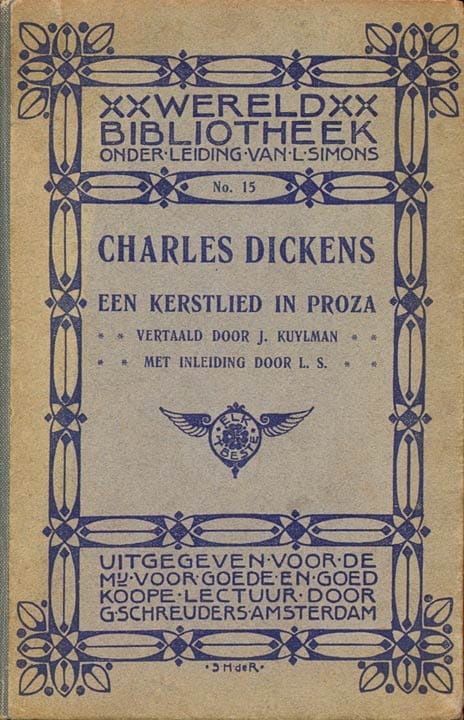
Every year, millions return to this story. They know every beat: the miser, the chains, the three spirits, the trembling question, "Are these the shadows of things that will be?" Yet it never grows stale. This is because Dickens understood something essential about human nature: we are not fixed. We can change. We can choose differently. Ebenezer Scrooge has made himself a prison. He counts money while his clerk's son dies of fever in a garret. He calls Christmas a "humbug" because joy costs him nothing, and he cannot bear to give anything away. But on one frozen Christmas Eve, the ghost of his partner Jacob Marley arrives bearing chains forged from a lifetime of greed. Then come the spirits: the pale child-thing of Christmas Past, the jovial giant of Christmas Present, and the silent hooded figure of Christmas Yet to Come. They show Scrooge what he has done, what he is doing, and what will come unless he changes. This is a ghost story, yes. But it is also a fierce, hopeful book about what we owe each other. Dickens poured his own childhood poverty and his rage at Victorian England's indifference into these pages. The result is a story that doesn't just entertain but insists: it is never too late to become someone better.
Editions
X-Ray
“There is nothing in the world so irresistibly contagious as laughter and good humor.””
— Charles Dickens
“It is a fair, even-handed, noble adjustment of things, that while there is infection in disease and sorrow, there is nothing in the world so irresistibly contagious as laughter and good humour.””
— Charles Dickens
“You are fettered," said Scrooge, trembling. "Tell me why?""I wear the chain I forged in life," replied the Ghost. "I made it link by link, and yard by yard; I girded it on of my own free will, and of my own free will I wore it.””
— Charles Dickens
“I will honour Christmas in my heart, and try to keep it all the year. I will live in the Past, the Present, and the Future. The Spirits of all Three shall strive within me. I will not shut out the lessons that they teach.””
— Charles Dickens
“No space of regret can make amends for one life's opportunity misused””
— Charles Dickens
“For it is good to be children sometimes, and never better than at Christmas, when its mighty Founder was a child Himself.””
— Charles Dickens
“You may be an undigested bit of beef, a blot of mustard, a crumb of cheese, a fragment of underdone potato. There's more of gravy than of grave about you, whatever you are!””
— Charles Dickens
“There are many things from which I might have derived good, by which I have not profited, I dare say,' returned the nephew. 'Christmas among the rest. But I am sure I have always thought of Christmas time, when it has come round”
— Charles Dickens
“But you were always a good man of business, Jacob,' faltered Scrooge, who now began to apply this to himself.Business!' cried the Ghost, wringing its hands again. "Mankind was my business; charity, mercy, forbearance, and benevolence, were, all, my business. The deals of my trade were but a drop of water in the comprehensive ocean of my business!””
— Charles Dickens
Link to this book
Add a free, dofollow link to Lex on your blog, forum, syllabus, or reading list.

<a href="https://lex-books.com/book/een-kerstlied-in-proza-ba8a3ff9-1334-47cd-8782-3fea35b7fb4f"><img src="https://lex-books.com/badges/read-on-lex.svg" alt="Read Een Kerstlied in Proza by Charles Dickens free on Lex" width="160" height="40"></a>[](https://lex-books.com/book/een-kerstlied-in-proza-ba8a3ff9-1334-47cd-8782-3fea35b7fb4f)[url=https://lex-books.com/book/een-kerstlied-in-proza-ba8a3ff9-1334-47cd-8782-3fea35b7fb4f][img]https://lex-books.com/badges/read-on-lex.svg[/img][/url]Read Een Kerstlied in Proza by Charles Dickens free on Lex: https://lex-books.com/book/een-kerstlied-in-proza-ba8a3ff9-1334-47cd-8782-3fea35b7fb4fCite this book
Reading this edition for a paper or guide? Copy a citation.
Dickens, Charles. Een Kerstlied in Proza. Lex, lex-books.com/book/een-kerstlied-in-proza-ba8a3ff9-1334-47cd-8782-3fea35b7fb4f.Dickens, C. (n.d.). Een Kerstlied in Proza. Lex. https://lex-books.com/book/een-kerstlied-in-proza-ba8a3ff9-1334-47cd-8782-3fea35b7fb4fDickens, Charles. Een Kerstlied in Proza. Lex. https://lex-books.com/book/een-kerstlied-in-proza-ba8a3ff9-1334-47cd-8782-3fea35b7fb4f.