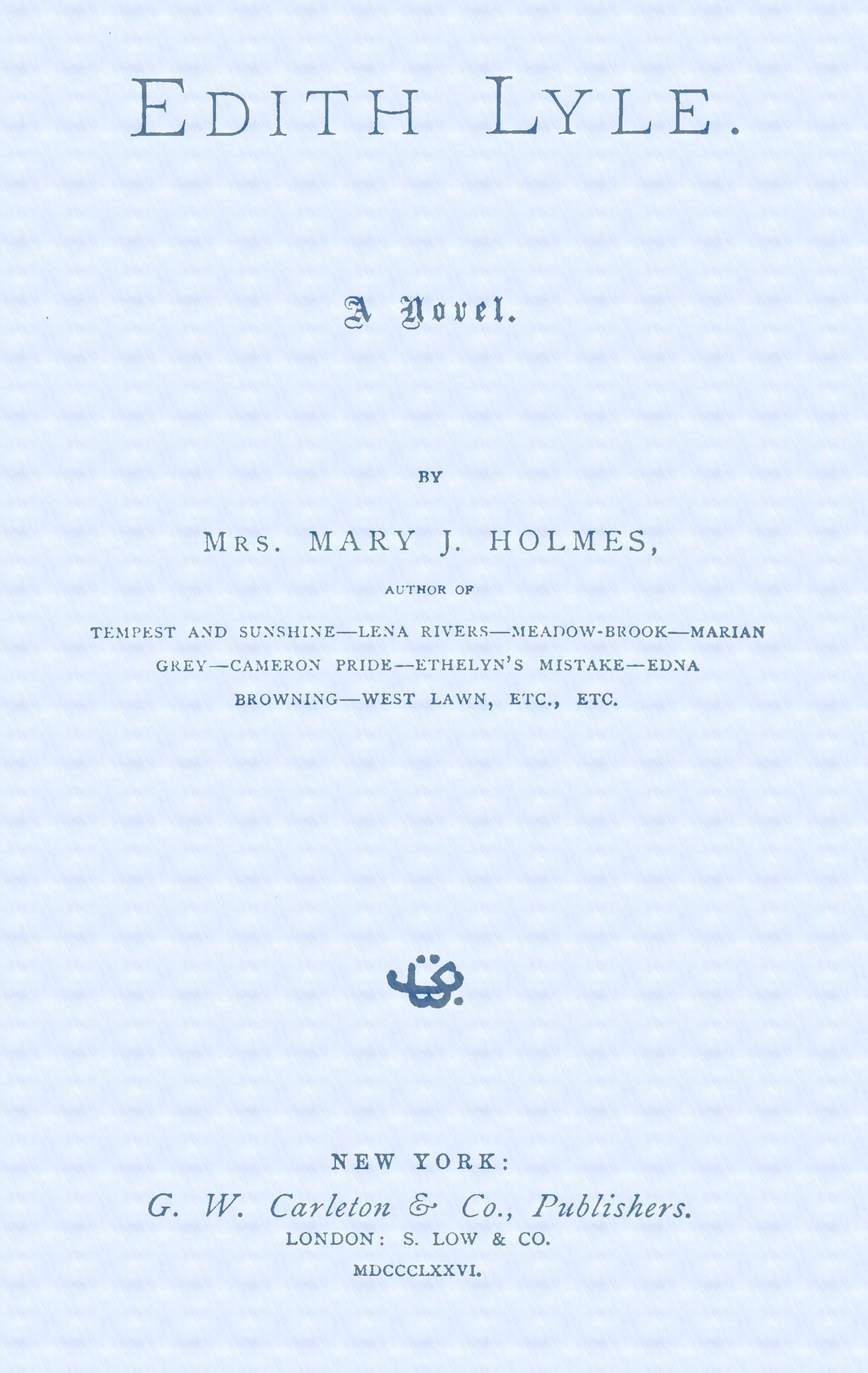
Edith Lyle: A Novel
1876

A young widow named Edith Lyle must forge her own path through grief, betrayal, and the rigid expectations of 19th-century society. When her husband Abelard dies saving a child from a terrible accident, Edith is left to rebuild her life. But her mother, a calculating social climber, has ambitious plans that do not include Edith's happiness or independence. The novel's darkest moment arrives when Edith's own mother steals her newborn baby from drugged arms and abandons the child at a hospital, a Act of cruelty that forces Edith to find strength she never knew she possessed. Told through the perspective of Esther, a village schoolmistress, the novel offers an intimate window into community life and the class structures that governed women's choices. Rather than fighting with fury, Edith wages her battle through quiet dignity, personal refinement, and unwavering faith. She refuses to climb through social facades, instead elevating herself from within. Mary Jane Holmes writes with the warmth and sharp observation of an American Jane Austen, finding humor and humanity in the constraints that shaped women's lives. This novel endures because it speaks to anyone who has fought to maintain their identity against pressure to become someone else. It is a story of resilience, of choosing integrity over advancement, and of the quiet revolution that happens when a woman decides to stop being moved and starts moving herself.
Editions
Link to this book
Add a free, dofollow link to Lex on your blog, forum, syllabus, or reading list.

<a href="https://lex-books.com/book/edith-lyle-a-novel-169ee7c0-0aa2-4d69-b242-e7b5793f17ab"><img src="https://lex-books.com/badges/read-on-lex.svg" alt="Read Edith Lyle: A Novel by Mary Jane Holmes free on Lex" width="160" height="40"></a>[](https://lex-books.com/book/edith-lyle-a-novel-169ee7c0-0aa2-4d69-b242-e7b5793f17ab)[url=https://lex-books.com/book/edith-lyle-a-novel-169ee7c0-0aa2-4d69-b242-e7b5793f17ab][img]https://lex-books.com/badges/read-on-lex.svg[/img][/url]Read Edith Lyle: A Novel by Mary Jane Holmes free on Lex: https://lex-books.com/book/edith-lyle-a-novel-169ee7c0-0aa2-4d69-b242-e7b5793f17abCite this book
Reading this edition for a paper or guide? Copy a citation.
Holmes, Mary Jane. Edith Lyle: A Novel. Lex, lex-books.com/book/edith-lyle-a-novel-169ee7c0-0aa2-4d69-b242-e7b5793f17ab.Holmes, M. J. (1876). Edith Lyle: A Novel. Lex. https://lex-books.com/book/edith-lyle-a-novel-169ee7c0-0aa2-4d69-b242-e7b5793f17abHolmes, Mary Jane. Edith Lyle: A Novel. Lex. https://lex-books.com/book/edith-lyle-a-novel-169ee7c0-0aa2-4d69-b242-e7b5793f17ab.