Der Tod in Venedig
1912
A distinguished author, his artistic powers fading, travels to Venice seeking renewal and finds only his own dissolution. Gustav von Aschenbach has spent a lifetime cultivating discipline and intellectual stature, but the city of water unlocks something feral in him: a consuming, hopeless obsession with a beautiful Polish boy named Tadzio. As Venice succumbs to a mysterious epidemic and the tourists flee, Aschenbach remains, paralyzed by desire, watching the boy on the beach until his own end comes. This is not merely a story of forbidden longing; it is Mann's ruthless examination of what happens when the artist's carefully constructed self collapses under the weight of eros. The prose is crystalline, controlled, and utterly devastating, the tension between Aschenbach's dignity and his degradation reaching toward tragedy. A century later, the book retains its power to disturb: it asks whether creation and destruction are two faces of the same impulse, and whether the pursuit of beauty is ever truly separable from self-destruction.
Editions
X-Ray
“Nothing is stranger or more ticklish than a relationship between people who know each other only by sight, who meet and observe each other daily - no hourly - and are nevertheless compelled to keep up the pose of an indifferent stranger, neither greeting nor addressing each other, whether out of etiquette or their own whim.””
— Thomas Mann
“A lonely, quiet person has observations and experiences that are at once both more indistinct and more penetrating than those of one more gregarious; his thoughts are weightier, stranger, and never without a tinge of sadness. . . . Loneliness fosters that which is original, daringly and bewilderingly beautiful, poetic. But loneliness also fosters that which is perverse, incongruous, absurd, forbidden.””
— Thomas Mann
“The observations and encounters of a solitary, taciturn man are vaguer and at the same times more intense than those of a sociable man; his thoughts are deeper, odder and never without a touch of sadness. Images and perceptions that could be dismissed with a glance, a laugh, an exchange of opinions, occupy him unduly, become more intense in the silence, become significant, become an experience, an adventure, an emotion. Solitude produces originality, bold and astonishing beauty, poetry. But solitude also produces perverseness, the disproportionate, the absurd and the forbidden.””
— Thomas Mann
“Solitude produces originality, bold & astonishing beauty, poetry. But solitude also produces perverseness, the disproportionate, the absurd, and the forbidden.””
— Thomas Mann
“(...) nearly all the great things that exist owe their existence to a defiant despite: it is despite grief and anguish, despite poverty, loneliness, bodily weakness, vice and passion and a thousand inhibitions, that they have come into being at all.””
— Thomas Mann
“Because man loves and honors man as long as he is not able to judge him, and desire is a product of lacking knowledge.””
— Thomas Mann
“His yearning for new and faraway places, his desire for freedom, relief and oblivion was as he admitted to himself, an urge to flee-an urge to get away from his work, from the everyday site of a cold, rigid, and passionate servitude.””
— Thomas Mann
“It is as well that the world knows only a fine piece of work and not also its origins, the conditions under which it came into being; for knowledge of the sources of an artist's inspiration would often confuse readers and shock them, and the excellence of the writing would be of no avail.””
— Thomas Mann
“Like any lover, he desired to please; suffered agonies at the thought of failure.””
— Thomas Mann
Link to this book
Add a free, dofollow link to Lex on your blog, forum, syllabus, or reading list.

<a href="https://lex-books.com/book/der-tod-in-venedig-74d5996f-753c-4655-a197-e26b0419e448"><img src="https://lex-books.com/badges/read-on-lex.svg" alt="Read Der Tod in Venedig by Thomas Mann free on Lex" width="160" height="40"></a>[](https://lex-books.com/book/der-tod-in-venedig-74d5996f-753c-4655-a197-e26b0419e448)[url=https://lex-books.com/book/der-tod-in-venedig-74d5996f-753c-4655-a197-e26b0419e448][img]https://lex-books.com/badges/read-on-lex.svg[/img][/url]Read Der Tod in Venedig by Thomas Mann free on Lex: https://lex-books.com/book/der-tod-in-venedig-74d5996f-753c-4655-a197-e26b0419e448Cite this book
Reading this edition for a paper or guide? Copy a citation.
Mann, Thomas. Der Tod in Venedig. Lex, lex-books.com/book/der-tod-in-venedig-74d5996f-753c-4655-a197-e26b0419e448.Mann, T. (1912). Der Tod in Venedig. Lex. https://lex-books.com/book/der-tod-in-venedig-74d5996f-753c-4655-a197-e26b0419e448Mann, Thomas. Der Tod in Venedig. Lex. https://lex-books.com/book/der-tod-in-venedig-74d5996f-753c-4655-a197-e26b0419e448.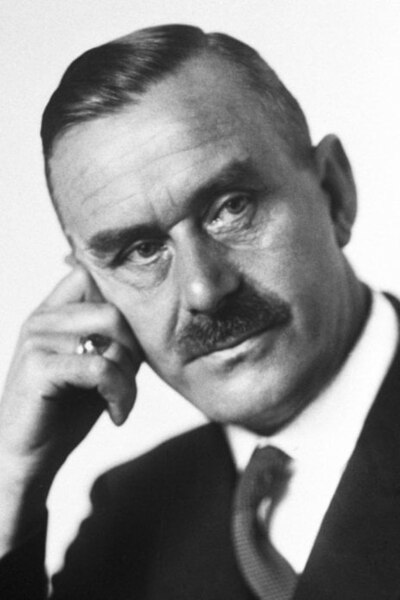



![Tonio Kröger[Erstausgabe; Illustrationen Von Erich M. Simon]](/_next/image?url=https%3A%2F%2Fd3b2n8gj62qnwr.cloudfront.net%2FCOVERS%2Fgutenberg_covers75k%2Febook-38692.png&w=3840&q=75)