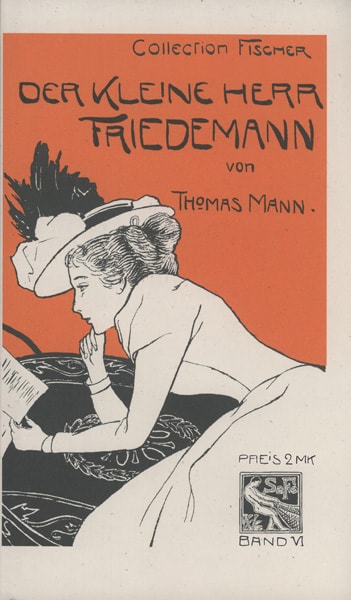
Der Kleine Herr Friedemann: Novellen
1898
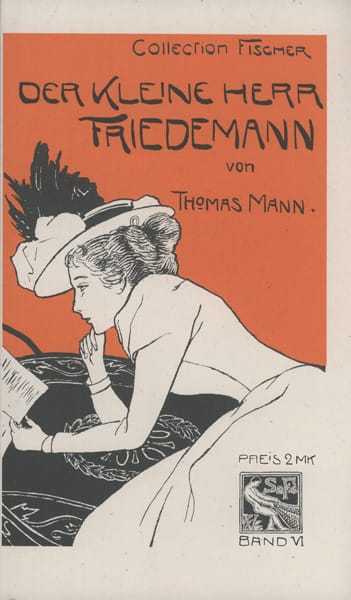
Thomas Mann's debut collection announces a master of psychological fiction. The centerpiece novella introduces Johannes Friedemann, a man whose physical deformity has marked him for a life of painful outsiderhood since childhood. Raised in protective seclusion, Friedemann longs for love and belonging yet finds himself perpetually estranged from a world that cannot see past his appearance. Mann excavates this character's inner life with surgical precision, tracing how isolation shapes desire, how beauty becomes a wound, and how the artist exists in perpetual tension with a society that has no place for his sensitivity. The other novellas in this collection share this preoccupation with figures caught at the margins of existence, forced to reckon with the gap between their inner selves and the roles society permits them. Mann's prose is elegant yet restrained, the work of a young writer who has already learned that true horror and longing live beneath the surface of respectable life. This is Mann before the Nobel Prize, before Buddenbrooks, but already in possession of his signature themes: the artist as outsider, the cost of aesthetic sensibility in a brutal world, the terrible loneliness of being truly seen. For readers who cherish Mann's later works, this collection offers those obsessions in their earliest, rawest formation. For newcomers, it serves as proof that one of the twentieth century's great psychological novelists was born, not made.
Editions

Link to this book
Add a free, dofollow link to Lex on your blog, forum, syllabus, or reading list.

<a href="https://lex-books.com/book/der-kleine-herr-friedemann-novellen-6af4c02b-8134-4453-987d-90cd8d958a18"><img src="https://lex-books.com/badges/read-on-lex.svg" alt="Read Der Kleine Herr Friedemann: Novellen by Thomas Mann free on Lex" width="160" height="40"></a>[](https://lex-books.com/book/der-kleine-herr-friedemann-novellen-6af4c02b-8134-4453-987d-90cd8d958a18)[url=https://lex-books.com/book/der-kleine-herr-friedemann-novellen-6af4c02b-8134-4453-987d-90cd8d958a18][img]https://lex-books.com/badges/read-on-lex.svg[/img][/url]Read Der Kleine Herr Friedemann: Novellen by Thomas Mann free on Lex: https://lex-books.com/book/der-kleine-herr-friedemann-novellen-6af4c02b-8134-4453-987d-90cd8d958a18Cite this book
Reading this edition for a paper or guide? Copy a citation.
Mann, Thomas. Der Kleine Herr Friedemann: Novellen. Lex, lex-books.com/book/der-kleine-herr-friedemann-novellen-6af4c02b-8134-4453-987d-90cd8d958a18.Mann, T. (1898). Der Kleine Herr Friedemann: Novellen. Lex. https://lex-books.com/book/der-kleine-herr-friedemann-novellen-6af4c02b-8134-4453-987d-90cd8d958a18Mann, Thomas. Der Kleine Herr Friedemann: Novellen. Lex. https://lex-books.com/book/der-kleine-herr-friedemann-novellen-6af4c02b-8134-4453-987d-90cd8d958a18.

![Tonio Kröger[Erstausgabe; Illustrationen Von Erich M. Simon]](/_next/image?url=https%3A%2F%2Fd3b2n8gj62qnwr.cloudfront.net%2FCOVERS%2Fgutenberg_covers75k%2Febook-38692.png&w=3840&q=75)